
Conductivity Standards: What to Specify Before Ordering
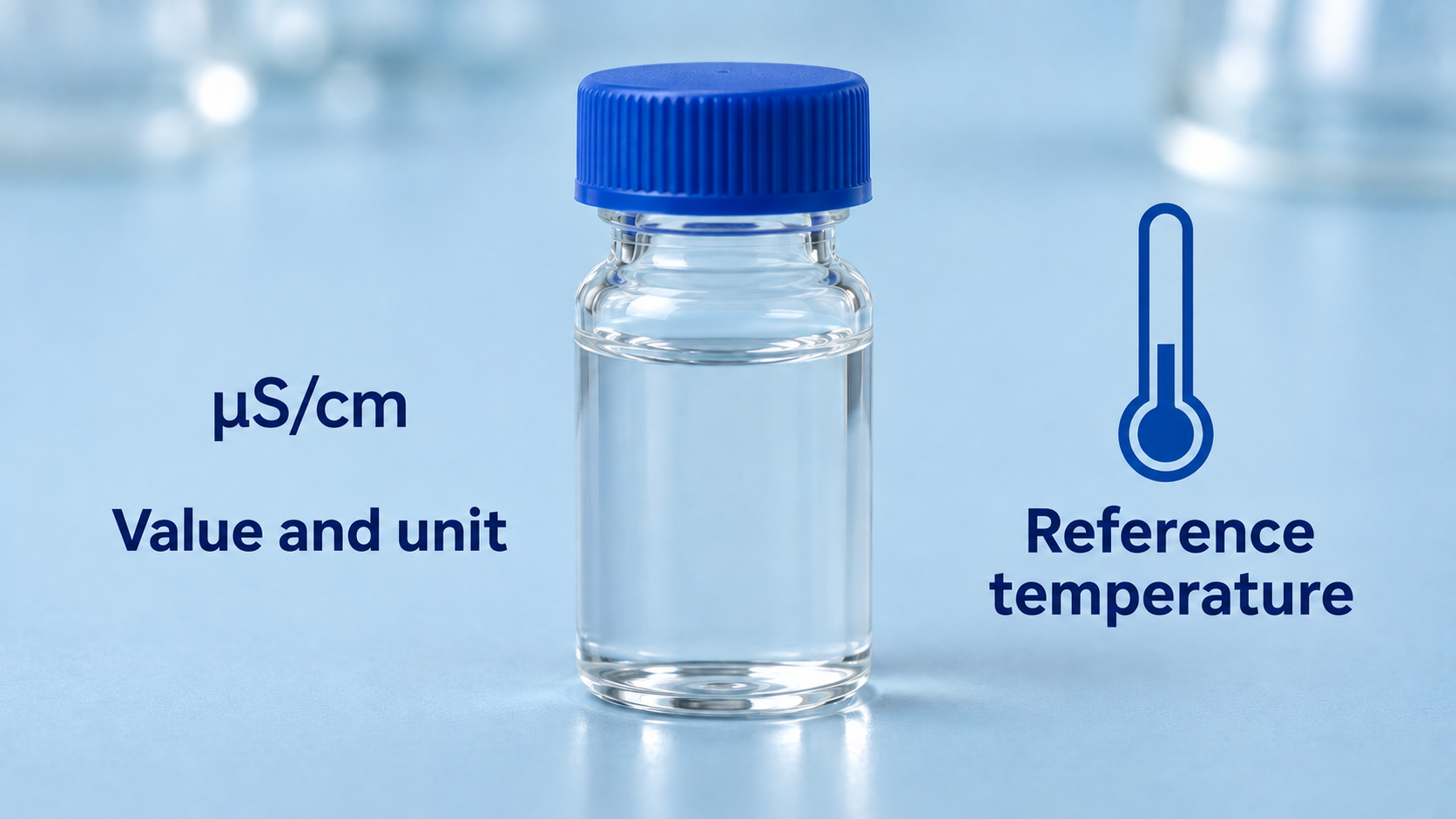
Put the required conductivity value, its unit and reference temperature on the purchase request. Then confirm that the specified value matches the meter, conductivity cell and purpose of the check. Ask for documentation that identifies the lot and states its assigned value. A catalog name or a number copied from a meter display is too little information to compare offers.

Start with the meter, cell and intended use
Ask the laboratory for the meter model, cell model, intended measurement range and the applicable method or work instruction. The team should identify whether the standard is for calibration, an independent verification check, or another defined purpose. Calibration establishes a measurement relationship; a verification check supplies evidence against a defined requirement. A lab may specify different materials for those roles.
The cell constant describes how the cell's geometry relates measured conductance to conductivity. A meter may support a fixed set of recognized standards or allow other values depending on the model. Check the actual meter and cell documentation and the lab's procedure before assuming that a given nominal value or value range is supported. Metrohm's conductivity measurement notes explain the cell constant and its link to measured conductance. The laboratory's documents govern which standard to request.
Specify the value and its temperature together
Conductivity depends on temperature. The reference temperature states the basis for the assigned or reported value; it does not necessarily describe the temperature of the solution on the bench. Check whether the laboratory's procedure calls for a value at a defined temperature, a supplier temperature table or a meter function that recognizes a particular standard. Do not assume that the same correction applies to every solution or meter. NIST's reference on electrolytic conductivity explains the role of temperature in conductivity measurements and reference values.
Read the unit prefix as carefully as the number: 1 mS/cm equals 1,000 µS/cm. Compare quotes on the same unit and temperature basis, and check whether the offered figure is nominal or the assigned value for the supplied lot. A unit conversion changes how a value is written; it does not account for a difference in reference temperature.
Request documentation that follows the lot
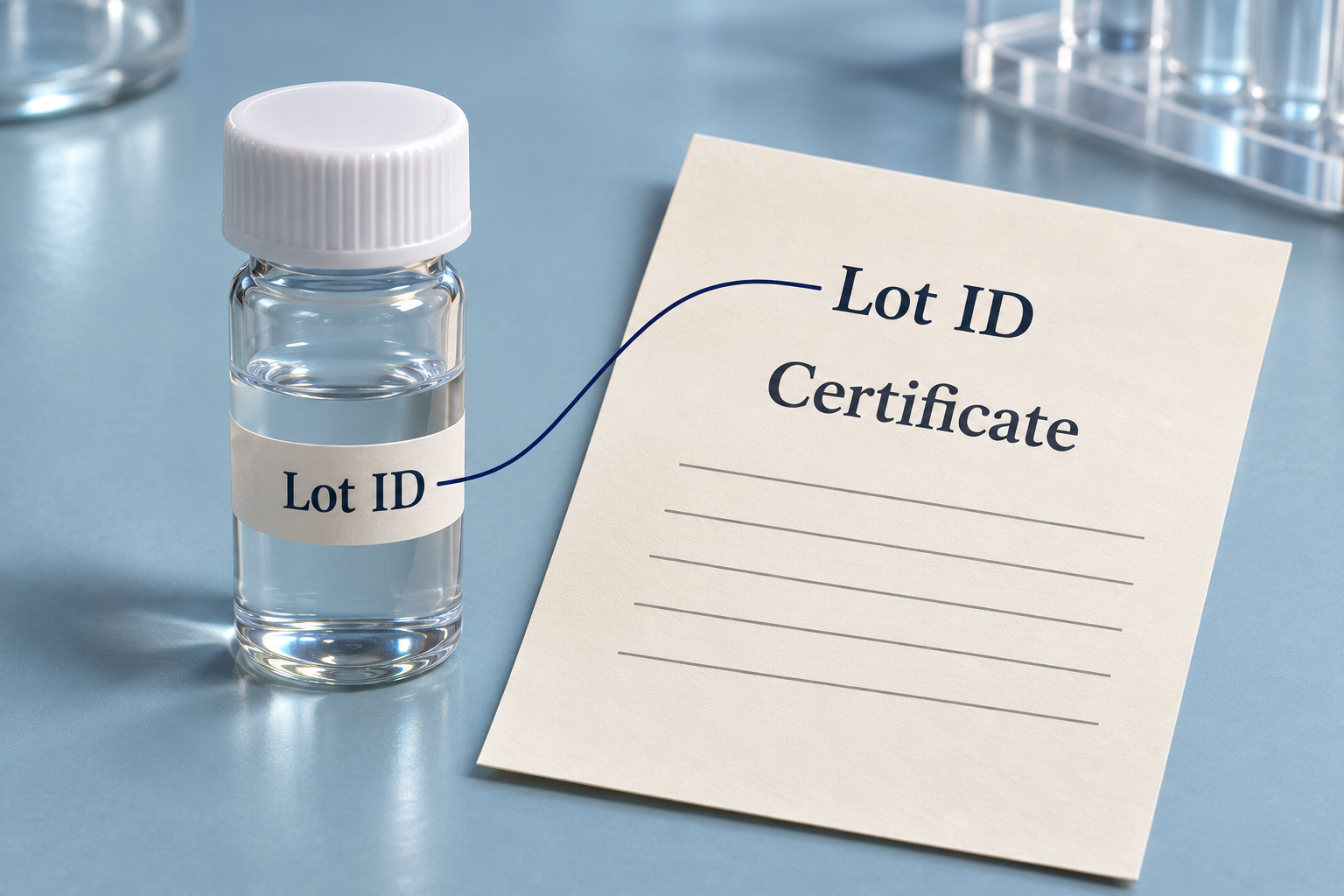
- Identity and value: Request the product identifier and a lot-specific document showing the assigned conductivity, unit and temperature basis.
- Reference and uncertainty: Ask for the stated traceability and associated uncertainty if required by the laboratory. Request a sample certificate to review the format, and confirm what document will accompany the actual lot. NIST's reference material definitions describe the types of information a certified reference material certificate can carry.
- Packaging and use period: Ask for the pack type and size, storage instructions and the applicable validity information. If the procedure depends on a defined period after opening, ask whether the supplier documents one. The lab should confirm which conditions apply.
Turn the comparison into a complete order request
Send purchasing the intended role, approved meter and cell combination, nominal value and unit at the required reference temperature, and required lot documentation. If a quote lists the same number but a different temperature, unclear units or missing evidence, ask the supplier for clarification and have the laboratory review the difference before the order proceeds. The objective is to buy the standard the procedure calls for, with the evidence needed to identify the lot on receipt.
Related Reading
- A QA and procurement checklist for prepared standard solutions offers a broader look at documentation, traceability and stock decisions.
Leave a comment!