Matrix Effects vs Extraction Recovery in LC-MS: How to Separate Them
A weak LC-MS response can reflect analyte loss during preparation, suppression of the response in the final extract, or both. Compare a standard in solvent, a blank-matrix extract spiked after preparation, and the same matrix spiked before preparation.
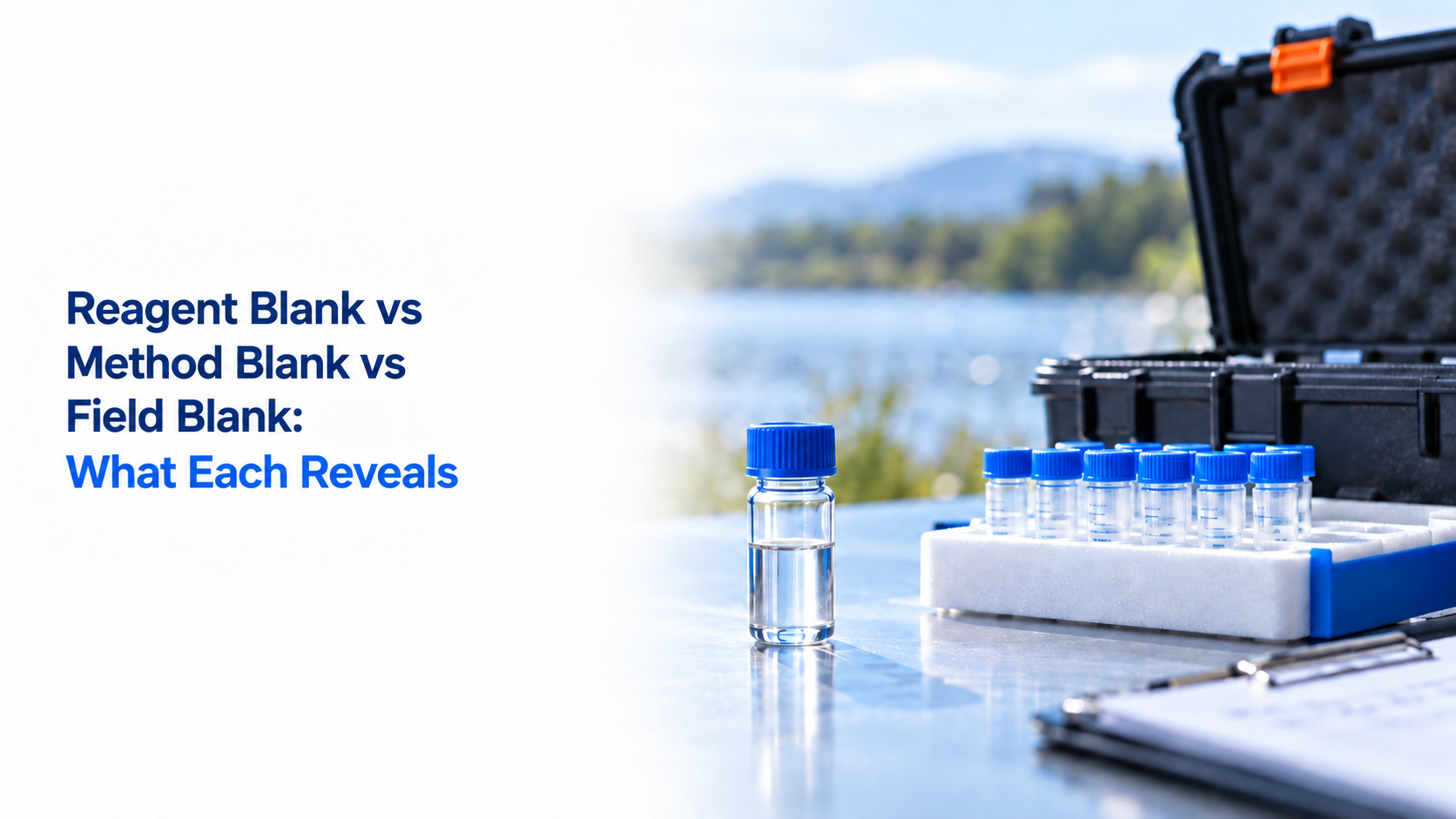
Reagent Blank vs Method Blank vs Field Blank: What Each Reveals
Blanks help reveal signals introduced by materials, preparation or sampling rather than the environmental or laboratory sample being studied. Their useful distinction is the pathway they experience.
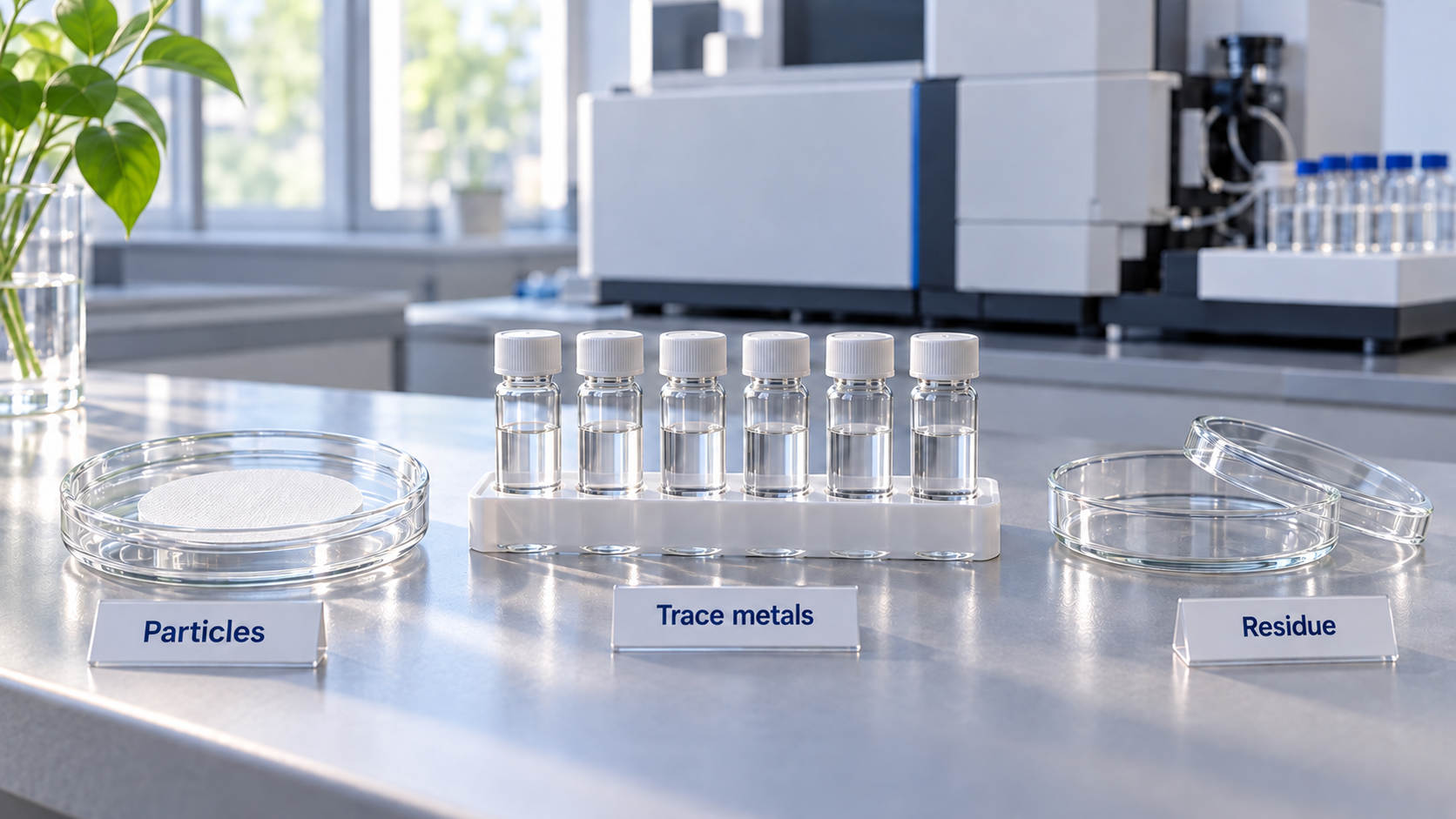
Laboratory Water Quality: Why Resistivity Alone Is Not Enough
Resistivity is a useful indicator of ionic contamination in laboratory water. It is not a complete test for organic compounds, particles, microorganisms or their by-products. Water is suitable for an application when the relevant quality evidence meets that application's requirements—not simply when a dispenser displays a high resistivity value.
Nitrosamine Testing: Distinguishing Reagent Background from Sample Signals
A signal in a nitrosamine analysis does not automatically belong to the sample simply because it appears in the sample chromatogram. QA/QC teams need evidence that the method distinguishes the target compound from interference.
Extractables vs Leachables: How Study Purpose Shapes Solvent Selection
Choose the study question before choosing the solvent. Extractables studies characterize substances that a material can release under defined extraction conditions. Leachables studies investigate substances that migrate into a product under relevant storage and use conditions.
PFAS Analysis: Planning Reagent Blanks and Contamination Controls
A useful PFAS blank plan covers the actual sampling, preparation and measurement pathway. Testing a solvent alone cannot show whether extraction equipment, consumables or field handling introduced a signal.
Why Electronic-Grade Chemical Purity Matters Beyond the Assay Value
An assay value describes the amount of a specified chemical measured by a particular test. It does not, by itself, establish the identity and concentration of every impurity, the particle burden, or suitability for a semiconductor process.
We use cookies to ensure that we give you the best experience on our website. Unless you've selected "Allow", our website will deactivate the cookies session by default.