
Sample Adsorption to Vials: When Container Choice Changes Trace Results
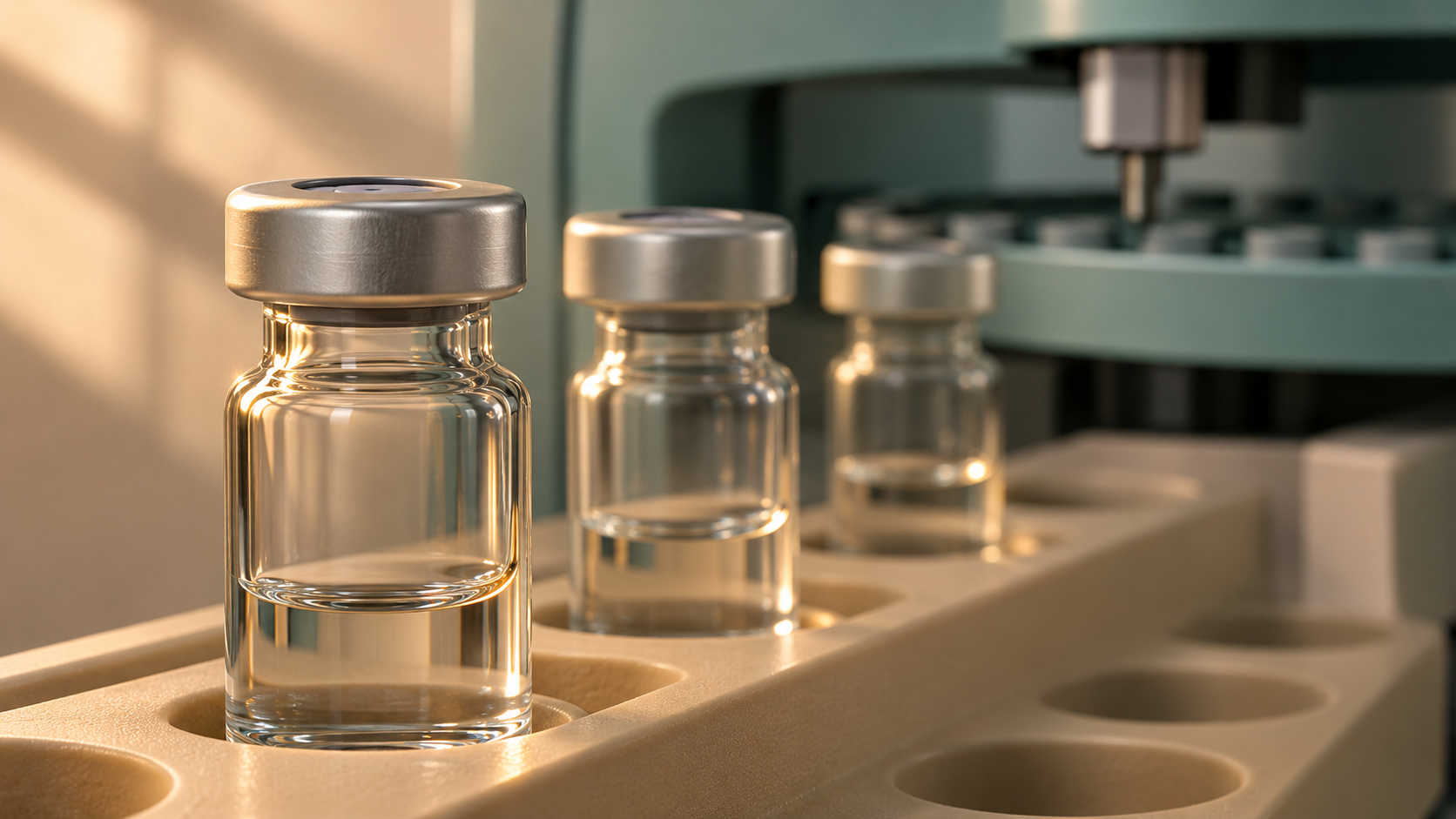
Some analytes adhere to the inside of a sample vial. This surface interaction is called adsorption. It can leave less analyte in the liquid that the instrument samples, so a low response can reflect a loss after preparation. The effect depends on the analyte, solution and surfaces it contacts. Untreated glass, treated glass and polypropylene each need to be assessed in the context of the method.
What changes at the vial wall
Vial surfaces differ in their chemistry. Depending on the compound and solution, polar or ionic interactions can contribute to binding on a glass surface, while hydrophobic interactions can matter on some polymer surfaces. A treatment can change surface behavior within a material family. The Shimadzu vial study illustrates this with chlorhexidine under specific test conditions. Its result cannot be extended to every basic compound or used to rank all vials.
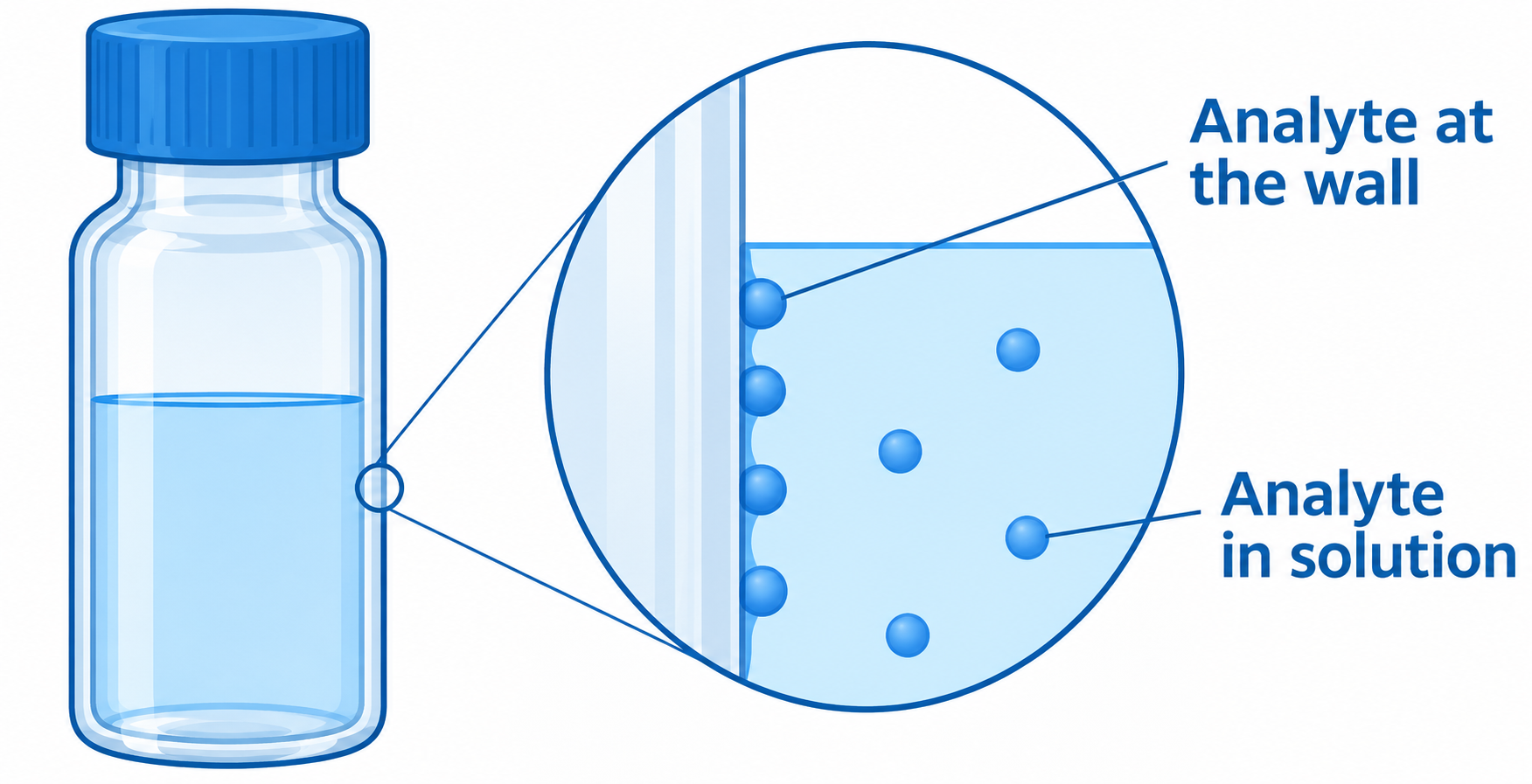
At trace levels, a small absolute loss can account for a substantial share of the starting analyte. Fill volume and vial geometry affect the amount of surface in contact with the liquid relative to the amount of sample present. Contact time, solvent composition and pH can also matter. A vial that behaves acceptably with a concentrated check solution may behave differently near the working range of a trace assay.
What a fair comparison can tell you
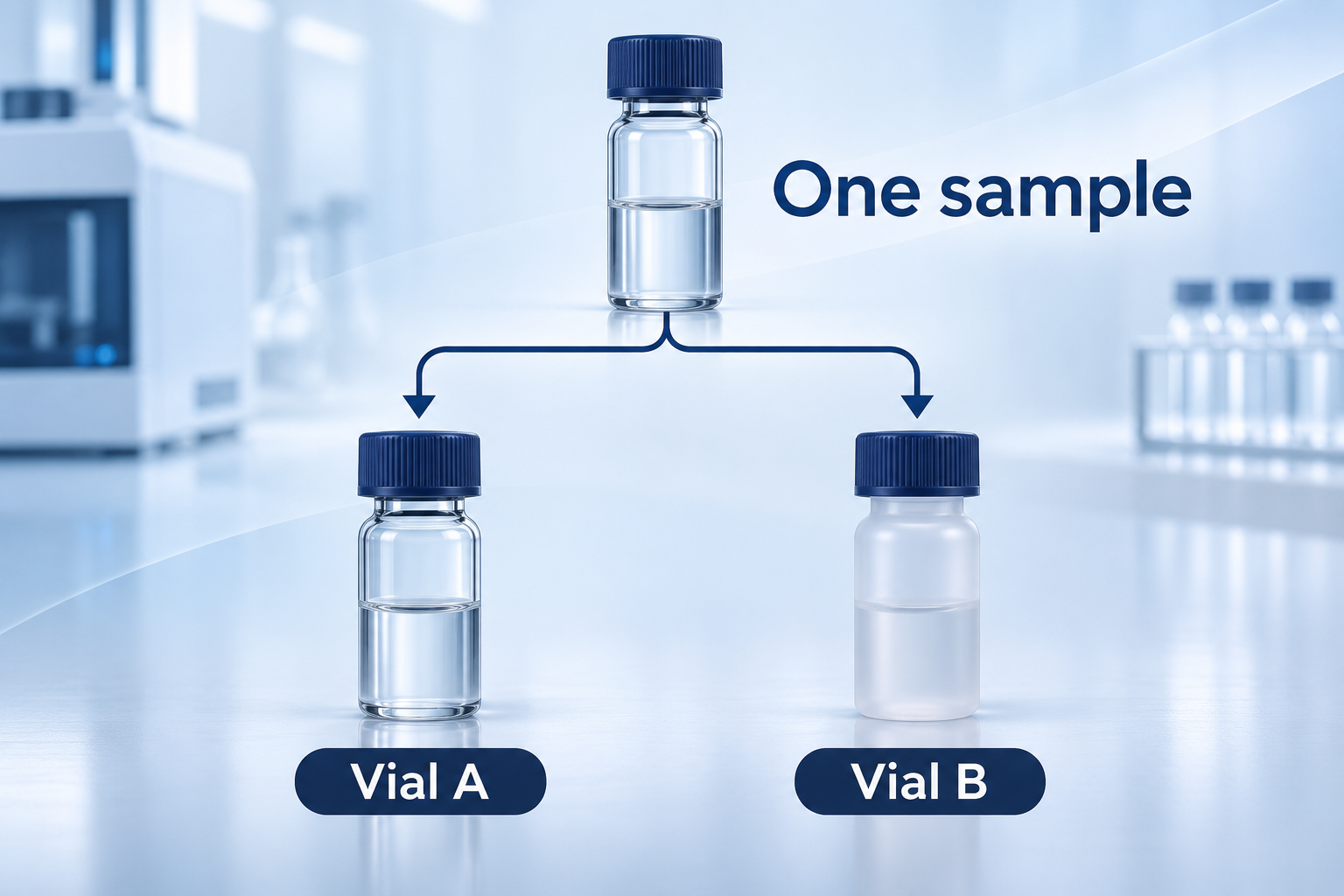
A method owner investigating a vial effect can compare matched portions of a common sample across candidate containers. Record the vial and closure combination and compare at representative concentration and hold conditions. If the investigation is about wall material, keep other differences such as fill, preparation history and acquisition conditions visible in the record. A difference between vials supports a container-associated effect under those conditions. It does not identify adsorption on its own.
| Evidence | What it helps distinguish |
|---|---|
| Comparable portions and contact conditions | Whether a response difference follows the container rather than a different preparation or hold history. |
| Baseline and time-dependent observations | Whether the difference is present at the earliest observation or changes during the relevant hold. |
| Relevant blanks and independent response checks | Whether background, degradation or detection effects need separate investigation. |
Adsorption takes analyte out of the sampled liquid. Leaching adds material from the container, which may create background or change the solution environment. Degradation changes the analyte chemically. Changes in LC-MS ionization can alter response even when the amount introduced into the ion source has not changed. The laboratory should interpret the vial comparison alongside controls that address those alternatives.
When requesting replacement vials, identify the full sample-contact configuration, including any insert and closure that contact the sample. Retain the method owner's evidence and change decision with the exact configuration reviewed.
Related Reading
- Matrix effects versus extraction recovery in LC-MS. Use this companion to distinguish changes in LC-MS response from losses elsewhere in sample preparation.
Leave a comment!