RCI Labscan HPLC Solvents Product Range
High-purity solvents designed to support reliable HPLC and LC analytical performance

Direct Answer
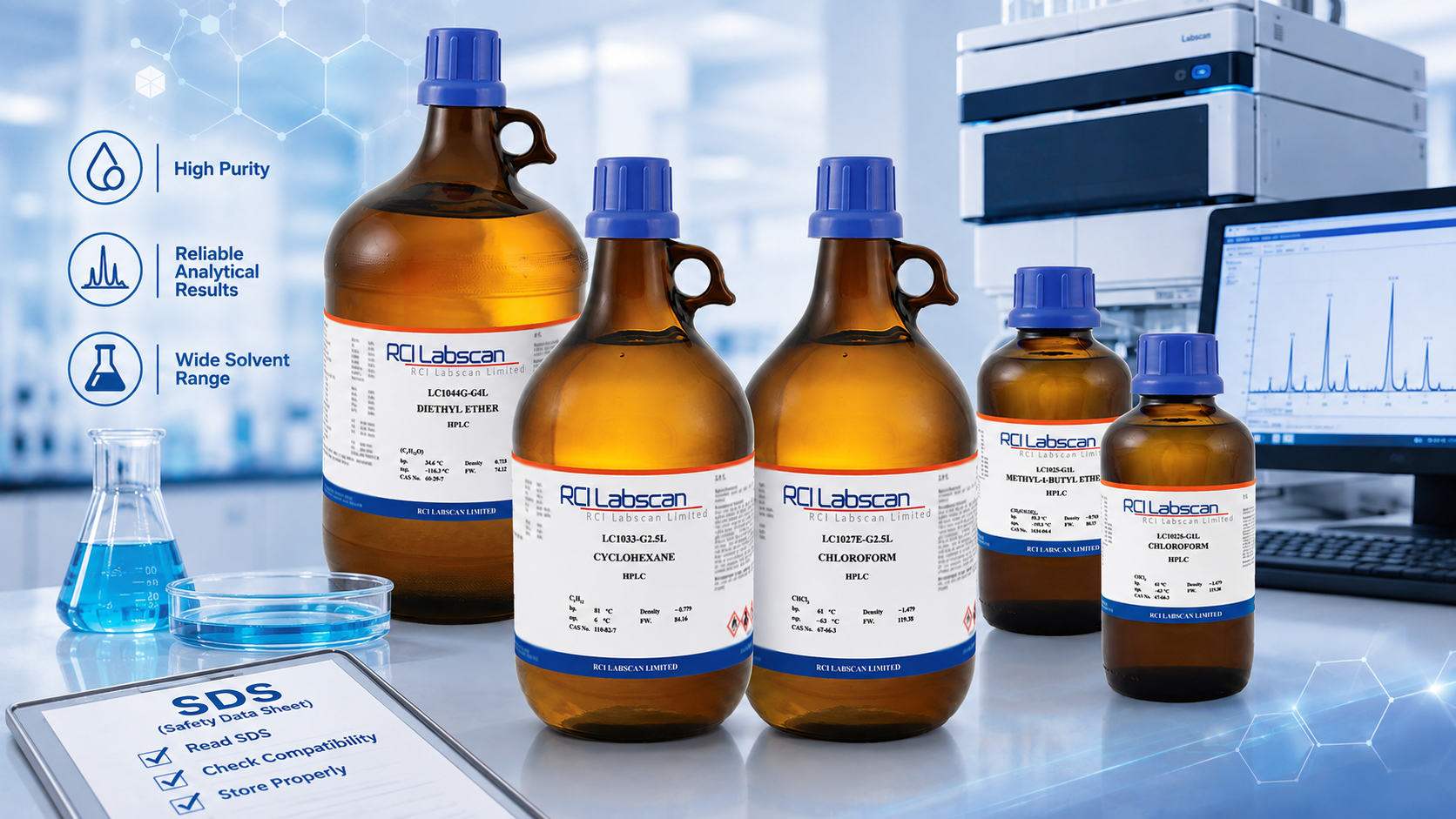
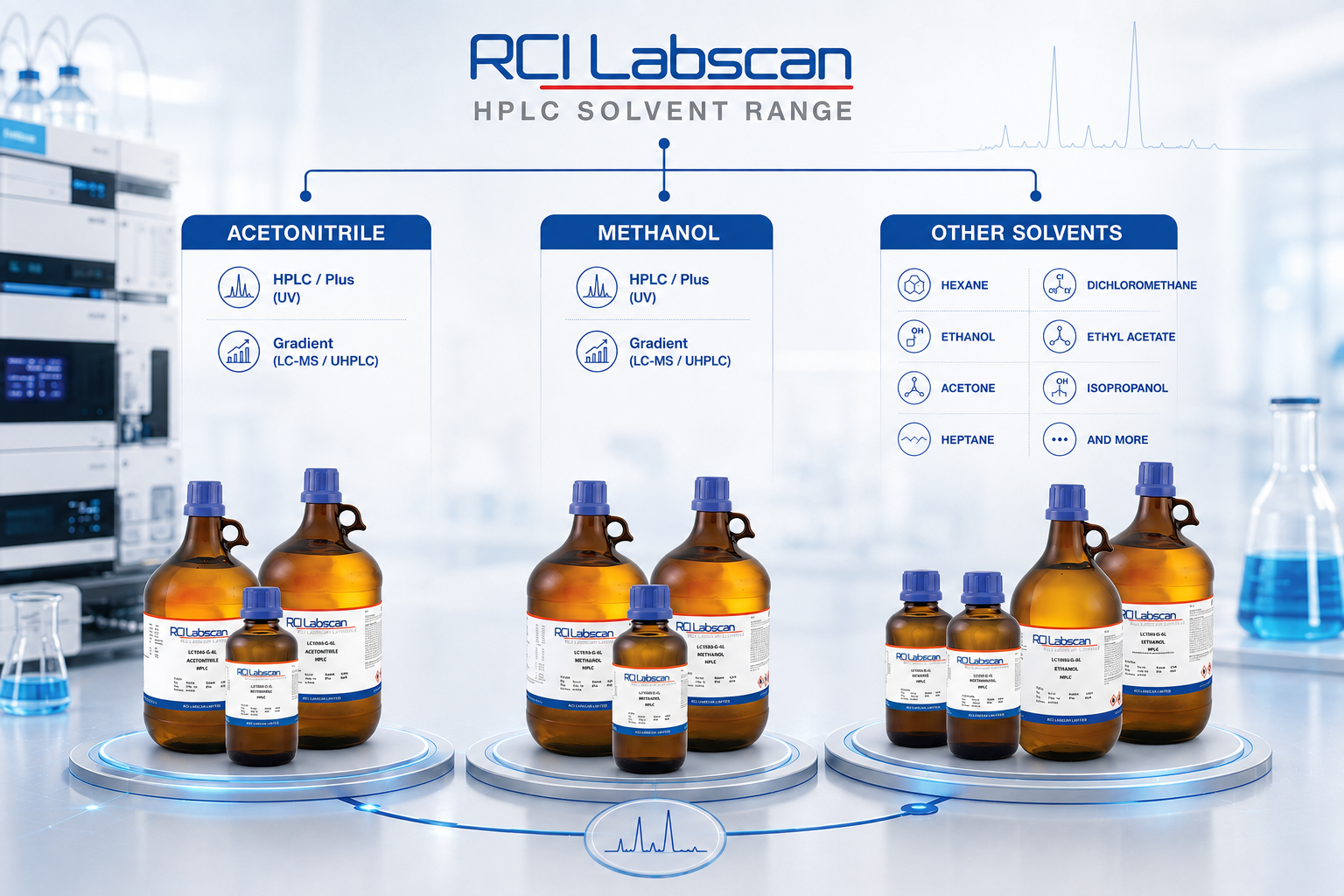
RCI Labscan offers a broad range of HPLC solvents designed for analytical and preparative separation, including use as mobile phases in HPLC and LC techniques. The product range covers commonly used solvents such as Acetonitrile, Methanol, Acetone, Ethanol, Hexane, Heptane, Dichloromethane, Ethyl Acetate, and other solvents for different chromatographic requirements.
In addition to standard HPLC Grade solvents, RCI Labscan provides specialized options such as HPLC Plus, Far UV, Super Gradient, and Ultra Gradient grades. This allows laboratories to select a solvent based on the chromatographic method, detector requirements, and sensitivity of the analysis rather than using a single grade for every application.
Why HPLC Solvent Selection Matters
Solvent quality can directly influence chromatographic performance. The mobile phase is an essential part of an HPLC method, and unwanted impurities may contribute to baseline disturbances, unexpected peaks, or reduced analytical reproducibility.
For this reason, choosing an appropriate solvent grade is not simply a matter of selecting the correct chemical name. Laboratories should also consider:
- The HPLC or LC technique being performed
- Detector type and wavelength
- Isocratic or gradient conditions
- Required sensitivity
- UV absorbance of the solvent
- Water and other trace impurities
- Method specifications and validation requirements
RCI Labscan's HPLC Grade is designed for analytical and preparative separation and for use as a mobile phase in HPLC or LC techniques, including gel permeation chromatography. The grade is also suitable for various detector types and applications using wavelengths in the 190–230 nm Far UV region.
RCI Labscan HPLC Solvent Product Range
RCI Labscan's HPLC catalogue includes a wide selection of solvents for different chromatographic applications. The range includes both commonly used mobile-phase solvents and specialty solvents.
| Solvent | Available HPLC Options | Typical Consideration |
|---|---|---|
| Acetonitrile | HPLC, HPLC Plus, Far UV, Super Gradient, Ultra Gradient | Common organic mobile phase for HPLC and gradient separations |
| Methanol | HPLC, HPLC Plus, Super Gradient | Common organic mobile phase for HPLC and GPC |
| Acetone | HPLC, HPLC Plus | Suitable for specific chromatographic methods |
| Ethanol | HPLC, Super Gradient | Alternative organic solvent for selected methods |
| Hexane | HPLC, HPLC Plus | Used in normal-phase and related chromatographic applications |
| Heptane | HPLC | Used in normal-phase chromatography and solvent systems |
| Dichloromethane | HPLC, HPLC Plus | Used for selected separation and extraction methods |
| Ethyl Acetate | HPLC | Common solvent for chromatography and sample preparation |
| Acetic Acid | HPLC | Used as a mobile-phase modifier in suitable methods |
| Dimethylformamide (DMF) | HPLC | Used in selected analytical and chromatographic applications |
| Dimethylacetamide (DMAc) | HPLC | Used in specialized chromatographic applications |
The HPLC catalogue also includes Butan-1-ol, n-Butyl Acetate, Chloroform, Cyclohexane, 1,2-Dichloroethane, Diethyl Ether, Dimethylsulphoxide, 1,4-Dioxan, and other solvents.
Acetonitrile HPLC Solvents
Acetonitrile is one of the most widely used organic solvents in reversed-phase HPLC because of its chromatographic properties and compatibility with many analytical methods.
RCI Labscan offers several Acetonitrile options, including:
- Acetonitrile, HPLC — LC1005
- Acetonitrile, Far UV for HPLC — LC1007
- Acetonitrile, Super Gradient for HPLC — SG1005
- Acetonitrile, Ultra Gradient for HPLC — SG1006
The standard Acetonitrile HPLC product is intended for analytical and preparative separation, mobile-phase applications in HPLC or LC, and use with different detector types.
For laboratories performing gradient methods, specialized Gradient grades can provide an option more specifically suited to gradient mobile-phase requirements. RCI Labscan also offers a dedicated Acetonitrile HPLC Gradient product, LC1552.
Methanol HPLC Solvents
Methanol is another widely used HPLC solvent and can be used as an organic component of mobile phases in reversed-phase chromatography and other LC applications.
RCI Labscan offers:
- Methanol, HPLC — LC1115
- Methanol, Super Gradient for HPLC — SG1115
The Methanol HPLC product is intended for analytical and preparative separation, mobile-phase applications in HPLC or LC including gel permeation chromatography, and use with different detector types. It is also specified for applications in the 190–230 nm Far UV range.
For example, an RCI Labscan Methanol HPLC specification includes a minimum assay of 99.9%, maximum water content of 0.05%, UV transmission requirements across multiple wavelengths, fluorescence limits, and final filtration through a 0.2 μm filter.
Standard HPLC Grade vs Specialized HPLC Grades
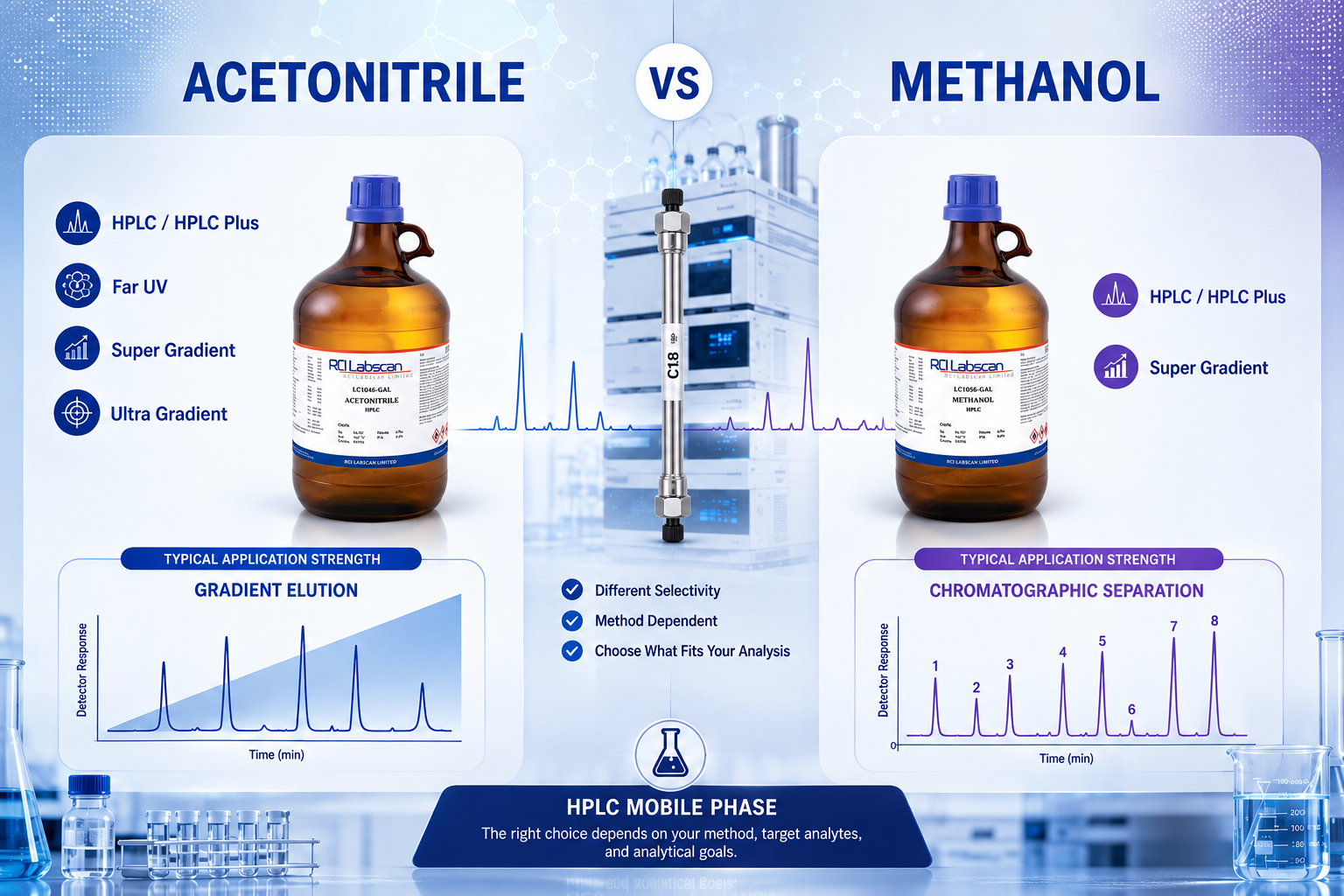
Not every HPLC method has the same requirements. RCI Labscan therefore provides several solvent options within its chromatography range.
| Grade | Main Purpose | Suitable Application |
|---|---|---|
| HPLC Grade | Routine analytical and preparative separation | HPLC and LC methods |
| HPLC Plus | Higher-performance option for selected chromatographic requirements | HPLC applications requiring additional impurity control |
| Far UV for HPLC | Designed for applications involving low UV wavelengths | UV detection in the Far UV region |
| Super Gradient | Designed for gradient mobile-phase applications | HPLC gradient methods |
| Ultra Gradient | Specialized gradient solvent option | More demanding gradient applications |
RCI Labscan describes Gradient Grade solvents as being intended for analytical and preparative separation and as mobile phases for gradient techniques, with low baseline drift and low levels of impurities.
The appropriate choice should always be based on the analytical method and the manufacturer's product specification rather than assuming that a higher grade is automatically required for every HPLC application.
What Should You Check Before Choosing an HPLC Solvent?
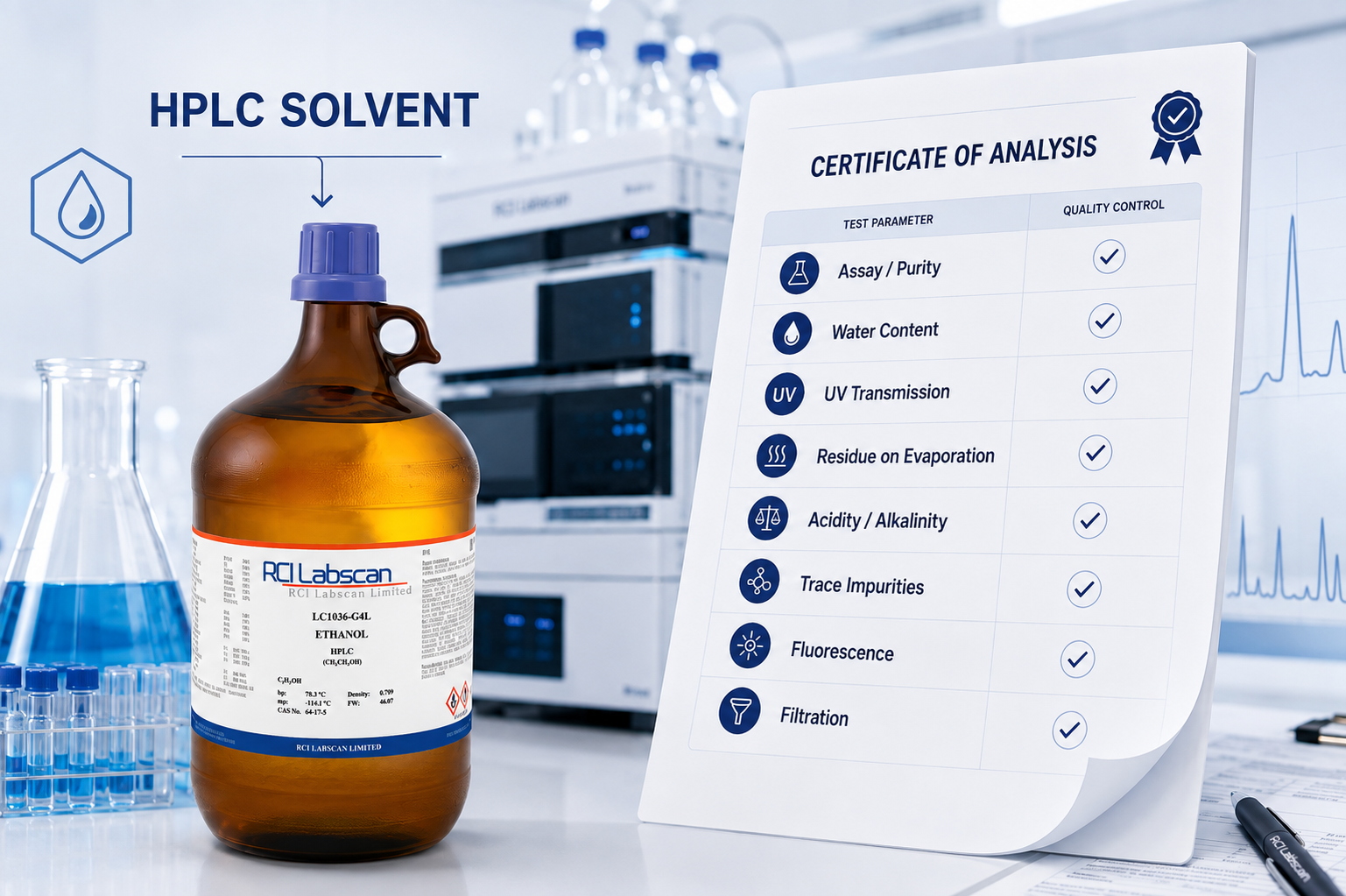
Before purchasing or substituting an HPLC solvent, laboratories should review the specifications that are relevant to their method.
Important parameters may include:
- Assay or purity
- Water content
- UV transmission
- Residue on evaporation
- Acidity and alkalinity
- Trace impurities
- Fluorescence
- Particulate control
- Filtration
- Detector wavelength requirements
For example, RCI Labscan's Methanol HPLC specification includes UV transmission values at wavelengths from 210 to 280 nm, as well as water, residue, acidity, alkalinity, fluorescence, and organic impurity specifications.
However, specification values can vary between products and revisions. Users should always refer to the current product specification and COA for the exact batch requirements.
How to Choose the Right RCI Labscan HPLC Solvent
A practical approach is to match the solvent to the method rather than choosing solely by chemical name.
For routine HPLC analysis:
HPLC Grade is generally the appropriate starting point when the validated method specifies HPLC-grade solvent.
For gradient HPLC:
Consider a Super Gradient or Ultra Gradient product when the method requires solvent characteristics specifically suited to gradient separation.
For low-wavelength UV detection:
Check UV transmission specifications carefully and consider products designed for Far UV applications.
For highly sensitive detection:
If the method uses LC-MS or another highly sensitive detector, do not automatically substitute standard HPLC Grade. RCI Labscan also provides dedicated LC-MS and ULC-MS grades with additional impurity controls.
For regulated or validated methods:
Always follow the solvent grade specified in the approved method and confirm that the selected product meets the required specification.
Practical Considerations When Using HPLC Solvents
Even a high-purity solvent needs to be handled correctly to maintain analytical performance.
- Check the product specification and COA before using a new batch.
- Use clean and compatible containers for solvent storage and transfer.
- Avoid contamination when opening or dispensing solvents.
- Follow the HPLC manufacturer's recommendations for solvent handling and filtration.
- Prepare mobile phases consistently according to the validated method.
- Monitor baseline stability and system suitability when changing solvent lots or suppliers.
- Do not assume that two solvents with the same chemical name are analytically equivalent. Grade, specification, and intended application can differ.
Why Choose RCI Labscan HPLC Solvents?
RCI Labscan has developed a broad range of high-purity grades for laboratory and analytical applications. Its chromatography range includes HPLC, Gradient, LC-MS, ULC-MS, and other specialized grades, allowing laboratories to select products according to their analytical requirements.
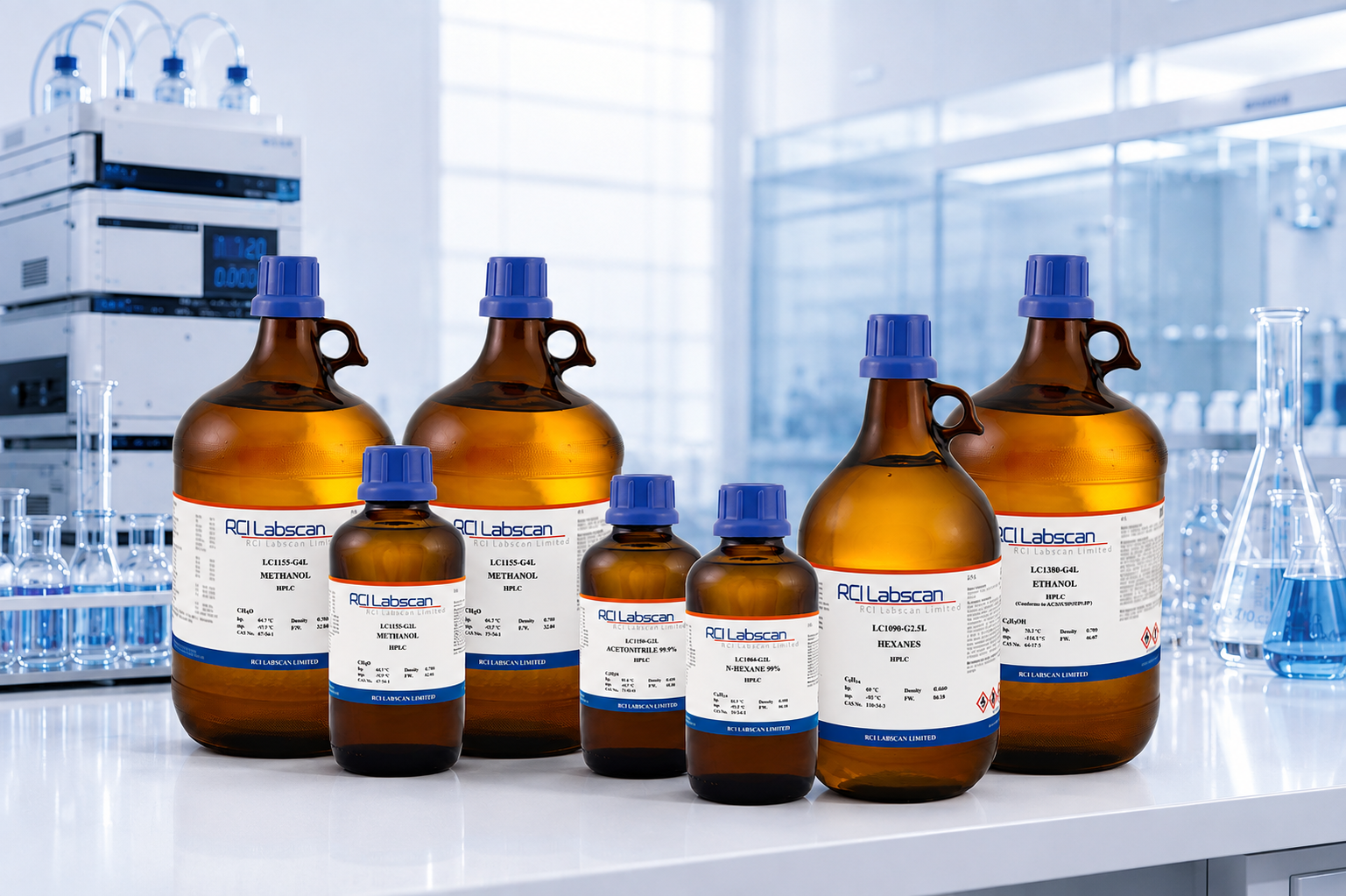
The range also provides multiple packaging options for commonly used solvents. For example, RCI Labscan's Acetonitrile HPLC and Methanol HPLC products are available in 500 mL, 1 L, 2.5 L, and 4 L glass bottle formats.
This broad product range can help laboratories standardize solvent selection across routine HPLC, gradient chromatography, and more specialized analytical workflows.
Related RCI Labscan Products
RCI Labscan provides a range of HPLC solvents, including:
- Acetonitrile, HPLC
- Acetonitrile, HPLC Plus
- Acetonitrile, Far UV for HPLC
- Acetonitrile, Super Gradient for HPLC
- Acetonitrile, Ultra Gradient for HPLC
- Methanol, HPLC
- Methanol, HPLC Plus
- Methanol, Super Gradient for HPLC
- Acetone, HPLC
- Ethanol, HPLC
- Hexane, HPLC
- Heptane, HPLC
- Dichloromethane, HPLC
- Ethyl Acetate, HPLC
The full HPLC catalogue contains additional solvents and product specifications for different analytical requirements.
FAQ
What is HPLC Grade solvent used for?
HPLC Grade solvents are designed for analytical and preparative separation and can be used as mobile phases in HPLC or LC techniques. They are suitable for various detector types and are commonly used in routine chromatographic analysis.
What HPLC solvents does RCI Labscan offer?
RCI Labscan offers a broad range including Acetonitrile, Methanol, Acetone, Ethanol, Hexane, Heptane, Dichloromethane, Ethyl Acetate, Acetic Acid, DMF, DMAc, and other chromatography solvents. Specialized grades such as HPLC Plus, Far UV, Super Gradient, and Ultra Gradient are also available for selected products.
What is the difference between HPLC Grade and Gradient Grade solvent?
HPLC Grade is intended for analytical and preparative separation and general HPLC or LC mobile-phase applications. Gradient Grade is specifically intended for gradient techniques and is characterized by low baseline drift and low levels of impurities.
Is Acetonitrile or Methanol better for HPLC?
Neither solvent is universally better. The appropriate choice depends on the validated method, analyte properties, retention, selectivity, detector requirements, and desired chromatographic performance.
Can HPLC Grade solvent be used for LC-MS?
It may be acceptable in some less-sensitive applications, but LC-MS methods generally require solvents with tighter impurity control. RCI Labscan offers dedicated LC-MS and ULC-MS grades for mass spectrometry applications. The final choice should follow the validated method and instrument requirements.
How should I confirm the quality of an HPLC solvent?
Review the manufacturer's current product specification and the COA for the specific batch. Parameters such as assay, water, UV transmission, residue, fluorescence, and other impurities may be important depending on the application.
Explore related products:
Related articles:
- HPLC Grade vs LC-MS Grade Solvents
- What Is HPLC Grade Solvent?
- Understanding Chemical Grades: Choosing the Right Solution with RCI Labscan
Product availability, specifications, packaging, and product codes may change. Always verify the latest information through the official RCI Labscan product page, current specification, and COA before use.
Leave a comment!