
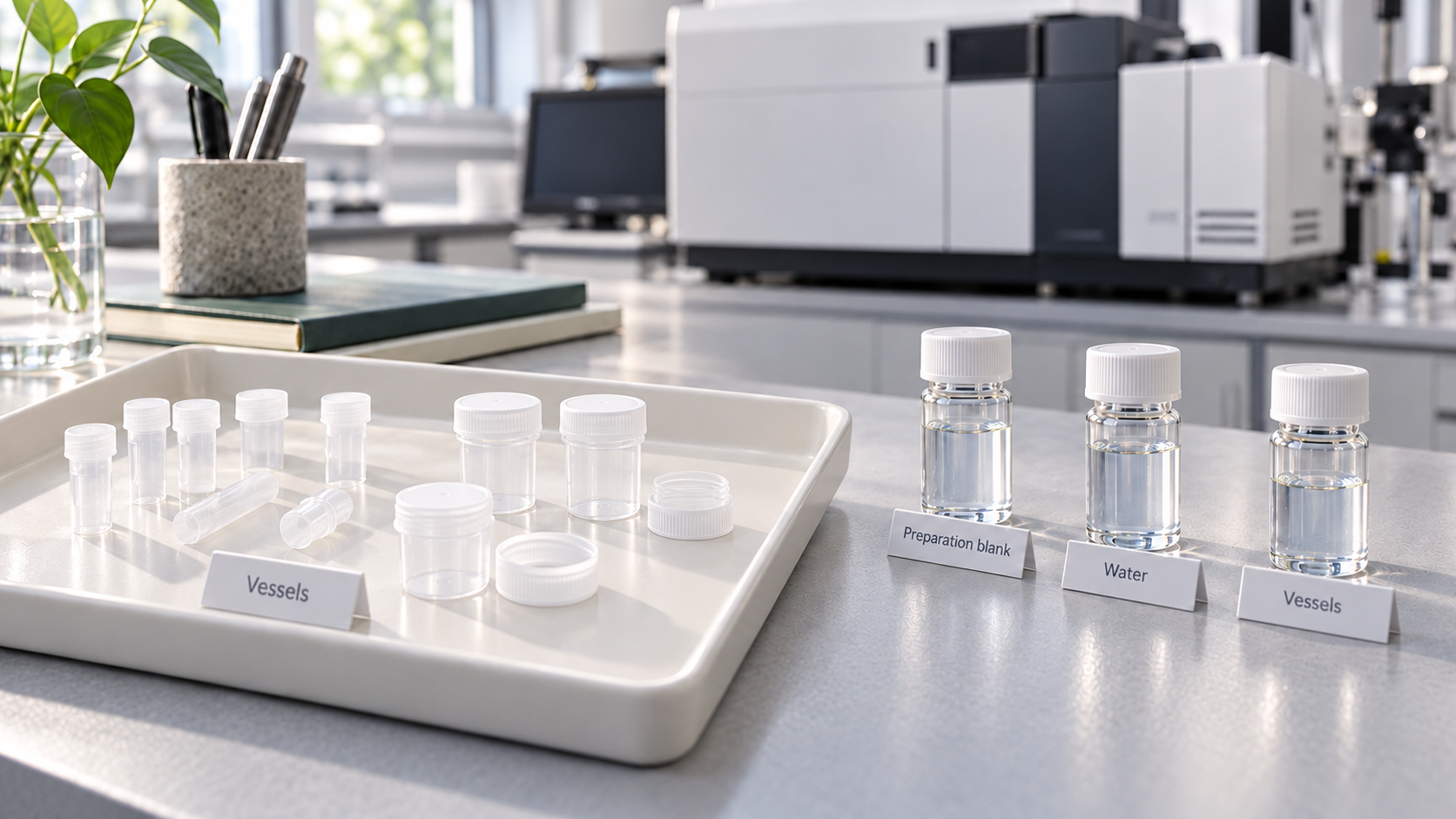
Trace-Metal Contamination: Checking Vessels, Water and Preparation Blanks
Before replacing an acid grade to solve a trace-metal blank problem, investigate the complete preparation pathway. Water, reagents, vessel surfaces, closures, transfer tools and handling can all contribute background. Use controls that distinguish these inputs under the actual method conditions.

Define the blank before interpreting it
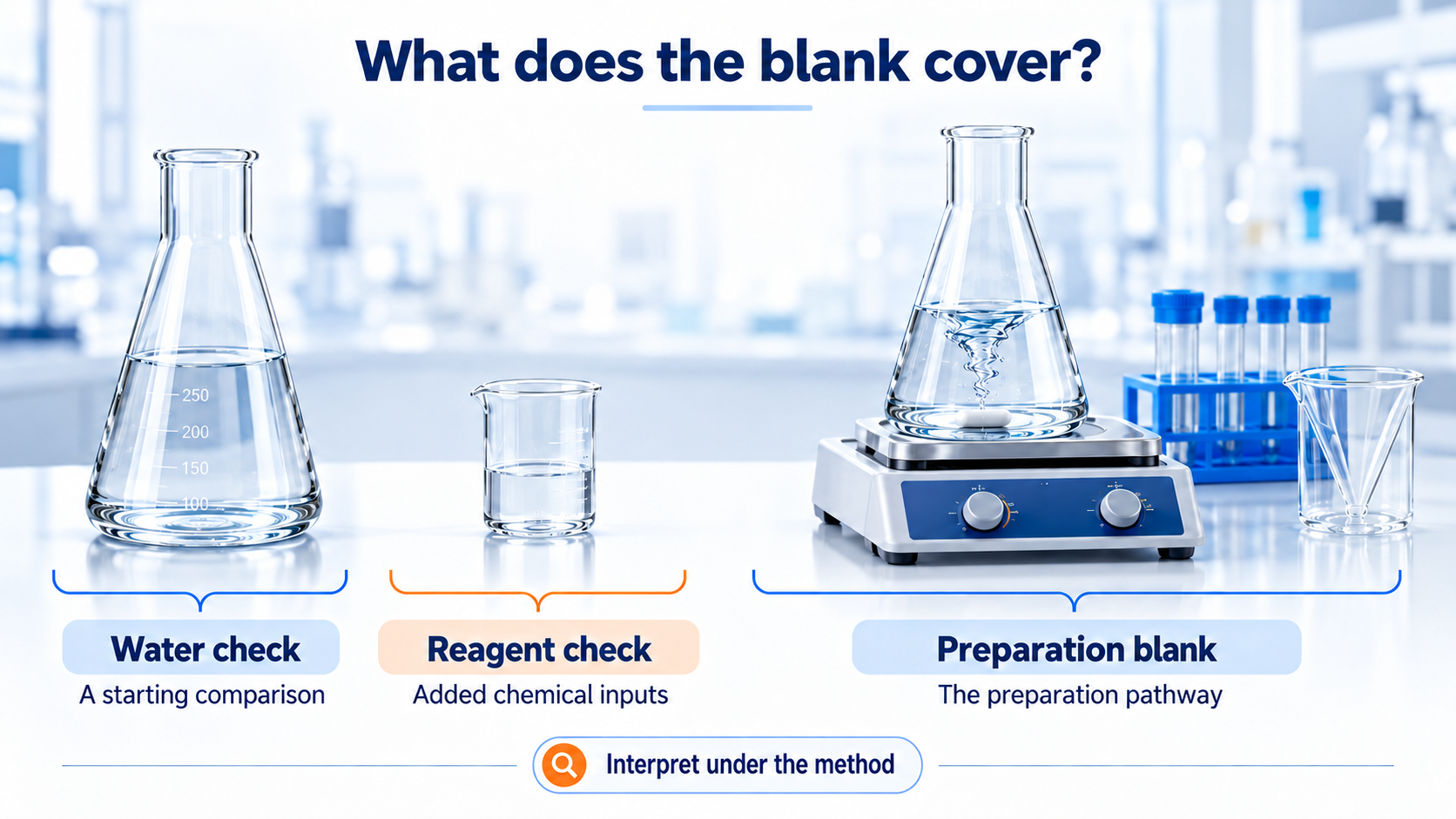
A calibration blank and a preparation blank cover different parts of the workflow. EPA Method 200.8 defines a calibration blank in the calibration acid matrix and a laboratory reagent blank that follows the sample preparation scheme, including digestion when applicable. A simple water measurement cannot stand in for that full pathway. Terminology and required controls must follow the selected method.
Map the operations that occur before the solution reaches the instrument: water withdrawal, acid addition, vessel contact, heating where applicable, transfers and dilution. Annotate which control includes each operation. This makes an unexplained elevated blank a bounded investigation rather than a reason to replace every consumable at once.
Design comparisons that isolate an input
| Comparison | Keep comparable |
|---|---|
| Water source or point of use | Collection vessel, handling and analysis conditions. |
| Reagent lot or documented grade | Acid amount, final matrix and preparation sequence. |
| Vessel or closure | Reagent matrix, contact conditions and cleaning history. |
| Preparation run or work area | Reagents, equipment and control design as far as practical. |
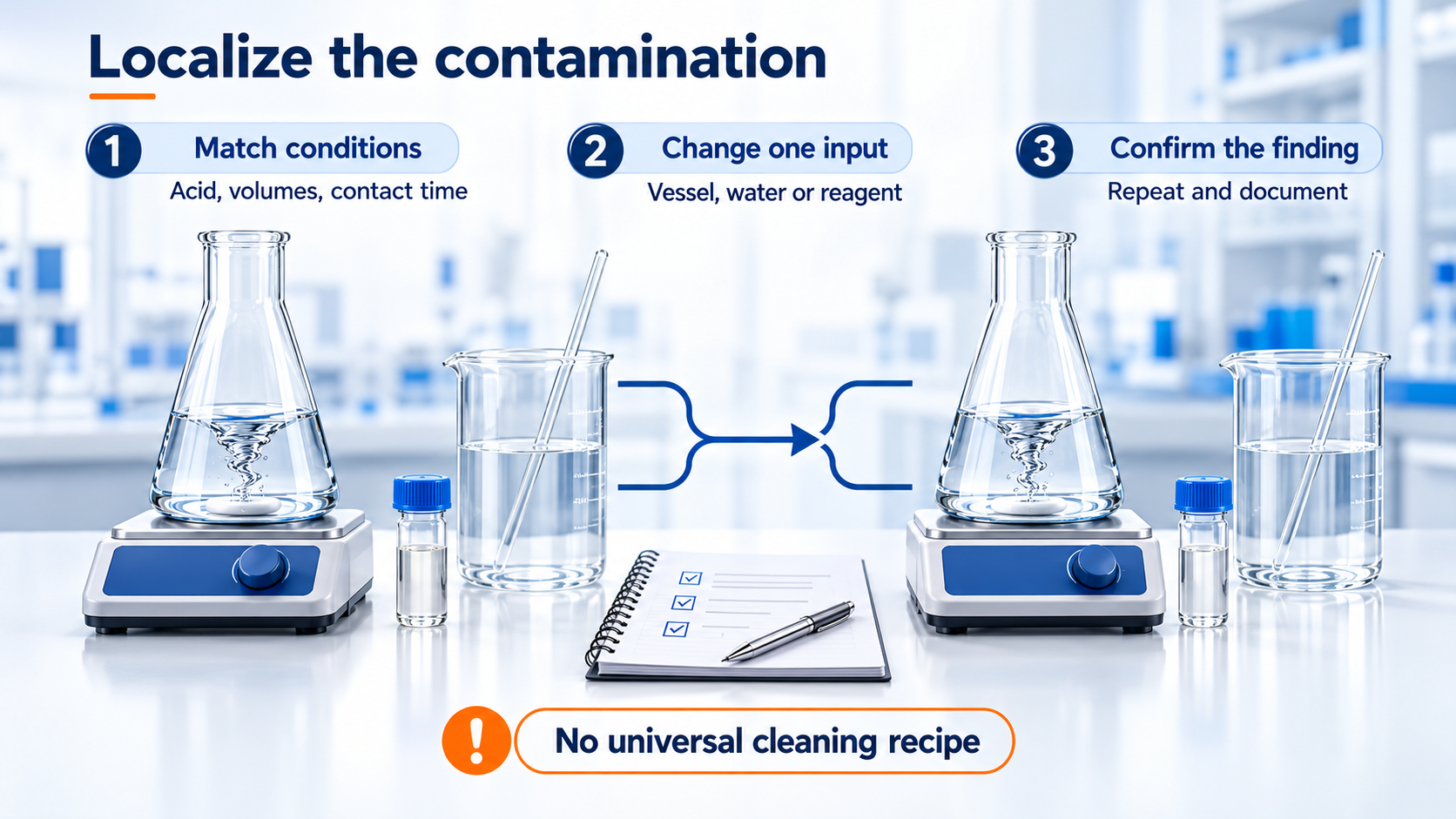
These are investigation comparisons, not substitutes for the mandatory method blanks. Keep the total dilution and acid matrix aligned so that a change in measured response is not simply a change in measurement conditions. Where a material is suspected, confirm the finding with suitable repeats and documented controls.
Material suitability is analyte- and method-specific
Glass and polymers are not interchangeable guarantees of cleanliness. Review the analytes, chemical compatibility, expected contact time and approved vessel treatment. EPA Method 200.8 discusses contamination from laboratory apparatus and cleaning; its prescribed practices belong to that method's context. Do not transfer an acid-cleaning recipe to another material or method without technical and EHS approval.
Distinguish contamination from instrument effects
Check the rinse sequence, calibration/QC behavior, carryover and relevant interference controls before assigning every signal to the preparation reagents. A low blank does not by itself demonstrate acceptable analyte recovery or absence of matrix interference. Likewise, an elevated signal requires interpretation under the method's action criteria; do not assume arbitrary blank subtraction is an authorized correction.
Retain lot identities, vessel/closure identifiers where useful, the preparation record and the sequence data. A supplier comparison should be linked to the same controlled question. The discussion of Nitric Acid Grades for Trace-Metal Analysis: AR, Superpure, and Ultrapure provides grade-selection context, while this investigation asks whether the reagent is the source at all.
Practical conclusion
Use matched controls to localize background before selecting a corrective action. Ask the method owner to approve the comparison design, cleaning controls and disposition of affected results. A higher purity label cannot compensate for an uncontrolled preparation pathway.
Leave a comment!