Acetonitrile vs Methanol: Which Solvent Should You Choose for HPLC?
A practical comparison guide for HPLC method development and solvent selection

Direct Answer
Acetonitrile and Methanol are both widely used solvents in HPLC mobile phases, but they behave differently. Acetonitrile generally offers lower viscosity, stronger elution power, and a lower UV cutoff, which makes it a common choice for many reversed-phase methods and UV detection. Methanol is often more cost-effective and may be preferred for certain selectivity requirements or when a different elution profile is needed. The best choice depends on the analytical method, detector type, and separation goals, so users should always follow their validated method and check the relevant product specification.
Why Solvent Choice Matters in HPLC
The organic solvent used in an HPLC mobile phase directly affects separation efficiency, peak shape, retention time, and detector performance. Acetonitrile and Methanol are the two most commonly used organic modifiers in reversed-phase HPLC, and choosing between them is one of the most frequent decisions lab users face when developing or running a method.
Acetonitrile vs Methanol: Key Differences
| Factor | Acetonitrile | Methanol |
|---|---|---|
| Viscosity | Lower viscosity, generally allows lower system backpressure | Higher viscosity compared to Acetonitrile |
| Elution Strength | Generally stronger eluting power in reversed-phase HPLC | Generally weaker eluting power than Acetonitrile |
| UV Cutoff | Lower UV cutoff, often suitable for detection at shorter wavelengths | Higher UV cutoff compared to Acetonitrile |
| Selectivity | May provide different selectivity for certain compounds | May provide different selectivity, useful for some separations where Acetonitrile is less effective |
| Cost | Price can vary by market and grade; users should check current supplier pricing | Price can vary by market and grade; users should check current supplier pricing |
| Miscibility | Miscible with water and common HPLC buffers | Miscible with water and common HPLC buffers |
Note: Exact performance differences depend on the specific method, column chemistry, and analyte. Users should confirm suitability through method validation.
When Acetonitrile May Be Preferred
Acetonitrile is commonly selected when:
- The method requires lower viscosity for reduced system backpressure
- Detection is performed at lower UV wavelengths, where a lower UV cutoff is beneficial
- The method calls for strong elution strength in reversed-phase separations
- Gradient elution methods require consistent baseline performance
When Methanol May Be Preferred
Methanol is commonly considered when:
- A different selectivity profile is needed for specific analytes
- Cost efficiency is a key consideration for routine, high-volume testing
- The method has historically been validated using Methanol as the mobile phase modifier
- Certain compound classes show improved separation with Methanol compared to Acetonitrile
UV Cutoff Considerations
UV cutoff is an important factor for methods using UV or PDA detection. Acetonitrile generally has a lower UV cutoff than Methanol, which can reduce background interference at shorter wavelengths. Users working with sensitive UV detection should check the product specification of both solvents to confirm suitability for their specific wavelength requirements.

Does Grade Matter for Both Solvents?
Yes. Whether choosing Acetonitrile or Methanol, users should select an HPLC grade or LC-MS grade solvent depending on the analytical method. General-purpose solvents may contain impurities or quality variations that can affect baseline stability, peak shape, or retention time. For methods involving mass spectrometry, LC-MS grade solvent should be considered due to stricter impurity control requirements.
Practical Considerations for Choosing Between Acetonitrile and Methanol
- Check your validated method. If a method has already been validated with a specific solvent, changing solvents may require re-validation.
- Review detector requirements. UV cutoff and background absorbance can influence detection sensitivity.
- Consider elution strength needs. Acetonitrile and Methanol have different elution strengths, which can affect run time and resolution.
- Evaluate selectivity for your analytes. Some compounds separate better with one solvent over the other.
- Confirm documentation. Product specification, SDS, and COA should be reviewed before purchase, especially for regulated laboratories.
Users should always verify actual product values through the approved product specification, SDS, or COA rather than relying on general assumptions.
Related RCI Labscan Products
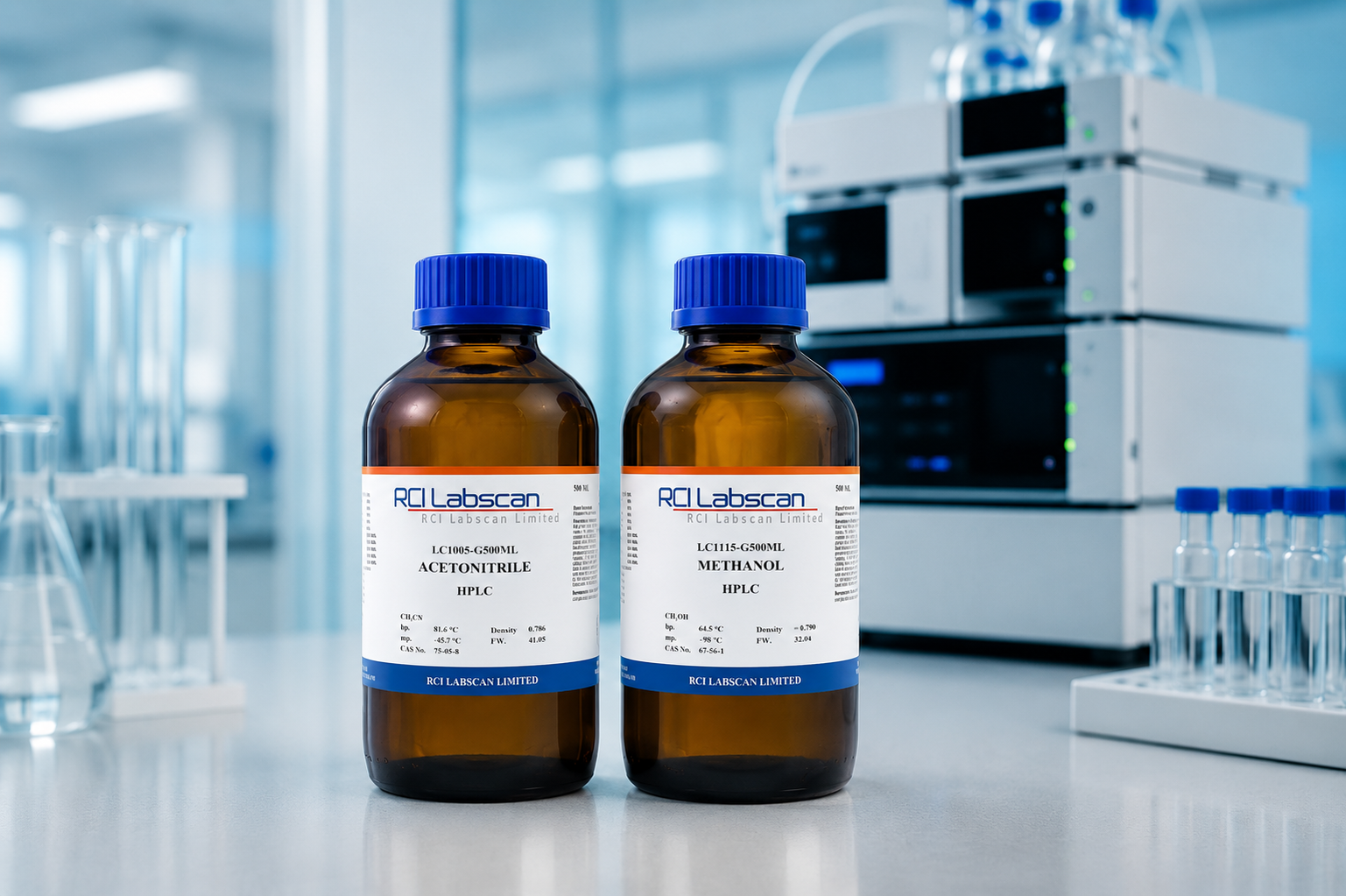
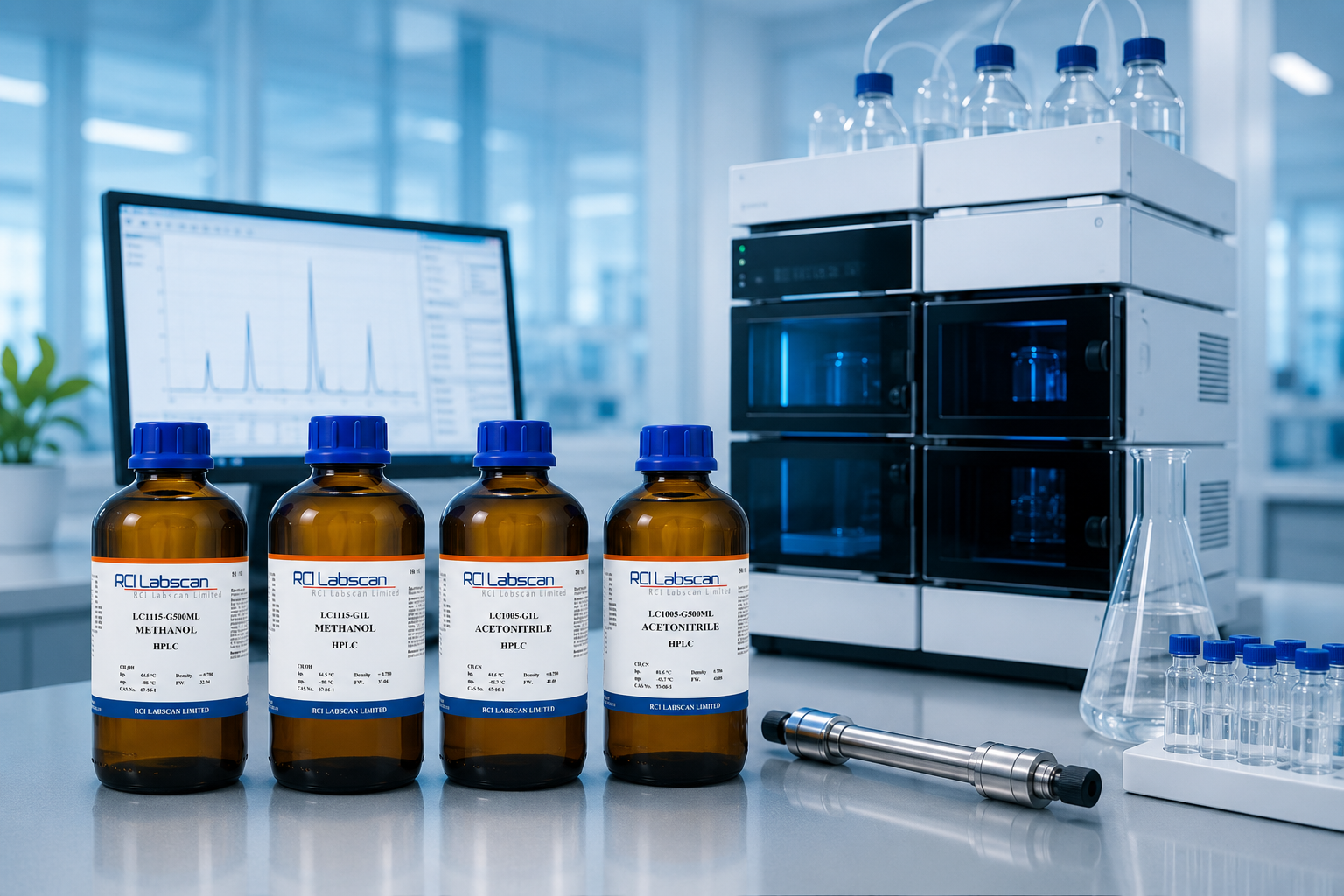
RCI Labscan offers high-purity Acetonitrile HPLC and Methanol HPLC solvents suitable for chromatographic applications. For product availability, packaging options, or documentation requests, customers may contact RCI Labscan or an authorized local distributor.
FAQ
Is Acetonitrile better than Methanol for HPLC?
Neither solvent is universally "better." Acetonitrile generally offers lower viscosity and a lower UV cutoff, while Methanol may offer different selectivity or cost advantages. The right choice depends on the analytical method and detector requirements.
Can I substitute Methanol for Acetonitrile in an existing HPLC method?
Substituting solvents can change elution strength, selectivity, and retention time. Any change should be validated according to the laboratory's method validation procedures before use.
Which solvent has a lower UV cutoff, Acetonitrile or Methanol?
Acetonitrile generally has a lower UV cutoff than Methanol, which can be beneficial for methods using detection at shorter UV wavelengths. Exact values should be confirmed in the product specification.
Do I need HPLC grade for both Acetonitrile and Methanol?
Yes. For reliable HPLC results, both solvents should be HPLC grade or higher, depending on method sensitivity. LC-MS grade may be required for mass spectrometry applications.
Which solvent is more cost-effective, Acetonitrile or Methanol?
Pricing can vary by supplier, region, and grade. Users should check current pricing and availability with their supplier, as this article does not provide specific pricing information.
Explore related products:
Related article:
Leave a comment!