
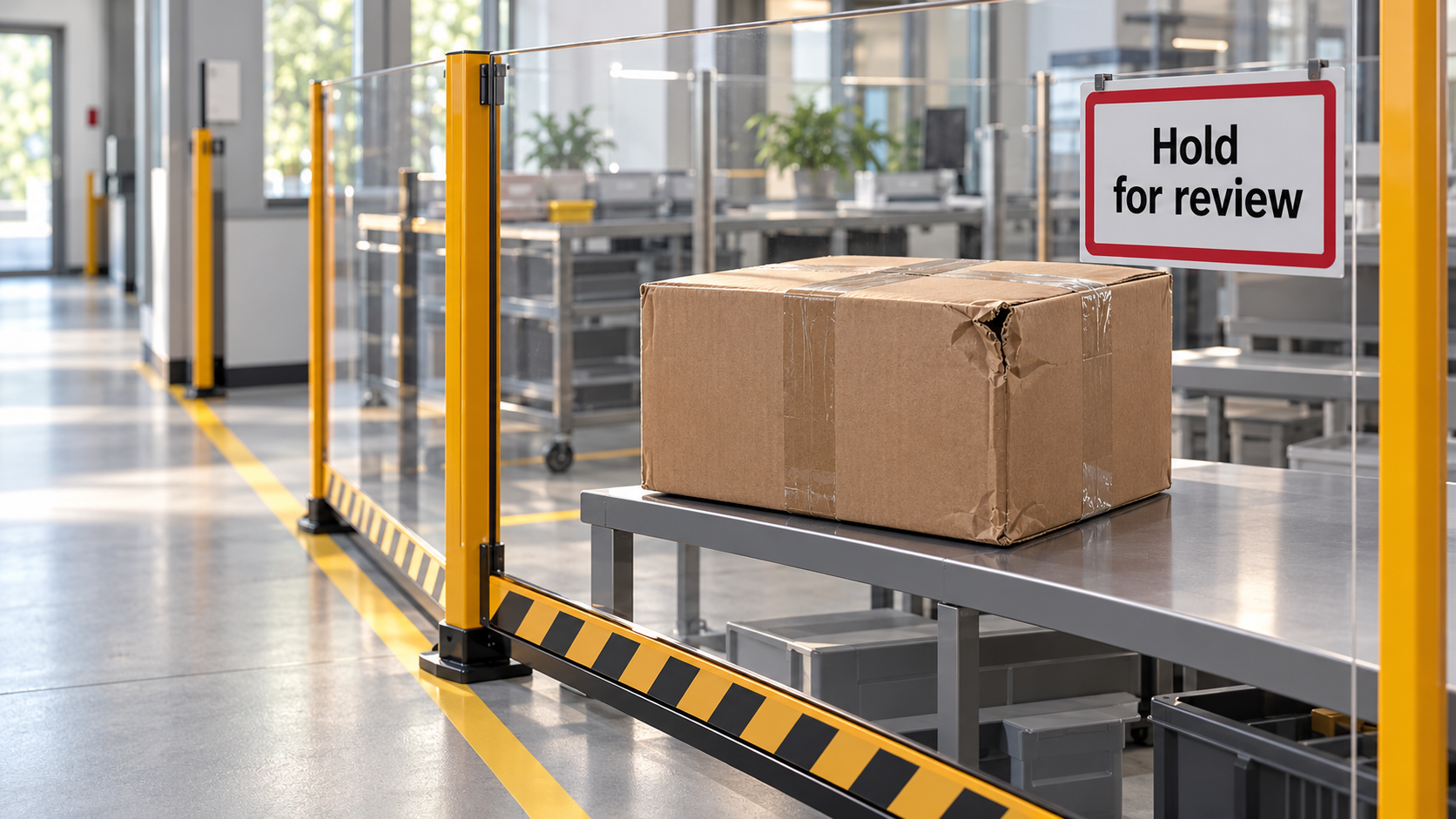
Receiving Damaged Chemical Containers: A Quarantine and Escalation Checklist
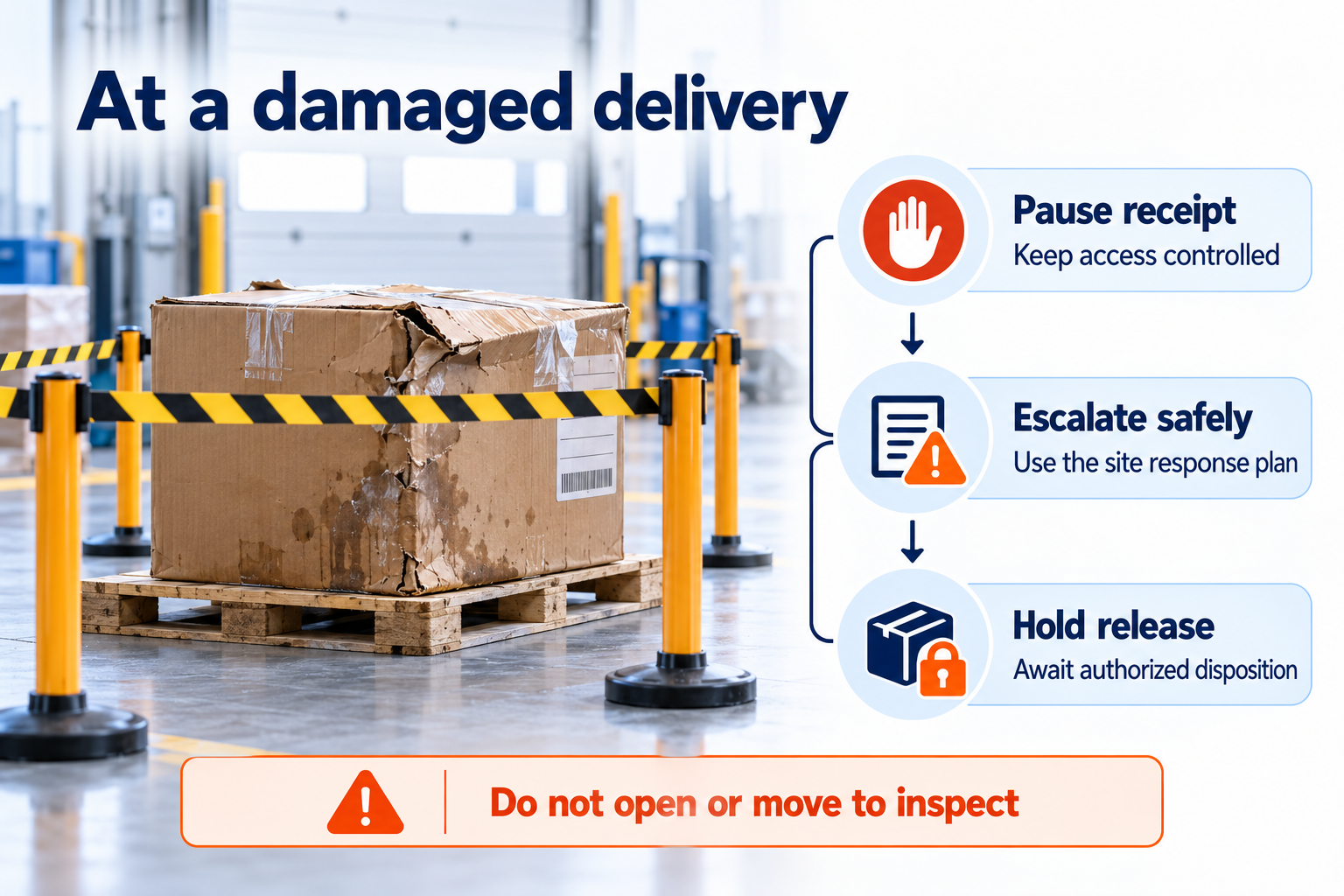
Do not release a visibly damaged chemical delivery into routine stock until an authorized person has assessed it. Instead, pause receiving, prevent unnecessary access from a safe position and contact the site's designated safety and receiving leads. If you suspect leakage, exposure or another emergency condition, follow the site emergency response rather than treating the situation as a procurement inspection.

Quarantine means a controlled status, not a relocation instruction
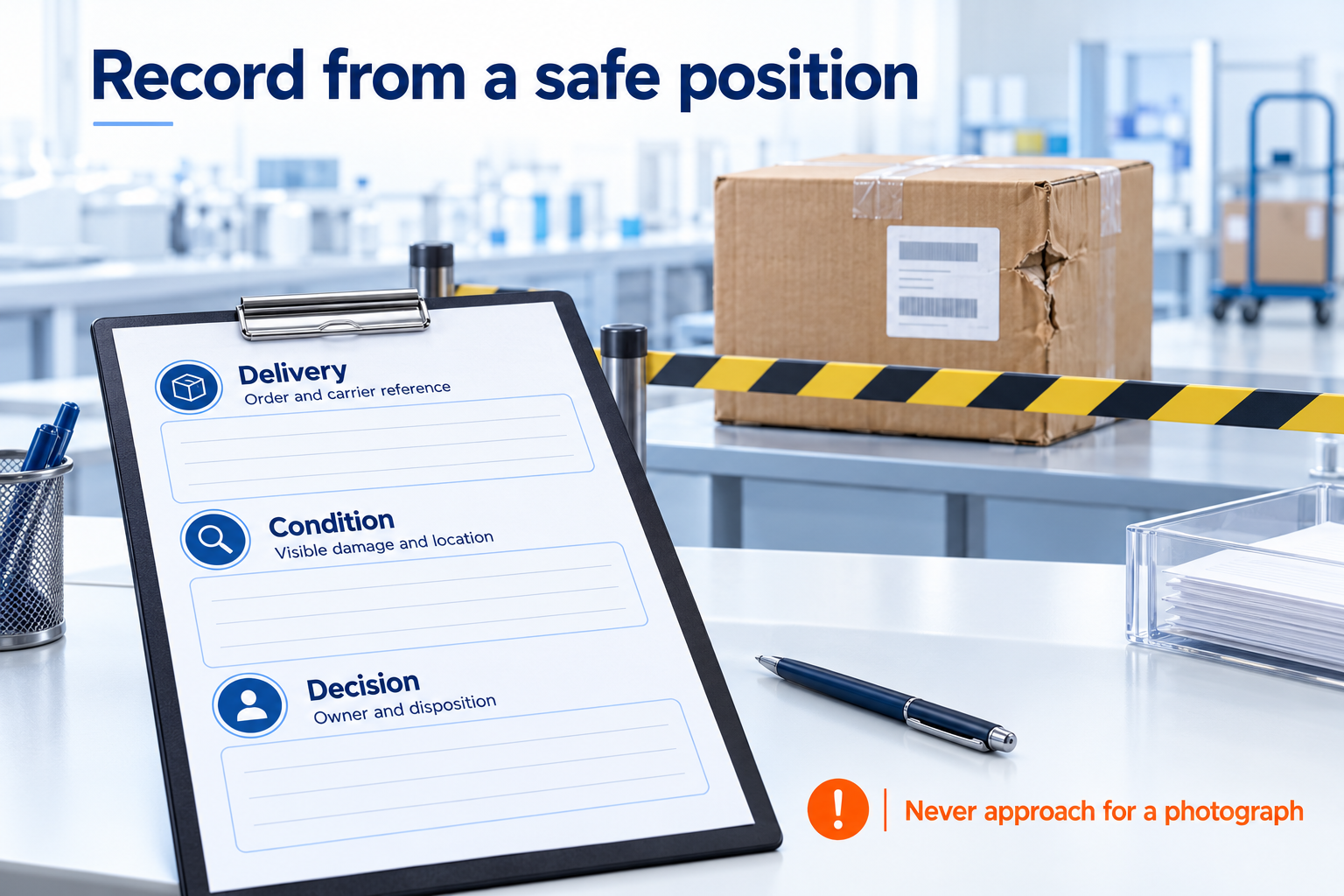
A receiving hold prevents use and release. However, it does not authorize someone to carry a damaged package to a quarantine shelf. Do not open, smell, tighten, decant, clean or move a suspect container to discover what is wrong. Instead, let trained, authorized responders determine whether movement or containment is safe. In addition, avoid entering the affected area simply to attach a label or obtain a photograph.
Use the site's emergency communication route if you suspect exposure, a release, heat, pressure or another immediate hazard. Importantly, there is no safe universal distance or cleanup procedure for all chemical deliveries. Therefore, local responders must assess the actual substance, quantity, packaging and conditions.
Use the information already available
Order records, the delivery reference and the current SDS can support escalation without approaching the package. For example, SDS sections on hazard identification, accidental releases, handling and storage, and stability/reactivity provide relevant information. However, they do not replace the site response plan or prove that a damaged shipment is safe to handle.
| Information | Useful detail |
|---|---|
| Delivery identity | Order, carrier, delivery reference and expected material. |
| Observed condition | Visible external damage and location, without speculative diagnosis. |
| Notifications | Contacts notified and the person or team controlling the response. |
| Disposition | Authorized decision and link to the incident or quality record. |
Separate commercial resolution from safety disposition
The supplier and carrier may need delivery details to investigate replacement, credit or transport damage. However, those discussions do not authorize local cleanup, repacking, return shipment or use. Therefore, keep the material on hold while the responsible site personnel decide the safe disposition and assess any effect on quality.
Even when no release is apparent, packaging damage can raise questions about closure integrity, identification or storage history. For that reason, do not conclude that the contents are acceptable solely because the outer carton looks repairable. Instead, have the designated quality and safety owners determine what evidence they require before making any acceptance decision.
Prepare the escalation route before the next delivery
- Make the safety, receiving and quality contacts accessible to the receiving team.
- Define how the receiving team communicates holds to inventory users.
- Agree who may authorize movement, return or disposal.
- Ensure staff know the emergency route and do not improvise chemical-response tasks.
In addition, use What Procurement Should Check Before Ordering Laboratory Chemicals to address documentation and receiving requirements before ordering. The SDS guide in Related Reading explains the document's role. However, neither article provides chemical-specific emergency instructions.
Practical conclusion
First, keep people safe and preserve the receiving hold. Next, escalate the issue using the information already available. Then obtain authorized safety and quality disposition before routine stock release. Finally, any return transport must follow the applicable rules, and authorized personnel must arrange it.
Leave a comment!