
Chromatography System Suitability vs Calibration: Which Question Does Each Answer?
System suitability asks whether the chromatographic system demonstrates the performance the procedure expects for the analysis. Calibration asks how measured response relates to a known amount or concentration so the method can estimate the amount in a sample. One gives evidence about performance under the run conditions; the other gives the relationship needed for quantitation.

System suitability looks at how the system is performing
Imagine a method that needs to separate two neighboring peaks. Its suitability check might ask whether the specified pair is sufficiently resolved under the current conditions. A different method might check how consistently the system measures peak areas across repeat injections. Both checks look at specific aspects of performance. They do not, by themselves, tell you the concentration of an unknown sample.
The system here is more than the instrument alone. The separation and response depend on the setup and conditions used by the procedure, including the column and mobile phase where applicable. Agilent's explanation of system suitability gives resolution and peak shape as examples of performance attributes. The applicable method determines which checks matter, when they are made and how they are interpreted.
Calibration relates response to amount
Imagine measuring standards that contain known concentrations of the same analyte. In a simple external calibration example, their peak areas provide responses at those concentrations. The method uses the relationship to interpret the area from a sample peak. Some methods use a curve; others use a response factor or another model. NIST's Principles of Quantitation: Chromatography describes several approaches and why the choice depends on the measurement system.
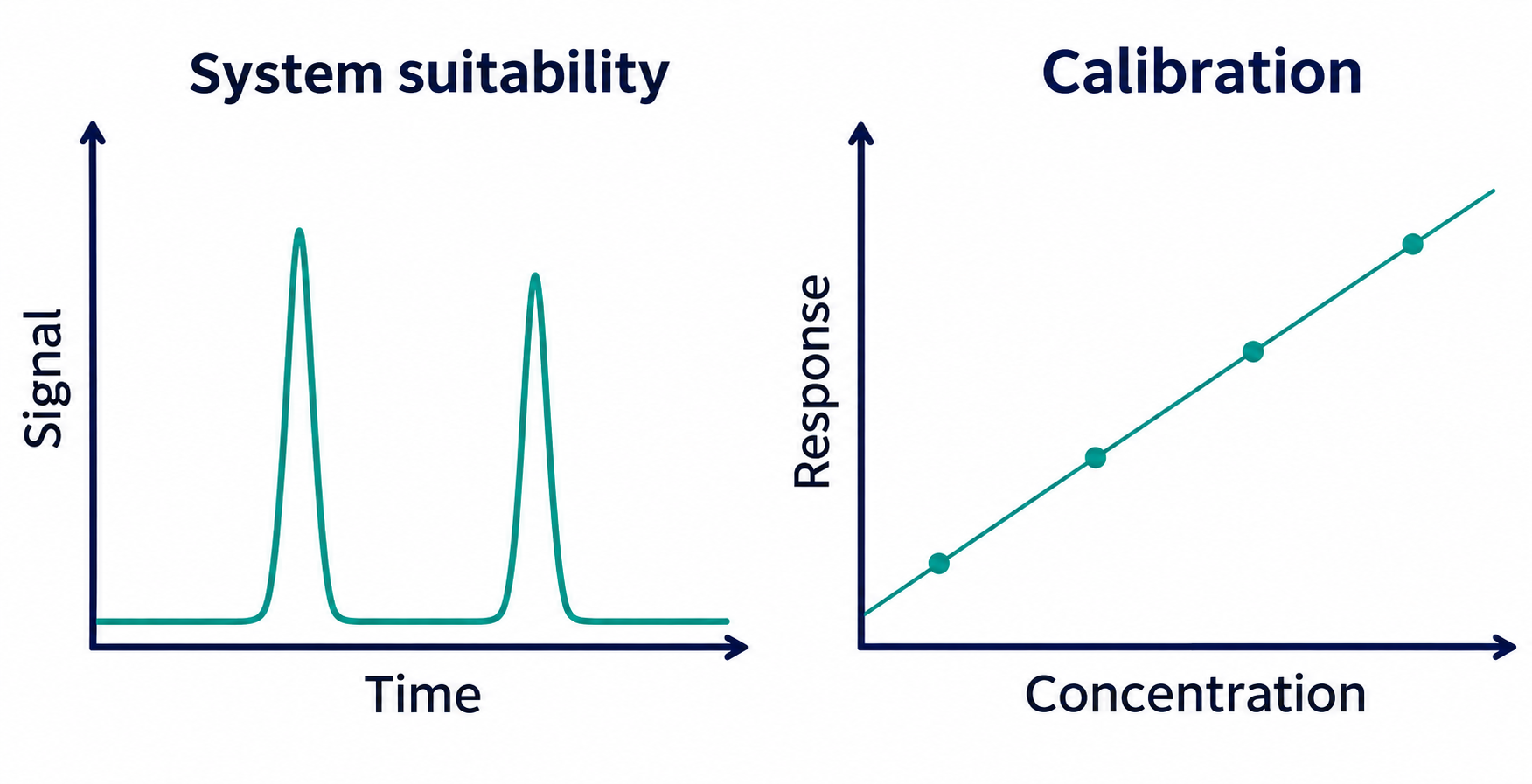
Notice the axes. A chromatogram shows detector signal against time. A calibration plot can show a response calculated from a peak, such as its area, against concentration. The figure illustrates those axes with a hypothetical separation and a simple linear model. It shows neither measured results nor a required calibration design.
A result for one question leaves the other question open
Suppose the two peaks in a suitability mixture are well separated. That observation tells you something about separation under the tested conditions. It cannot show whether the concentrations assigned to the calibration standards are correct. Now suppose a set of standards gives an orderly response curve. The shape of that curve does not establish that the analyte and a neighboring peak are adequately resolved under the method's suitability check.
A procedure may use the same solution or injection record for more than one purpose. For example, a known solution can be useful both for assessing the repeatability of its response and for supplying a calibration response. The roles remain distinct: the repeatability check compares responses to each other, while the calibration uses the link between response and a known quantity.
Ask what each piece of evidence demonstrates
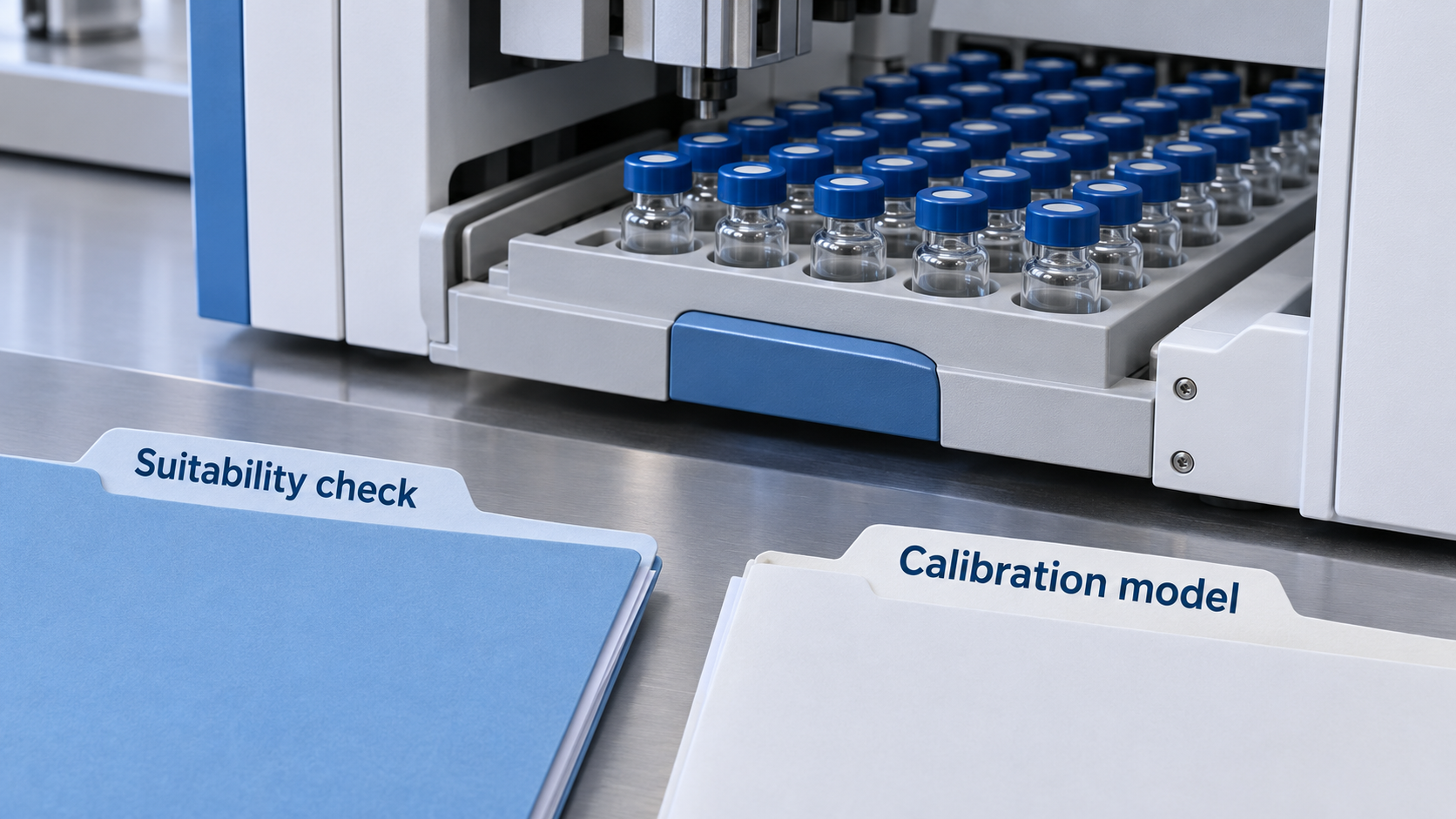
When reading an example sequence, identify the record that shows system performance and the record that connects response to amount. Then look for the procedure that explains the purpose of each. The order, frequency and acceptance criteria are specific to the method. Instrument service calibration and analytical calibration also serve different purposes: the first concerns a defined instrument measurement function, while the second connects an analyte's response to its amount in the analysis.
Related Reading
- Calibration curve checks beyond the correlation coefficient explains how to examine the calibration model once you know what it is supposed to do.
Leave a comment!