
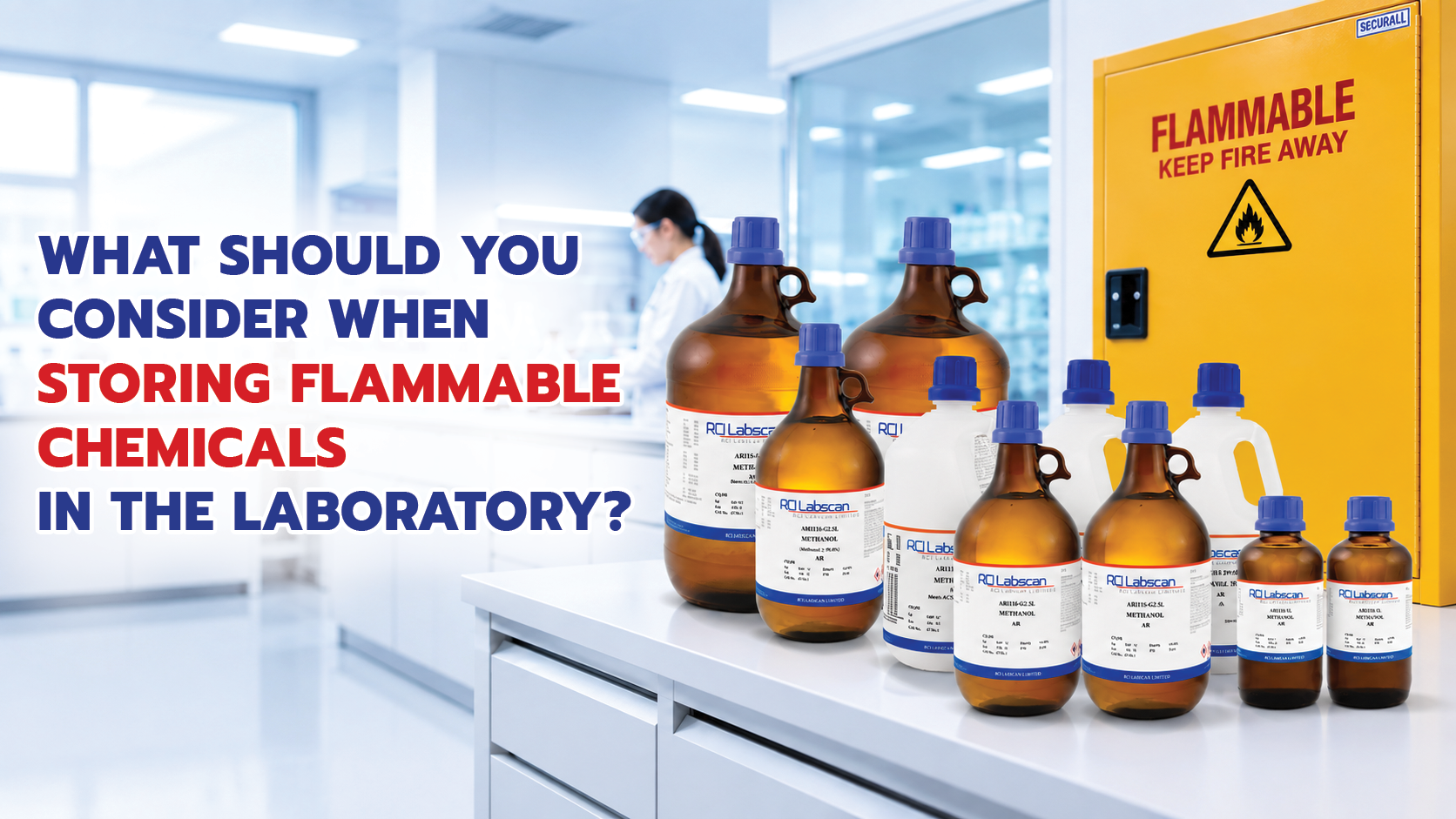
What Should You Consider When Storing Flammable Chemicals in the Laboratory?
Key storage practices to reduce the risk of fire, chemical spills, and exposure to flammable vapors

Direct Answer
Flammable chemicals should be stored with careful consideration of their hazard classification, storage conditions, quantity, container compatibility, chemical compatibility, ignition sources, ventilation, and appropriate storage equipment.
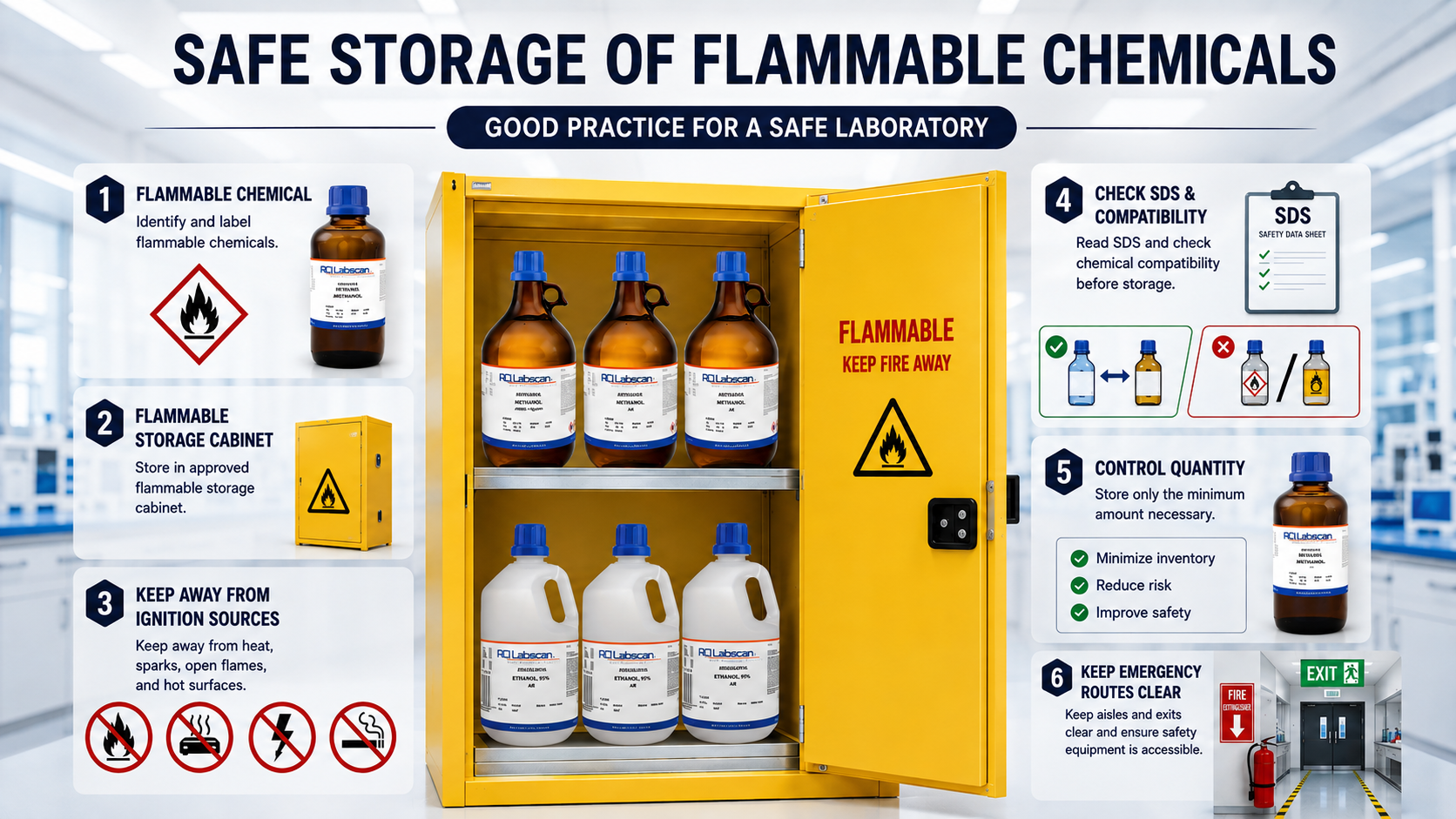
In general, flammable liquids that are not actively being used should be stored in a suitable Flammable Storage Cabinet, rather than being left on laboratory benches or stored together with incompatible chemicals. Laboratories should also follow the applicable Safety Data Sheet (SDS), local regulations, and facility-specific chemical safety procedures.
Note: Storage requirements may vary depending on the chemical, quantity, container type, laboratory design, and applicable regulations. Always refer to the product SDS and relevant local requirements before establishing a storage procedure.
Why This Matters
Many laboratory chemicals, including Acetone, Methanol, Ethanol, Acetonitrile, and other organic solvents, are flammable and can release vapors that may ignite when exposed to an ignition source.
The risk is not limited to the liquid itself. Flammable chemical storage also involves potential risks from:
- Flammable vapor accumulation
- Leaking or damaged containers
- Heat and ignition sources
- Improper storage cabinets
- Incompatible chemicals
- Excessive quantities of stored chemicals
- Poorly organized storage areas
Proper storage is therefore an important part of laboratory chemical safety and helps protect laboratory personnel, equipment, and facilities.
1. Check the Chemical Properties Before Storage
Before storing a flammable chemical, review the product Safety Data Sheet (SDS) and label.
Important information to check includes:
- Flash Point
- Flammability
- Vapor Pressure
- Recommended Storage Conditions
- Incompatible Materials
- Hazard Classification
Do not determine storage requirements based only on the chemical name. Different chemicals may have different hazards and storage requirements.
Reviewing the SDS helps laboratories determine where and how each chemical should be stored based on its specific hazards.
2. Use an Appropriate Flammable Storage Cabinet
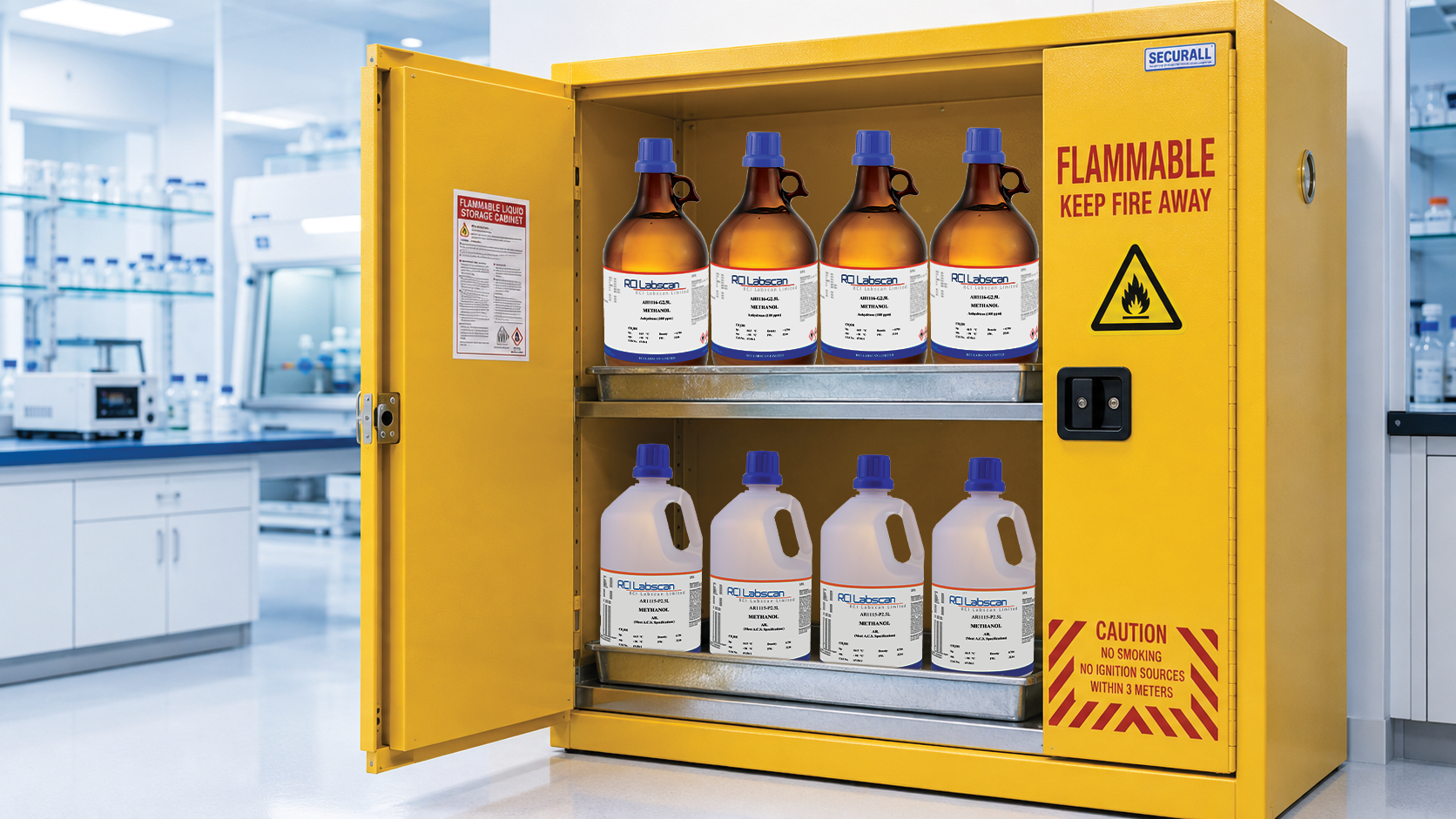
Flammable liquids that are not actively being used should generally be stored in an appropriate Flammable Storage Cabinet.
These cabinets are specifically designed for the storage of flammable liquids and help provide additional protection against external fire exposure.
When selecting a storage cabinet, consider:
- Cabinet capacity
- Types of chemicals being stored
- Cabinet construction and materials
- Spill containment
- Applicable safety standards
- Manufacturer requirements
A general-purpose cabinet should not automatically be used as a substitute for a cabinet designed for flammable chemicals.
3. Control the Quantity of Stored Chemicals
Laboratories should store only the amount of flammable chemicals reasonably required for their operations and avoid unnecessary accumulation.
For example, if a laboratory uses only a small amount of a solvent during routine work, it may not be necessary to keep large quantities on the laboratory bench.
Storage limits can vary depending on the chemical classification, container type, facility, and applicable regulations. Laboratories should therefore determine their maximum storage quantities based on the requirements applicable to their facility.
4. Keep Flammable Chemicals Away from Ignition Sources
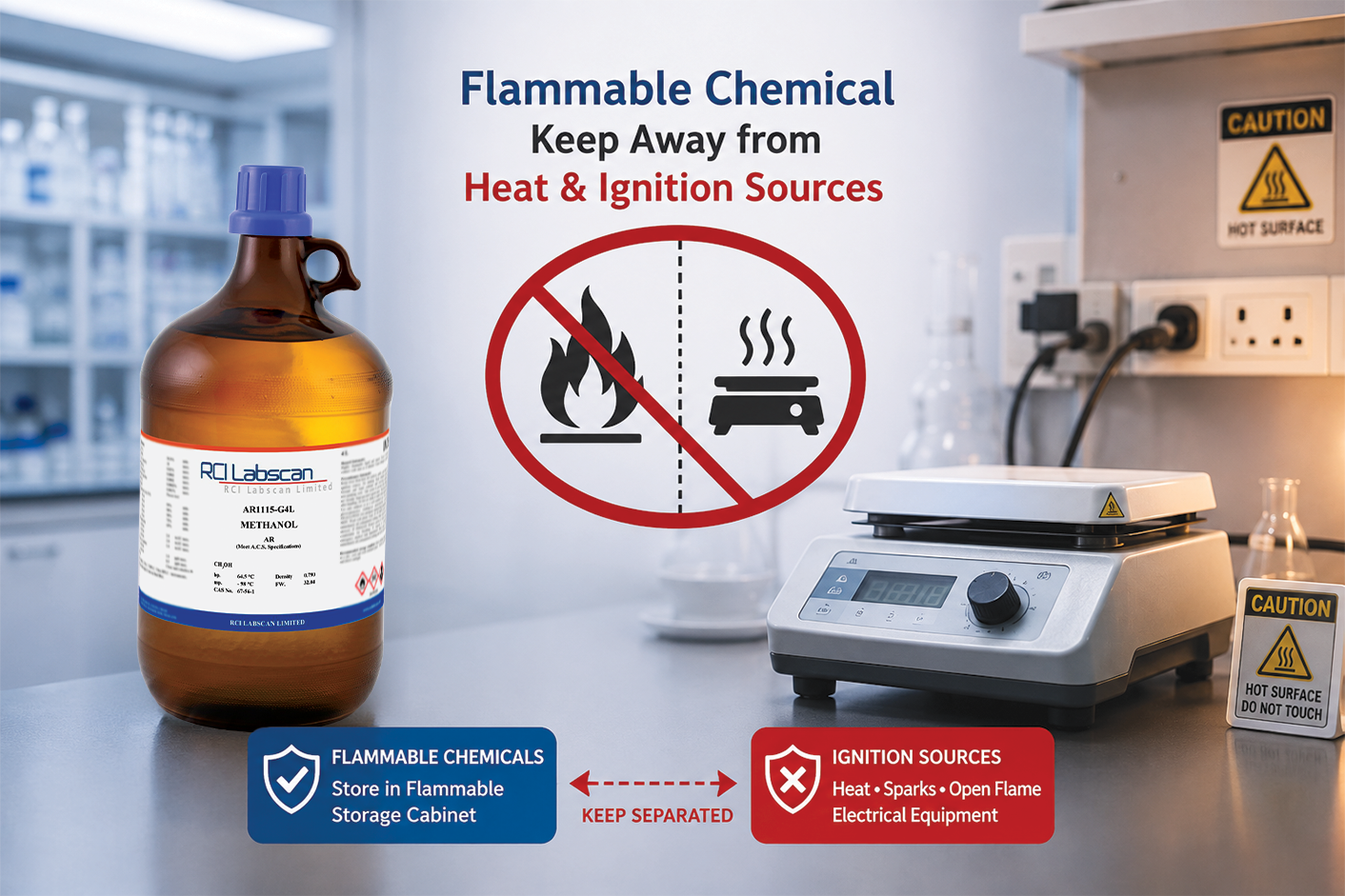
Flammable chemicals should be kept away from potential ignition sources, including:
- Open flames
- Hot plates
- Heating equipment
- Electrical sparks
- Welding or other spark-producing activities
- Direct sunlight or excessive heat
Flammable vapors can travel away from the location of a spill or open container and potentially reach an ignition source. Therefore, storage planning should consider both the chemical location and potential vapor pathways.
5. Inspect Containers and Closures Regularly
Containers used for flammable chemicals should be compatible with the chemical and maintained in good condition.
Regularly check that:
- Containers are not cracked or damaged
- Caps and closures are properly secured
- There are no signs of leakage
- Labels remain legible
- Containers show no significant deterioration
If a container is leaking or damaged, it should not simply be returned to normal chemical storage. Follow the laboratory's Chemical Spill Response and chemical waste procedures, as well as the instructions provided in the SDS.
6. Separate Incompatible Chemicals
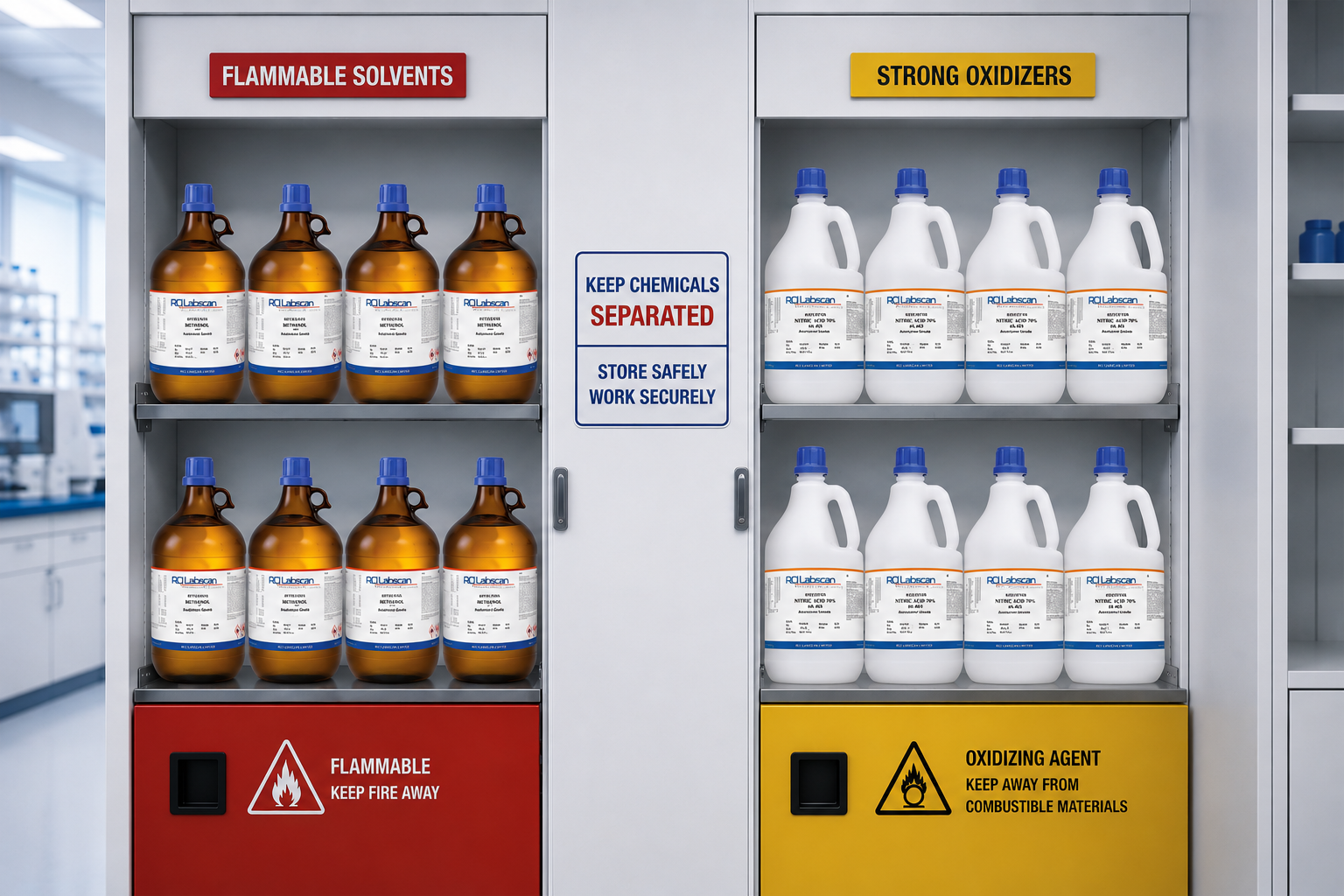
Flammable chemicals should not automatically be stored together with all other chemicals.
Before organizing chemical storage, review Chemical Compatibility and identify substances that may react with or increase the fire hazard of flammable materials.
For example, flammable liquids should generally be kept separate from Strong Oxidizers. Heat and direct sunlight should also be avoided when storing flammable materials.
Therefore, organizing chemicals alphabetically alone may not be sufficient. Chemical hazards and compatibility should also be considered.
7. Consider Adequate Ventilation
Appropriate ventilation is important in areas where flammable chemicals are handled or stored because it can help prevent the accumulation of flammable vapors.
Laboratory personnel should also avoid modifying or connecting cabinet ventilation systems without confirming the requirements of the cabinet manufacturer and applicable standards.
8. Avoid Using Ordinary Refrigerators
Some chemicals may require temperature-controlled storage, but ordinary household refrigerators should not be used automatically for flammable chemicals.
If refrigeration is required, use a Flammable-Safe Refrigerator or other equipment specifically designed and approved for flammable materials.
Ordinary refrigerators may contain electrical components that can potentially provide an ignition source.
9. Keep Emergency Routes Clear
Chemical storage areas should never block:
- Emergency exits
- Laboratory walkways
- Stairways
- Evacuation routes
- Fire extinguishers
- Emergency equipment
Proper chemical storage should allow personnel to access emergency equipment and leave the laboratory safely if an incident occurs.
Practical Considerations Before Storing Flammable Chemicals
- Check the SDS. Review Flash Point, Storage Conditions, and Incompatible Materials.
- Check the container. Inspect the bottle, cap, label, and overall condition before storage.
- Check the storage cabinet. Make sure the cabinet is appropriate for flammable liquids and has sufficient capacity.
- Check chemical compatibility. Keep flammable chemicals away from substances that may react with them or increase fire risk.
- Control the quantity. Store only the amount required and permitted for the laboratory.
- Control ignition sources. Keep chemicals away from flames, heat, sparks, and other potential ignition sources.
- Maintain clear access. Do not allow chemical storage to obstruct emergency exits or safety equipment.
- Inspect regularly. Periodically inspect containers and storage areas for leaks, damage, or deterioration.
Users should always review the SDS and product-specific storage requirements before storing a chemical.
Common Mistakes in Flammable Chemical Storage
Some common mistakes include:
- Leaving large quantities of flammable solvents on laboratory benches
- Storing flammable chemicals near hot plates or heating equipment
- Using general-purpose cabinets instead of suitable flammable storage cabinets
- Storing flammable chemicals with strong oxidizers
- Using ordinary refrigerators for flammable chemicals
- Ignoring damaged or leaking containers
- Storing unnecessarily large quantities
- Blocking walkways or emergency exits
- Failing to review the SDS before determining storage conditions
Related RCI Labscan Products
RCI Labscan offers a range of laboratory chemicals and solvents, including flammable solvents such as Methanol, Acetonitrile, Ethanol, and other organic solvents for laboratory applications.
For information regarding Product Specifications, SDS, COA, Packaging, or Storage Conditions, users should review the documentation provided for the specific product before handling and storage.
Customers can contact RCI Labscan or an authorized local distributor for product information and technical assistance.
FAQ
What type of cabinet should be used for flammable chemicals?
Flammable liquids should generally be stored in an appropriate Flammable Storage Cabinet designed for flammable materials. The appropriate cabinet depends on the chemical type, quantity, container, and applicable safety requirements.
Can flammable chemicals be stored on a laboratory bench?
Only the amount reasonably required for immediate laboratory work should generally be kept outside designated storage areas. Laboratory benches should not be used as long-term storage areas for large quantities of flammable chemicals.
Can flammable chemicals be stored with other chemicals?
Not automatically. Chemical Compatibility should be reviewed before storing chemicals together. Particular attention should be given to strong oxidizers and other substances that may react with or increase the hazard of flammable chemicals.
Can I store flammable chemicals in a regular refrigerator?
A regular household refrigerator should not be used for flammable chemicals. If refrigerated storage is required, use a refrigerator specifically designed for flammable materials.
What information should I check in the SDS before storing a flammable chemical?
Key sections include Hazards Identification, Handling and Storage, Fire-Fighting Measures, Physical and Chemical Properties, and Stability and Reactivity. These sections can provide important information for determining appropriate storage conditions.
How much flammable chemical can I store in the laboratory?
There is no single quantity that applies to every laboratory. Storage limits depend on factors such as chemical classification, container size, storage cabinet capacity, facility design, and applicable regulations.
What should I do if a flammable chemical container is leaking?
Do not simply return a leaking container to normal storage. Follow your laboratory's Chemical Spill Response and chemical waste procedures, and consult the SDS for the specific chemical.
Key Takeaway
Safe storage of flammable chemicals involves more than simply placing bottles inside a cabinet. Laboratories should consider chemical properties, quantity, container condition, chemical compatibility, ignition sources, ventilation, storage equipment, and emergency access.
Reviewing the SDS and product-specific storage requirements before storing each chemical is an important step toward maintaining a safer laboratory environment.
Safe Storage. Better Laboratory Safety.
Explore related products:
Related articles:
- What Is an SDS? Why Every Laboratory Should Take It Seriously
- Shelf Life vs Expiry Date: What's the Difference for Laboratory Chemicals?
- What Is Product Specification and How Should You Read It?
- Why Buying from an Authorized Distributor Matters When Purchasing Laboratory Chemicals
- What Procurement Should Check Before Ordering Laboratory Chemicals
Leave a comment!