
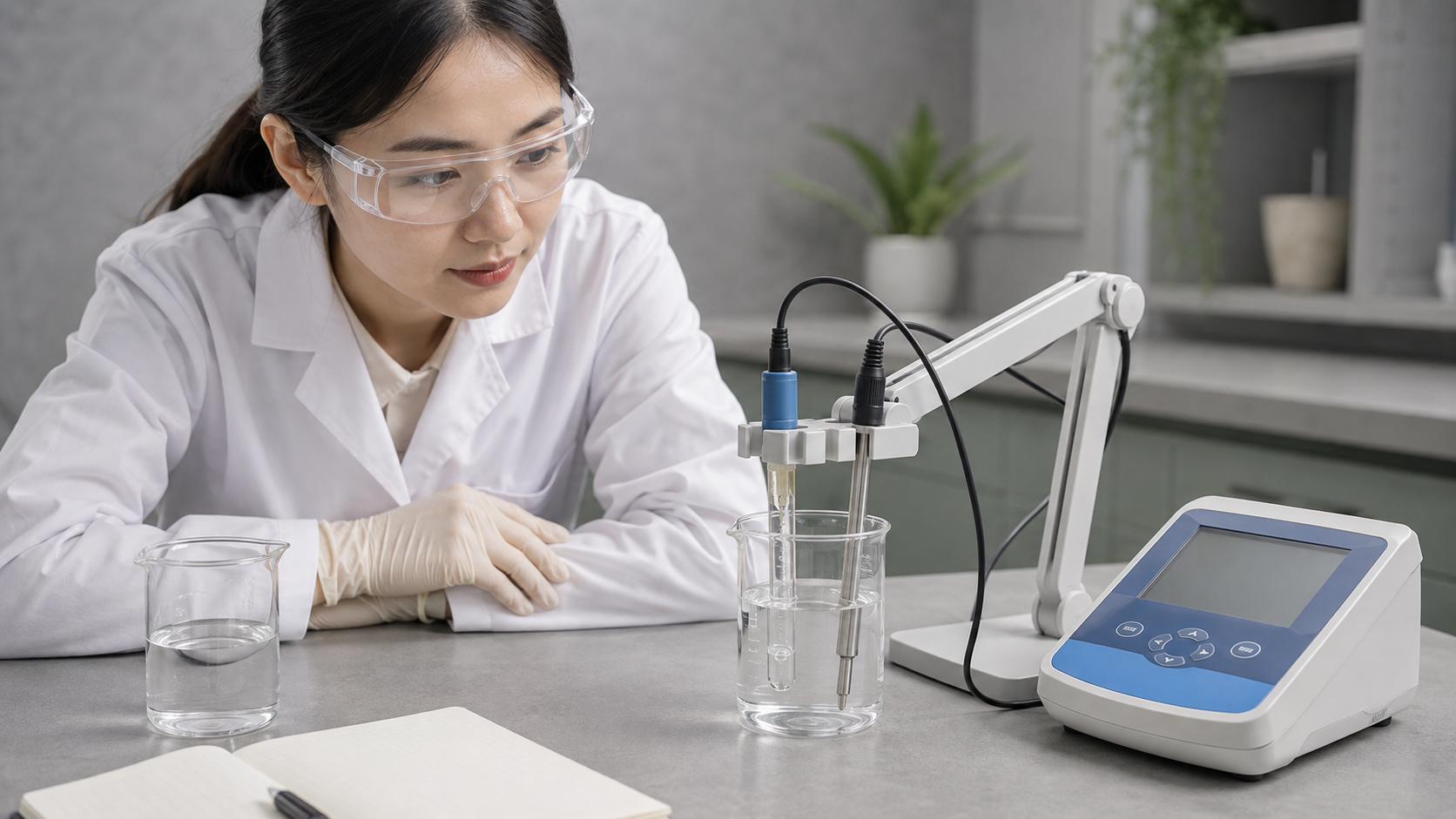

Why Temperature Matters When Using pH Buffer Standards
How buffer value, electrode response, and temperature compensation affect calibration quality
Direct Answer
Temperature matters because the assigned pH of a buffer can change with temperature, while the electrode's millivolt response also changes. Automatic temperature compensation can adjust the electrode response, but it does not automatically replace the correct temperature-specific buffer value in every instrument or procedure. For reliable calibration, measure or control buffer temperature, use the value provided by the buffer documentation for that temperature, and follow the pH meter manufacturer's instructions.
Two Temperature Effects Occur at the Same Time
It is useful to separate two ideas that are often combined under “temperature compensation.”
- The electrode response changes. The ideal slope of a glass pH electrode depends on absolute temperature. A meter with a connected temperature probe may compensate for this response.
- The buffer itself has a temperature-dependent pH value. Chemical equilibria change with temperature, so the assigned value of a buffer at 15 °C may differ from its value at 25 °C.
A temperature probe can help the meter apply the correct electrode-response calculation. Whether the meter also recognizes and applies the exact temperature table for a selected commercial buffer depends on its design and settings. The operator must confirm how the specific meter works.
Nominal pH Is Usually a Reference-Condition Value
A bottle labeled pH 4.01, 7.00, or 10.01 communicates a nominal value, commonly at a stated reference temperature such as 25 °C. The current specification may include values or deviations over a temperature range. These differences are often more noticeable for alkaline buffers than for near-neutral buffers, but the actual correction must come from the documentation for the specific buffer.
Do not copy a temperature table from a different brand, composition, product code, or lot without evidence that it applies. Buffers with similar nominal pH values can use different formulations and documentation conventions.
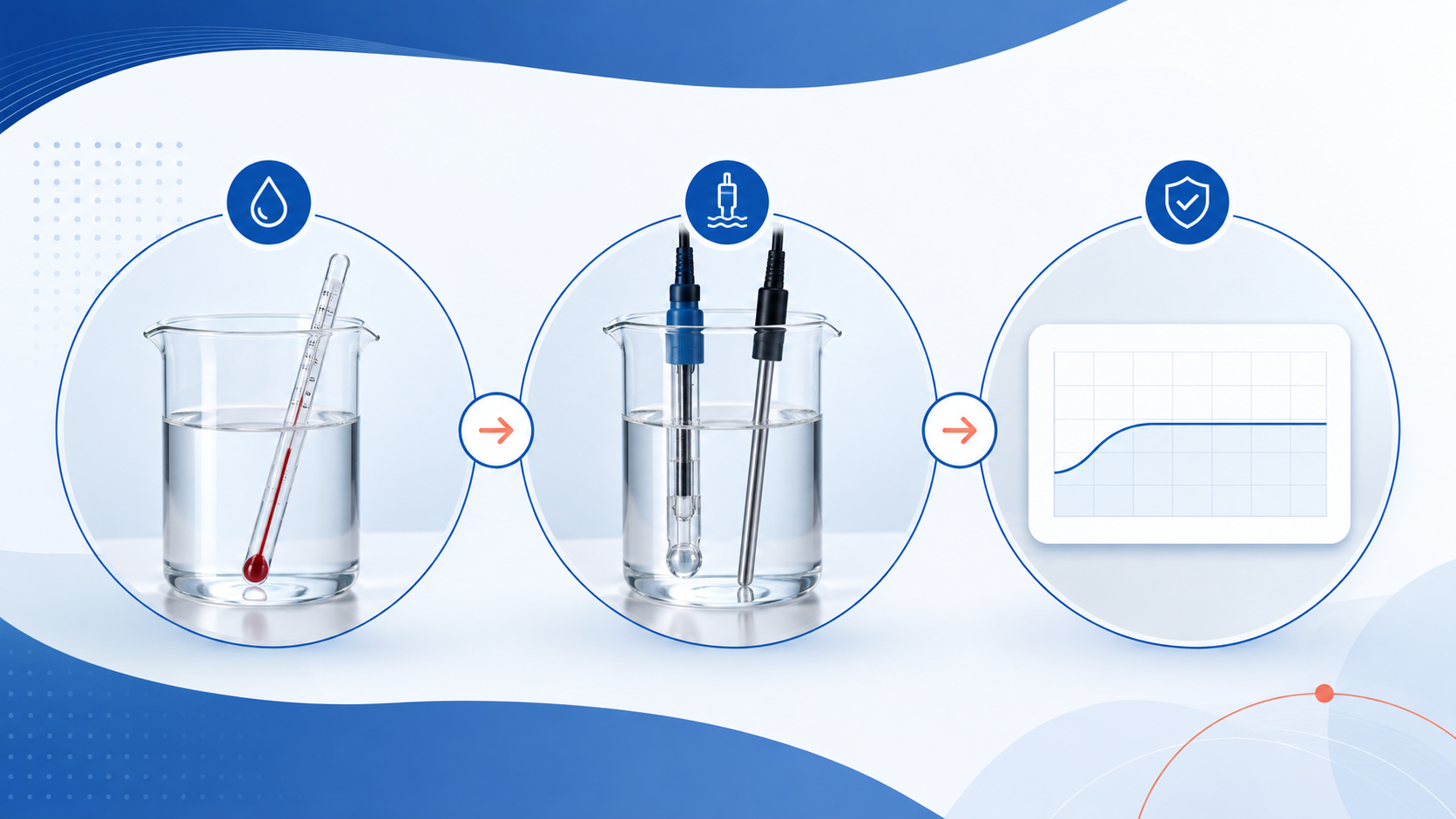
What Automatic Temperature Compensation Does—and Does Not Do
| Function | What it may do | What the operator still needs to verify |
|---|---|---|
| Measure temperature | Reads the buffer or sample temperature through a probe | Probe placement, equilibration, calibration, and contact with the same solution |
| Adjust electrode slope | Compensates the theoretical temperature effect on electrode response | Instrument mode, method requirements, and electrode condition |
| Recognize buffer tables | Some meters apply stored temperature values for selected buffer families | The selected table matches the actual commercial buffer |
| Correct sample chemistry | Usually does not convert a sample result to what its pH would be at another temperature | Whether the method requires measurement at a defined sample temperature |
A Temperature-Controlled Calibration Workflow
- Review the procedure. Identify the required calibration temperature range, buffer points, and acceptance criteria.
- Check the buffer documentation. Locate the reference temperature and temperature-specific values or deviations in the current specification or certificate.
- Condition the materials. Allow buffers, electrode, rinse solution, and samples to approach the intended temperature. Avoid direct sunlight, hot plates, or cold air streams that create gradients.
- Use a representative aliquot. Pour enough buffer into a clean container to immerse both the electrode sensing area and temperature probe correctly.
- Wait for stability. Temperature and potential may stabilize at different rates. Use the instrument's validated stability criterion rather than a fixed short waiting time.
- Confirm the buffer set. If the meter uses stored recognition tables, select the family that matches the product documentation.
- Review calibration results. Compare slope and offset with laboratory criteria and investigate failures.
- Record conditions. Document temperature, buffer product and lot, values used, instrument, electrode, and result.
Why Temperature Mismatch Can Create Bias
Suppose a meter assumes the nominal 25 °C buffer value while the actual calibration aliquot is substantially warmer or cooler. The meter may assign the wrong reference value even if the electrode is functioning correctly. That error can influence the calculated calibration line and carry into subsequent sample results.
A second problem occurs when buffers and samples are measured at different temperatures without a method-based rationale. Automatic compensation of electrode slope does not make a sample's chemical equilibrium temperature-independent. For comparable results, control or document sample temperature according to the method.
Product Documentation Is the Working Reference
RCI Labscan lists buffer standard solutions including pH 4.01, pH 7.0, and pH 10.01. Published specifications may provide a pH value at a reference temperature and temperature-dependent deviations. Confirm the current document for the exact product and lot before configuring the instrument or transcribing a correction table.
NIST's pH metrology program supports pH measurement traceability through certified Standard Reference Materials and primary measurements. In routine commercial use, any traceability statement must be supported by the supplier's documented calibration chain. It should not be interpreted as a general NIST endorsement.
Common Temperature-Control Mistakes
- Assuming the printed nominal pH applies at every temperature
- Believing automatic temperature compensation corrects all sample chemistry
- Selecting the meter's wrong built-in buffer family
- Measuring temperature in the room instead of in the buffer aliquot
- Calibrating before the electrode and probe have equilibrated
- Using a correction table from another buffer formulation
- Recording pH without the measurement temperature when the method requires it
Troubleshooting an Unexpected Calibration
If slope, offset, or verification fails, check the complete system:
- Correct buffer identity, lot, expiry, and temperature value
- Freshness and contamination status of the working aliquot
- Temperature probe accuracy, placement, and connection
- Selected buffer-recognition group in the meter
- Electrode cleanliness, hydration, reference system, and response time
- Temperature gradients between the buffer, electrode, and room
- Acceptance criteria and transcription in the laboratory procedure
FAQ
Does pH 7.00 stay exactly 7.00 at every temperature?
No. The assigned value can vary with temperature. Consult the specific buffer's current documentation.
Does automatic temperature compensation make calibration temperature irrelevant?
No. It can compensate electrode response, and some meters can apply stored buffer tables, but the operator must ensure that the correct buffer value and instrument setting are used.
Should buffers and samples be at the same temperature?
Keeping them close can reduce avoidable differences, but the validated method should define the required conditions. Some applications require measurement at a specified temperature.
Can I enter one correction table for every pH 10.01 buffer?
Only if the supplier and instrument documentation confirm that the table applies. Similar nominal labels do not prove identical formulation or temperature behavior.
Conclusion
Temperature is part of the pH result, not a minor environmental detail. Reliable calibration connects the buffer's temperature-specific assigned value with correct electrode-response compensation, stable measurement conditions, and complete records. When those elements are controlled, pH data become more comparable and defensible.
Leave a comment!