
Coulometric vs Volumetric Karl Fischer: Choosing a Water-Measurement Approach
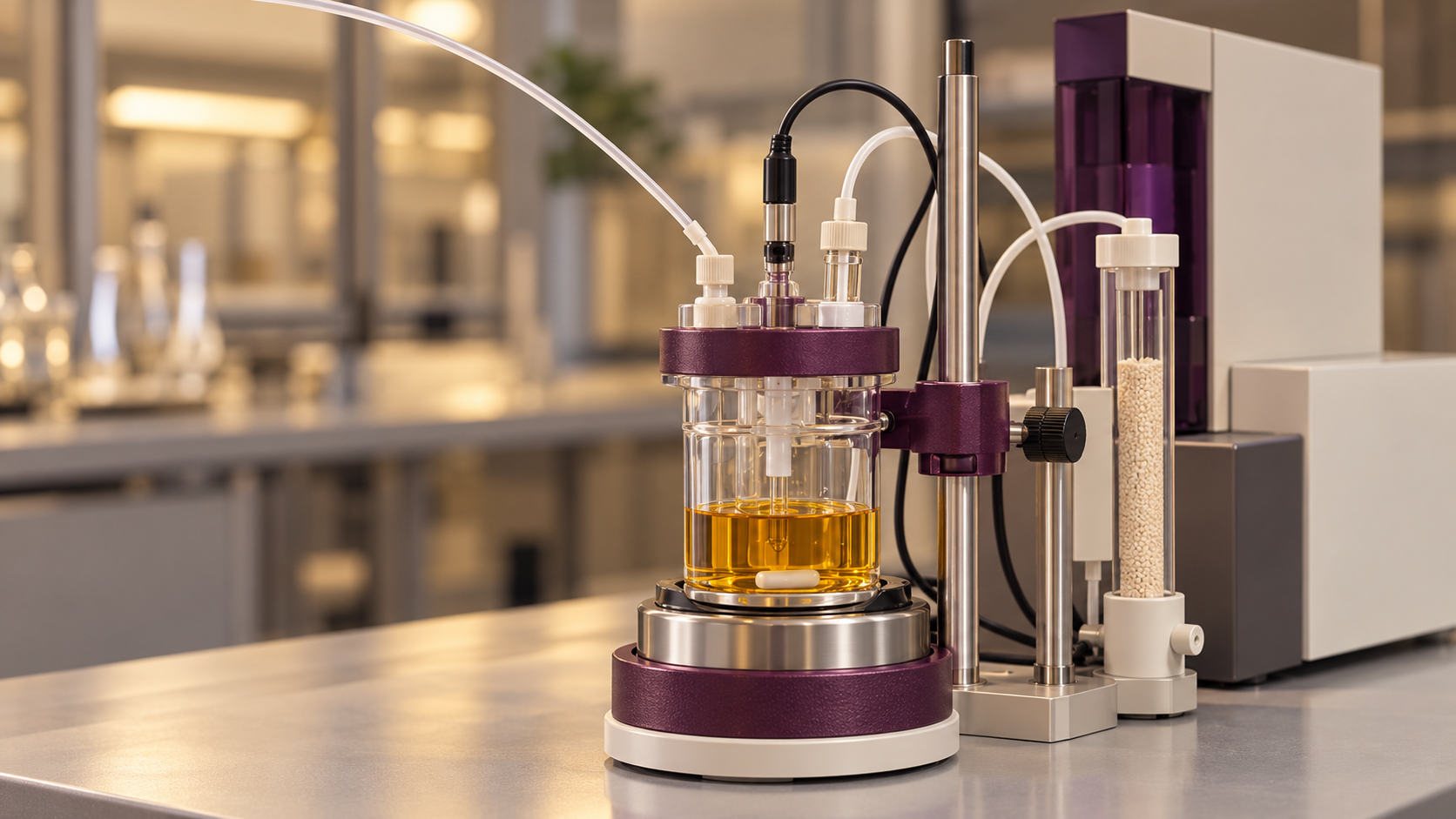
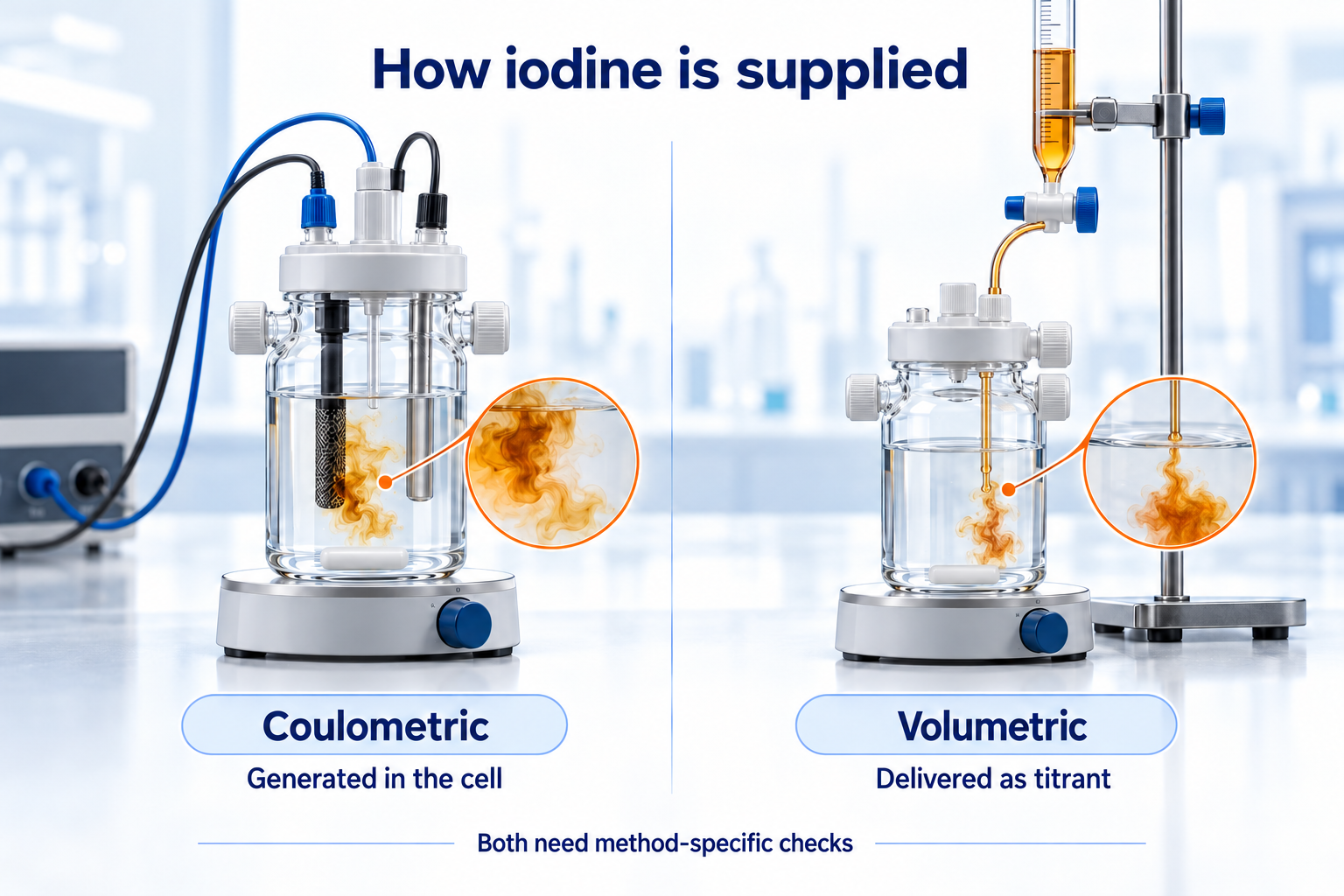
Choose a Karl Fischer (KF) approach from the expected amount of water entering the cell, the sample matrix and the demonstrated performance of the complete procedure. Coulometry generates iodine electrochemically; volumetry dispenses an iodine-containing titrant. Neither technique is automatically suitable merely because a solvent is described as dry.

What changes between the techniques?
In coulometric KF, electrical charge is used to determine the iodine generated for the reaction. In volumetric KF, the calculation uses titrant volume and its established water equivalent. Coulometry does not require a volumetric titrant factor, but still requires performance checks with appropriate water standards. Volumetric reagent standardization and instrument checks serve different purposes.
| Question | Why it matters |
|---|---|
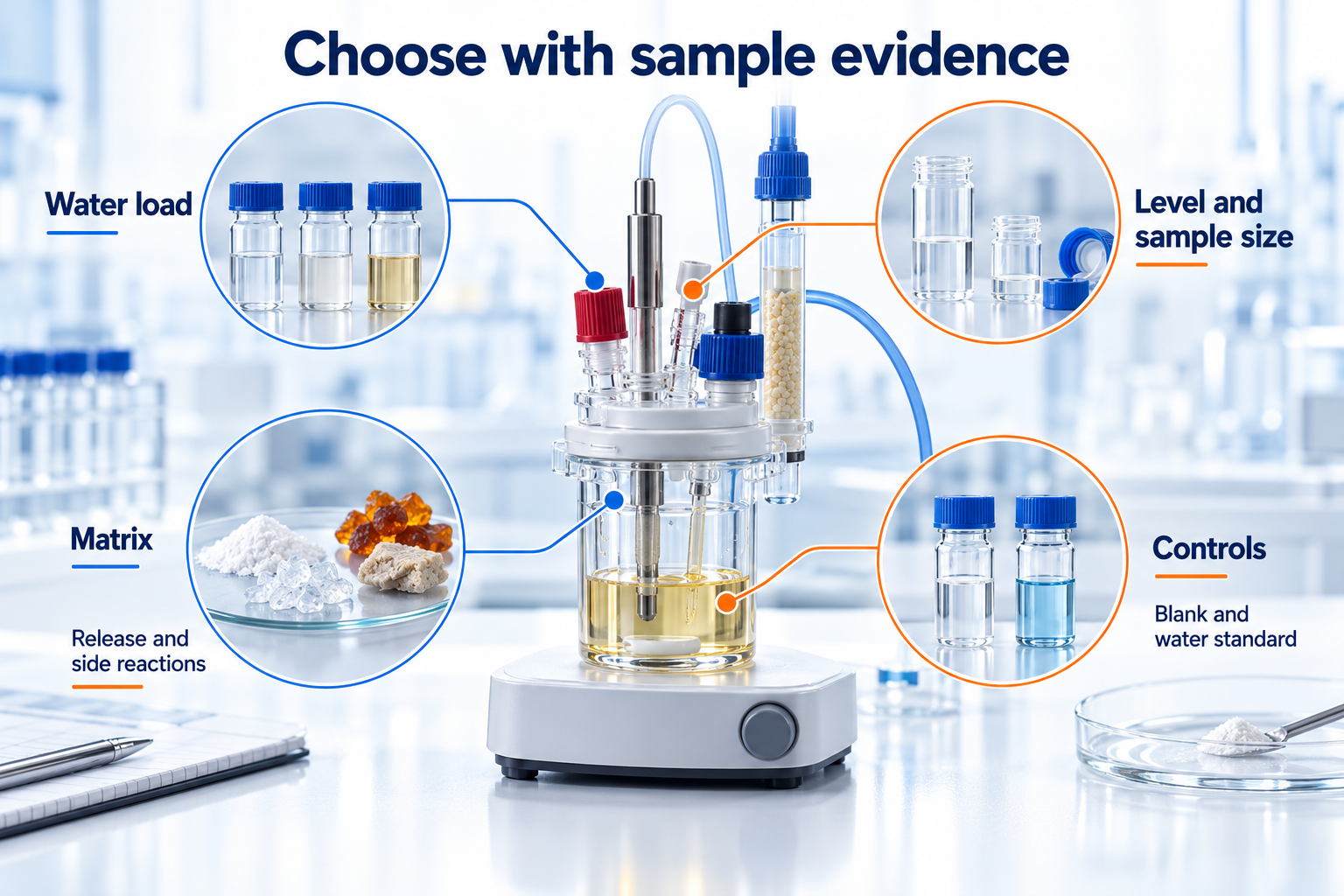
| How much water reaches the cell? | Concentration and test-portion size together determine the water load. |
| Will the sample release its water? | Incomplete dissolution or extraction can bias either technique. |
| Does the matrix react with the reagent? | Side reactions can consume iodine or form or consume water. |
| Can the introduction route be demonstrated suitable? | Direct addition, extraction and oven transfer need their own checks. |
Start with the water load, then examine the matrix
A reported concentration is only part of the choice. A small portion of a wetter material and a larger portion of a drier material can introduce comparable water amounts. Select a test portion within the validated procedure and instrument guidance rather than applying a universal concentration boundary. Consider representativeness and transfer losses as well as instrument capacity.
EPA Method 9000 illustrates both techniques and identifies matrix interferences, including reactions involving some carbonyl compounds and KF reagent systems. Its waste-material scope and operating ranges are not universal solvent specifications. Use a reagent system and introduction route supported for the actual matrix; changing from volumetric to coulometric detection does not by itself remove chemical interference.
Make the comparison auditable
- Define the sample, required reporting basis and decision the result must support.
- Record the expected water level, chosen test portion and introduction route.
- Document reagent compatibility and how water release is checked.
- Retain blank/drift information and results for suitable water standards.
- Investigate transfer, extraction and matrix effects before attributing a difference to the technique.
What should QA ask before accepting the result?
Ask which checks cover the instrument and which cover the sample pathway. A water standard added directly to the cell may check response without proving water extraction from the sample. Similarly, stable drift is useful operating evidence but does not establish absence of a sample-specific side reaction. Keep the procedure, calculations and control results linked to the reported sample.
The existing discussion of Water Content in Solvents: Why Is It Important? explains why moisture is a separate quality dimension. For a KF selection decision, the next step is to review matrix suitability and control evidence with the method owner, rather than treating a low reported value as proof of complete water recovery.
Practical conclusion
Select the technique that can demonstrate suitable performance for the sample and water load. Confirm the reagent system, introduction route, controls and reporting basis together. Ask the laboratory technical team to review the proposed procedure before using it for a release decision.
Leave a comment!