
How Do Impurities in Solvents Affect Analytical Results?
Understanding solvent purity and its impact on chromatographic accuracy

Direct Answer
Impurities in a solvent are unwanted substances that remain in the solvent even after purification. In analytical work such as HPLC, these impurities can cause baseline noise, unexpected peaks, retention time shifts, and reduced detector sensitivity. This can lead to inaccurate quantification, poor reproducibility, and unreliable results. Using a solvent grade appropriate for the intended analytical method, and reviewing documentation such as the Certificate of Analysis (COA), helps reduce the risk of impurity-related issues.
What Are Impurities in a Solvent?
Impurities are trace substances present in a solvent that are not part of its intended chemical composition. They may originate from raw materials, the manufacturing process, storage conditions, or packaging. No solvent is completely free of impurities; however, the type and level of impurities present can vary significantly depending on the solvent grade and production quality.
For general laboratory use, minor impurities may not cause noticeable issues. However, for sensitive analytical techniques such as HPLC, GC, or LC-MS, even trace-level impurities can influence results.
Why Impurities Matter in Analytical Work
Analytical techniques such as HPLC and LC-MS rely on a stable, predictable mobile phase or solvent environment. When impurities are present, they can interfere with detection, separation, or quantification. This is especially important in the following situations:
- Trace-level analysis, where low concentrations must be detected accurately
- Regulated testing, such as pharmaceutical or environmental analysis
- Method validation, where reproducibility is essential
- Sensitive detection techniques, such as UV, PDA, or mass spectrometry
Common Effects of Solvent Impurities on Analytical Results
1. Baseline Noise and Drift
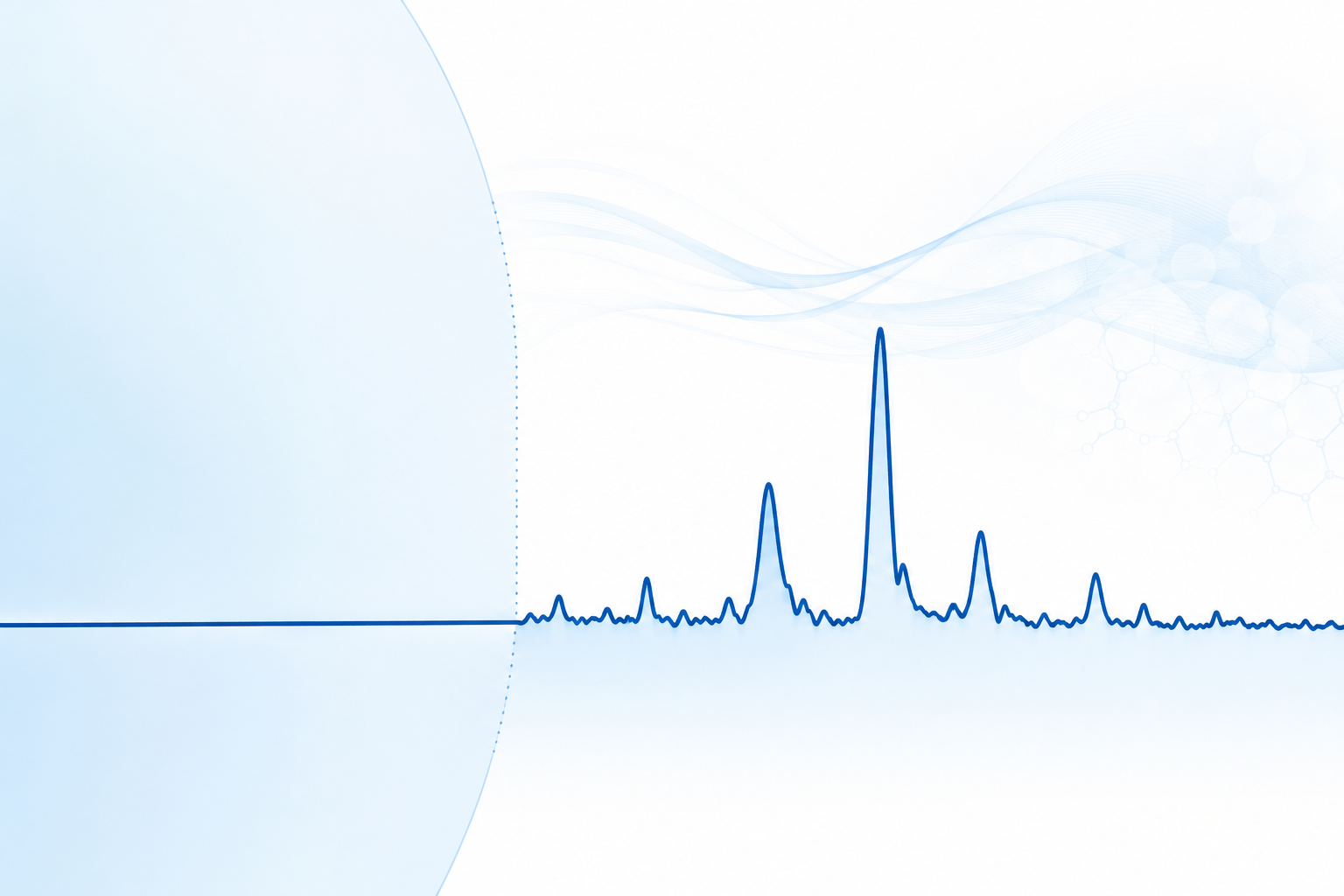
Impurities can cause an unstable or noisy baseline during chromatographic analysis. This makes it more difficult to distinguish real analyte peaks from background interference, particularly when working with low-concentration samples.
2. Ghost Peaks or Unexpected Peaks
Some impurities may elute at specific retention times and appear as unexpected peaks, sometimes called "ghost peaks." These can be mistaken for actual analytes or may interfere with peak integration and quantification.
3. Retention Time Shifts
Impurities can alter the chemical environment of the mobile phase, which may lead to slight shifts in retention time. This can affect peak identification, especially in methods that rely on precise retention time matching.
4. Reduced Detector Sensitivity
For UV, PDA, or mass spectrometry detectors, impurities may absorb light or generate background signal, which can reduce sensitivity and make it harder to detect low-level analytes accurately.
5. Poor Reproducibility Between Runs or Lots
If impurity levels vary between solvent batches, this can lead to inconsistent results between analytical runs, affecting reproducibility and potentially requiring re-testing.
How Solvent Grade Relates to Impurity Levels
Different solvent grades are produced and controlled to different quality standards. Generally, higher analytical grades such as HPLC grade or LC-MS grade are manufactured with tighter control over impurities compared to general-purpose or technical grade solvents.
| Solvent Grade | Typical Use Case | General Impurity Control |
|---|---|---|
| General / Technical Grade | Non-analytical or general laboratory use | Less strict control, may contain higher impurity levels |
| HPLC Grade | Routine HPLC analysis | Controlled for chromatographic applications |
| LC-MS Grade | Mass spectrometry, trace-level analysis | Stricter impurity control for sensitive detection |
Users should select the solvent grade appropriate for their specific analytical method, rather than assuming a higher grade is always necessary. The suitable grade depends on the application and method requirements.
How to Reduce the Risk of Impurity-Related Issues
- Choose the appropriate solvent grade based on the analytical method and detector sensitivity.
- Review the Certificate of Analysis (COA) to check documented quality parameters for each batch.
- Check the Safety Data Sheet (SDS) for general product information.
- Store solvents properly to avoid contamination or degradation, following supplier and SDS recommendations.
- Use consistent solvent sources to help maintain lot-to-lot reproducibility.
- Run system suitability or blank checks before critical analytical runs, as advised by the laboratory's own method validation procedures.
Exact impurity thresholds and specification values vary by product and should always be confirmed through the approved product specification or COA rather than general assumptions.
Related RCI Labscan Products
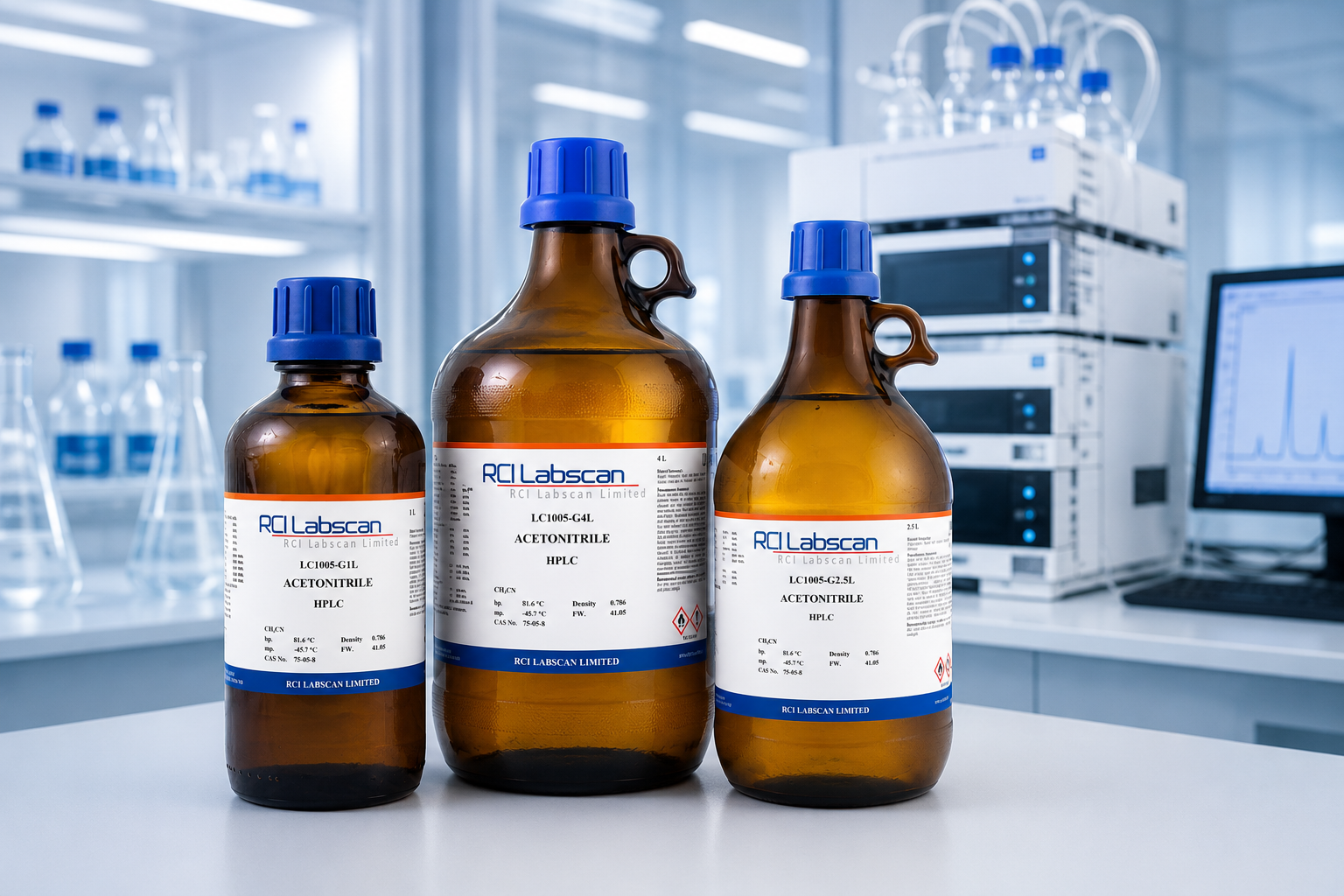
RCI Labscan provides HPLC grade and LC-MS grade solvents intended to support consistent, reliable analytical performance. For product specifications, COA requests, or documentation support, customers may contact RCI Labscan or an authorized local distributor.
FAQ
What causes impurities in a solvent?
Impurities can originate from raw materials, the manufacturing process, storage conditions, or packaging. Even high-purity solvents may contain trace-level impurities, though at controlled and documented levels.
Can impurities affect HPLC peak results?
Yes. Impurities can cause baseline noise, unexpected peaks, retention time shifts, or reduced detector sensitivity, which may affect peak identification and quantification accuracy.
Does a higher solvent grade always mean fewer impurities?
Generally, higher analytical grades such as HPLC or LC-MS grade are produced with tighter impurity control than general-purpose solvents. However, the suitable grade should be selected based on the specific analytical method and sensitivity requirements.
How can I check the impurity level of a solvent?
Impurity-related information is typically documented in the product specification or Certificate of Analysis (COA). Users should review these documents rather than relying on general assumptions.
Do impurities affect LC-MS analysis more than HPLC-UV analysis?
LC-MS analysis is often more sensitive to trace-level impurities because mass spectrometry can detect very low concentrations. This is why LC-MS grade solvents typically require stricter impurity control than standard HPLC grade solvents.
Explore related products:
Related article:

Leave a comment!