What Is AR Grade and What Is It Used for in the Laboratory?

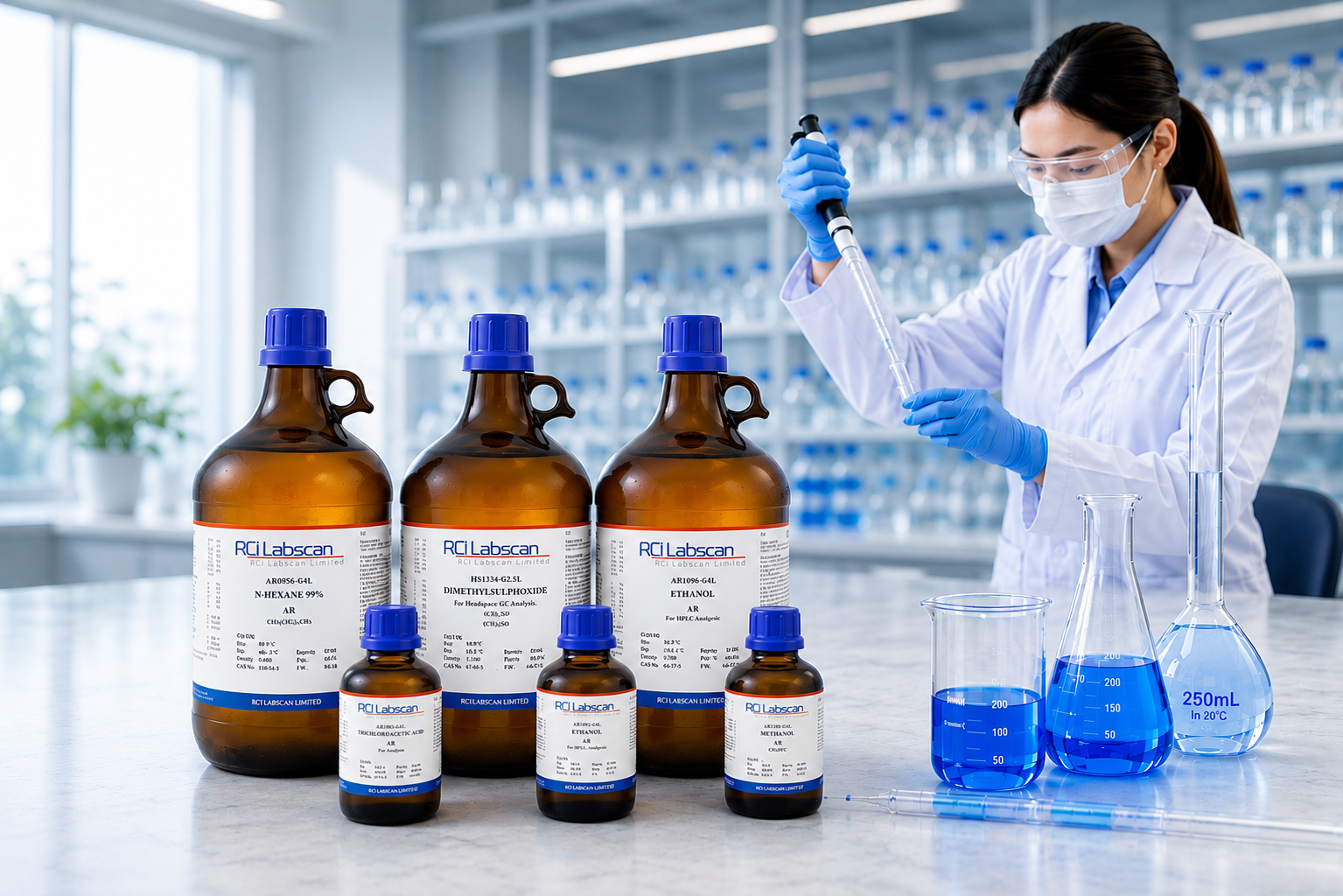
AR Grade (Analytical Reagent Grade) is a high-purity chemical grade manufactured for laboratory analytical work where accuracy, consistency, and low impurity levels are important. Laboratories commonly use AR Grade chemicals for analytical testing, reagent preparation, titration, quality control, research, and routine laboratory procedures.
Compared with general laboratory or technical grade chemicals, AR Grade products undergo tighter quality control to help ensure reliable analytical performance. Because impurities can influence experimental results, many laboratories choose AR Grade chemicals whenever analytical accuracy is required.
What Is AR Grade?
AR Grade stands for Analytical Reagent Grade. It refers to chemicals that meet high-purity specifications suitable for analytical laboratory applications.
Manufacturers produce AR Grade chemicals with strict quality control and provide supporting documentation such as Product Specifications, Safety Data Sheets (SDS), and Certificates of Analysis (COA).
Although specification requirements may vary by manufacturer and product, AR Grade generally offers lower impurity levels than general laboratory or technical grade chemicals.
Why Do Laboratories Commonly Use AR Grade Chemicals?
Many laboratories select AR Grade chemicals because analytical work often requires consistent chemical quality.
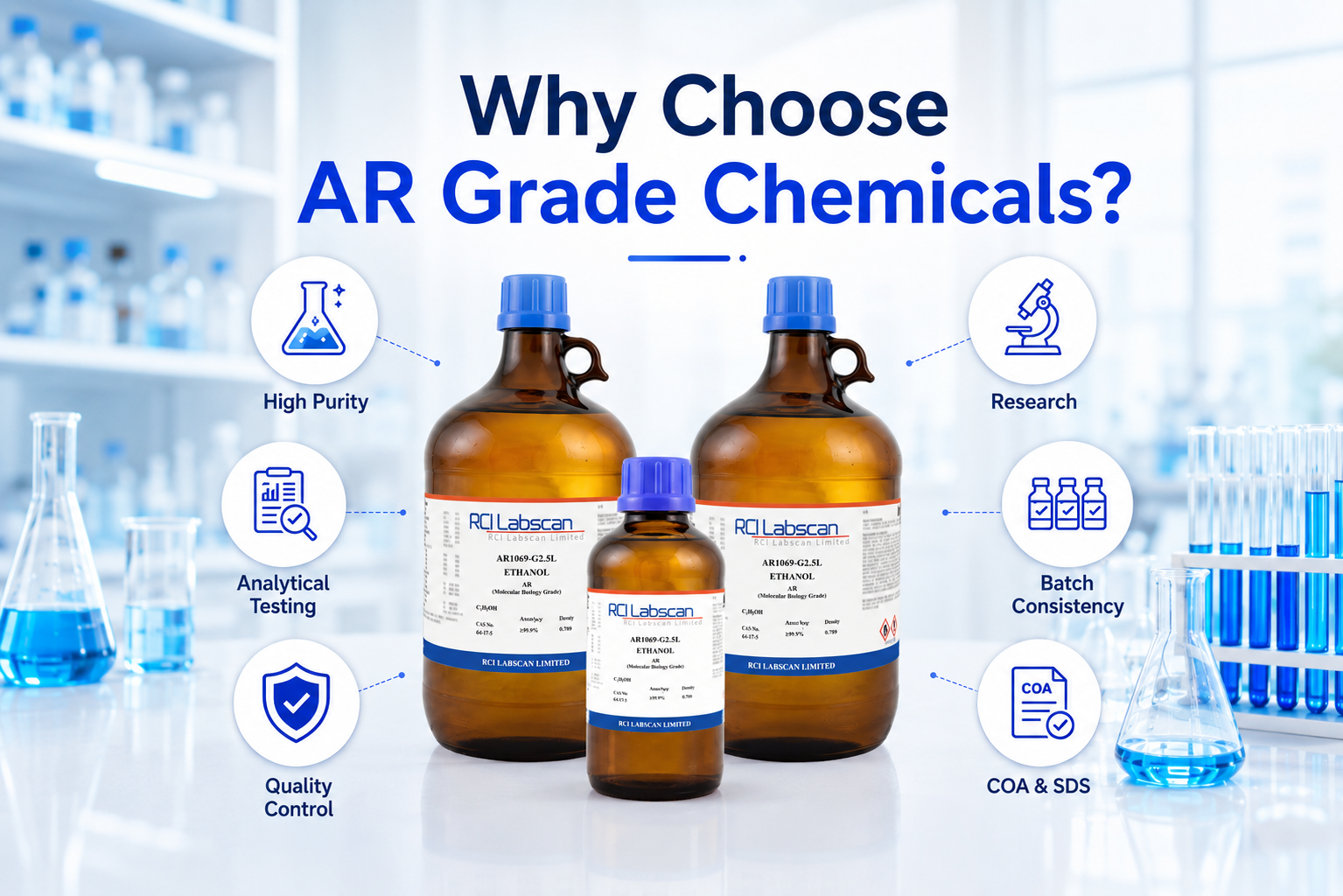
Key advantages include:
- High chemical purity
- Controlled impurity levels
- Suitable for analytical laboratory procedures
- Good batch-to-batch consistency
- Available product documentation (COA and SDS)
- Widely accepted for laboratory testing and research
As a result, AR Grade has become one of the most commonly used chemical grades in research laboratories, universities, pharmaceutical laboratories, food laboratories, environmental laboratories, and industrial quality control laboratories.
Common Applications of AR Grade Chemicals
1. Analytical Testing
Analytical laboratories routinely use AR Grade chemicals when preparing reagents or performing laboratory analysis.
- Quantitative analysis
- Qualitative analysis
- Classical chemical analysis
- Instrument calibration support
- Laboratory measurements
Because analytical results depend on reagent quality, laboratories generally prefer AR Grade chemicals over lower-purity grades.
2. Quality Control (QC) Laboratories
Manufacturing companies frequently use AR Grade chemicals in Quality Control laboratories to verify product quality and support routine testing.
- Raw material testing
- Finished product testing
- In-process quality control
- Routine laboratory analysis
Consistent reagent quality helps laboratories improve reproducibility across repeated analyses.
3. Reagent Preparation
Many laboratories prepare chemical reagents, buffer solutions, standard laboratory solutions, and indicator solutions using AR Grade chemicals.
- Standard laboratory reagents
- Buffer preparation
- Acid and base solutions
- Volumetric solutions
- Laboratory standards
The required grade should always follow the analytical method or laboratory procedure.
4. Titration and Classical Chemistry
AR Grade chemicals are widely used in classical analytical chemistry techniques such as:
- Acid-base titration
- Redox titration
- Complexometric titration
- Precipitation titration
Since impurities may influence titration accuracy, laboratories generally use high-purity reagents for these procedures.
5. Research and Academic Laboratories
Universities, research institutes, and R&D laboratories commonly use AR Grade chemicals for routine laboratory experiments.
- Chemical synthesis
- Laboratory experiments
- Method development
- Sample preparation
- Educational laboratory work
Researchers should always select the chemical grade required by their experimental protocol.
Which Industries Commonly Use AR Grade Chemicals?
AR Grade chemicals support laboratory work across many industries, including:
- Pharmaceutical laboratories
- Food and beverage testing
- Environmental analysis
- Academic research
- Chemical manufacturing
- Biotechnology
- Cosmetics testing
- Petrochemical laboratories
- Government laboratories
AR Grade vs Laboratory Grade vs Technical Grade
Although these chemical grades may appear similar, they are intended for different applications.
| Factor | AR Grade | Laboratory Grade | Technical Grade |
|---|---|---|---|
| Purity | High | Moderate | Varies |
| Analytical Testing | Recommended | Limited depending on method | Generally not recommended |
| Research | Common | Suitable for routine work | Limited |
| Quality Control | Widely used | Depends on application | Usually unsuitable |
| Documentation | Usually includes COA and SDS | Varies | Varies |
Users should always verify whether the selected chemical grade satisfies the analytical method requirements.
Is AR Grade Suitable for Instrumental Analysis?
In many laboratory applications, AR Grade chemicals are suitable for general analytical work and routine laboratory procedures. However, some instrumental techniques require specialized chemical grades.
| Instrument | Recommended Chemical Grade |
|---|---|
| General laboratory analysis | AR Grade |
| HPLC | HPLC Grade |
| LC-MS | LC-MS Grade |
| GC | GC Grade |
| Trace metal analysis | Trace Metal Grade or equivalent |
| Semiconductor applications | Electronic Grade or Semiconductor Grade |
Selecting the appropriate chemical grade helps improve analytical reliability and minimizes the risk of interference caused by impurities.
What Should Users Check Before Purchasing AR Grade Chemicals?
Before selecting an AR Grade chemical, laboratories should review:
- Required chemical grade
- Intended laboratory application
- Product specification
- Certificate of Analysis (COA)
- Safety Data Sheet (SDS)
- Chemical purity
- Applicable analytical method
- Storage recommendations
- Regulatory or quality requirements
Rather than selecting a chemical solely by its name, laboratories should confirm that the grade matches the analytical method.
Safety and Handling Considerations
AR Grade refers to chemical purity rather than chemical safety.
Users should always review the Safety Data Sheet (SDS) before handling any laboratory chemical. Appropriate personal protective equipment (PPE), proper storage conditions, and laboratory safety procedures should be followed according to institutional guidelines and local regulations.
This article provides general educational information and does not replace the official SDS, product specification, or laboratory safety procedures.
Related RCI Labscan Products
RCI Labscan supplies a wide range of high-purity laboratory chemicals, including AR Grade reagents for analytical laboratories, research institutions, quality control laboratories, and industrial testing.
For product selection, technical documentation, or product availability, customers can review the relevant product pages or contact RCI Labscan or an authorized distributor.
FAQ
What does AR Grade mean?
AR Grade stands for Analytical Reagent Grade, a high-purity chemical grade intended for analytical laboratory work.
What is AR Grade used for?
Laboratories commonly use AR Grade chemicals for analytical testing, reagent preparation, titration, research, and quality control applications.
Is AR Grade suitable for HPLC?
Not necessarily. HPLC methods generally require HPLC Grade solvents that are specifically manufactured for chromatographic applications. Users should follow the analytical method requirements.
Is AR Grade better than Laboratory Grade?
AR Grade generally provides higher purity and tighter impurity control than general Laboratory Grade chemicals. However, the appropriate choice depends on the intended laboratory application.
Can AR Grade chemicals be used for research?
Yes. Many universities, research institutes, and industrial R&D laboratories routinely use AR Grade chemicals for laboratory research and analytical work.
Does AR Grade guarantee the same specification between manufacturers?
No. Specifications may differ among manufacturers. Users should always review the Product Specification and Certificate of Analysis before purchase or use.
Explore related products:
Related Articles:
Leave a comment!