

PFAS Analysis: Planning Reagent Blanks and Contamination Controls
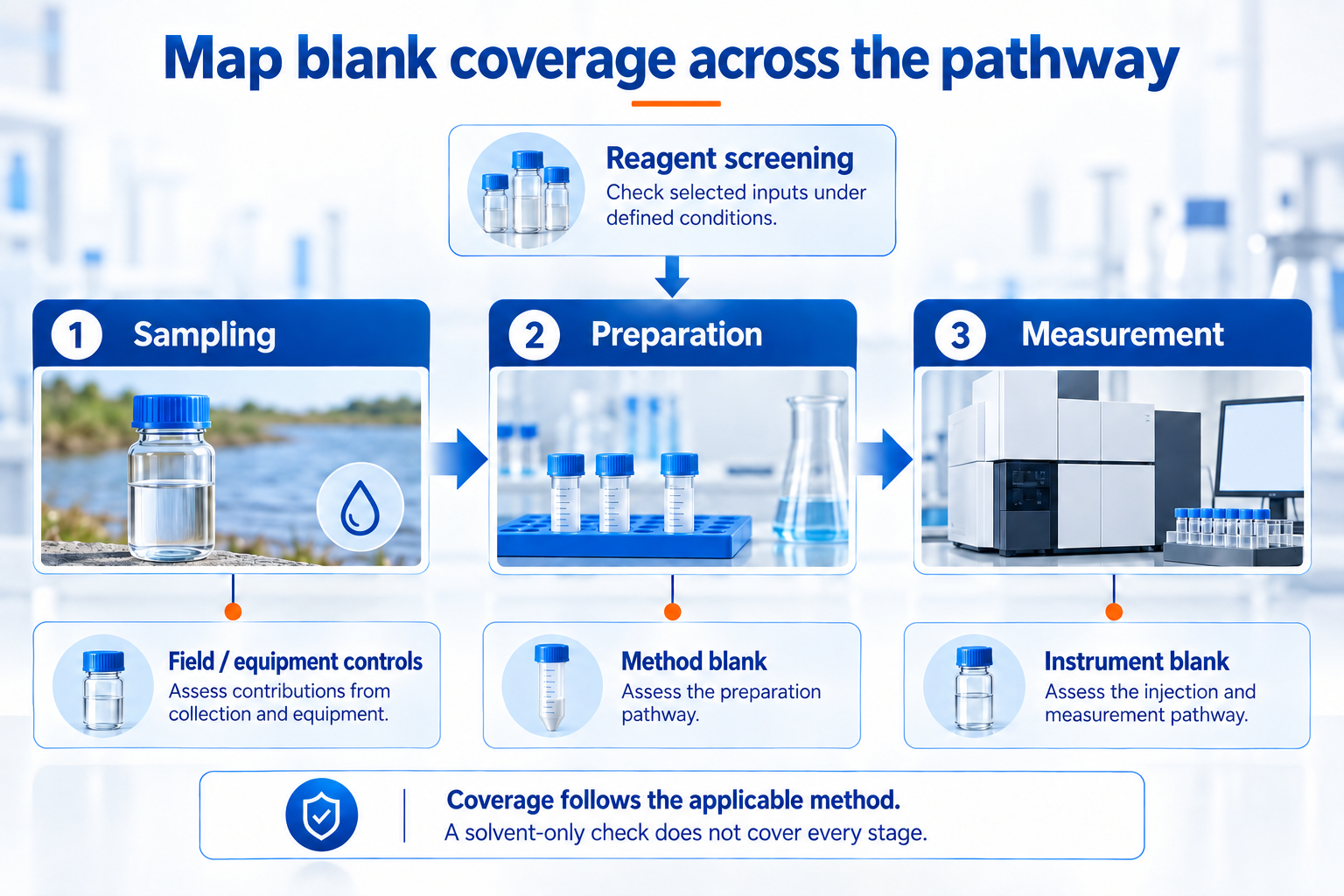
A useful PFAS blank plan covers the actual sampling, preparation and measurement pathway. Testing a solvent alone cannot show whether extraction equipment, consumables or field handling introduced a signal. Select controls and interpret their results under the applicable analytical method and project requirements; a material name or solvent-grade label does not establish suitability for every PFAS measurement.
For QA/QC teams, the practical question is: which control can distinguish a sample contribution from background introduced along this particular pathway? Answering it before sample collection makes later investigations more informative.
Start with the method and matrix
Define the target analytes, sample matrix, reporting objective and method version first. EPA has separate methods for drinking water and other environmental matrices. Consult its drinking-water methods overview for the applicable drinking-water procedures. A procedure that works for one matrix is not automatically transferable to another.
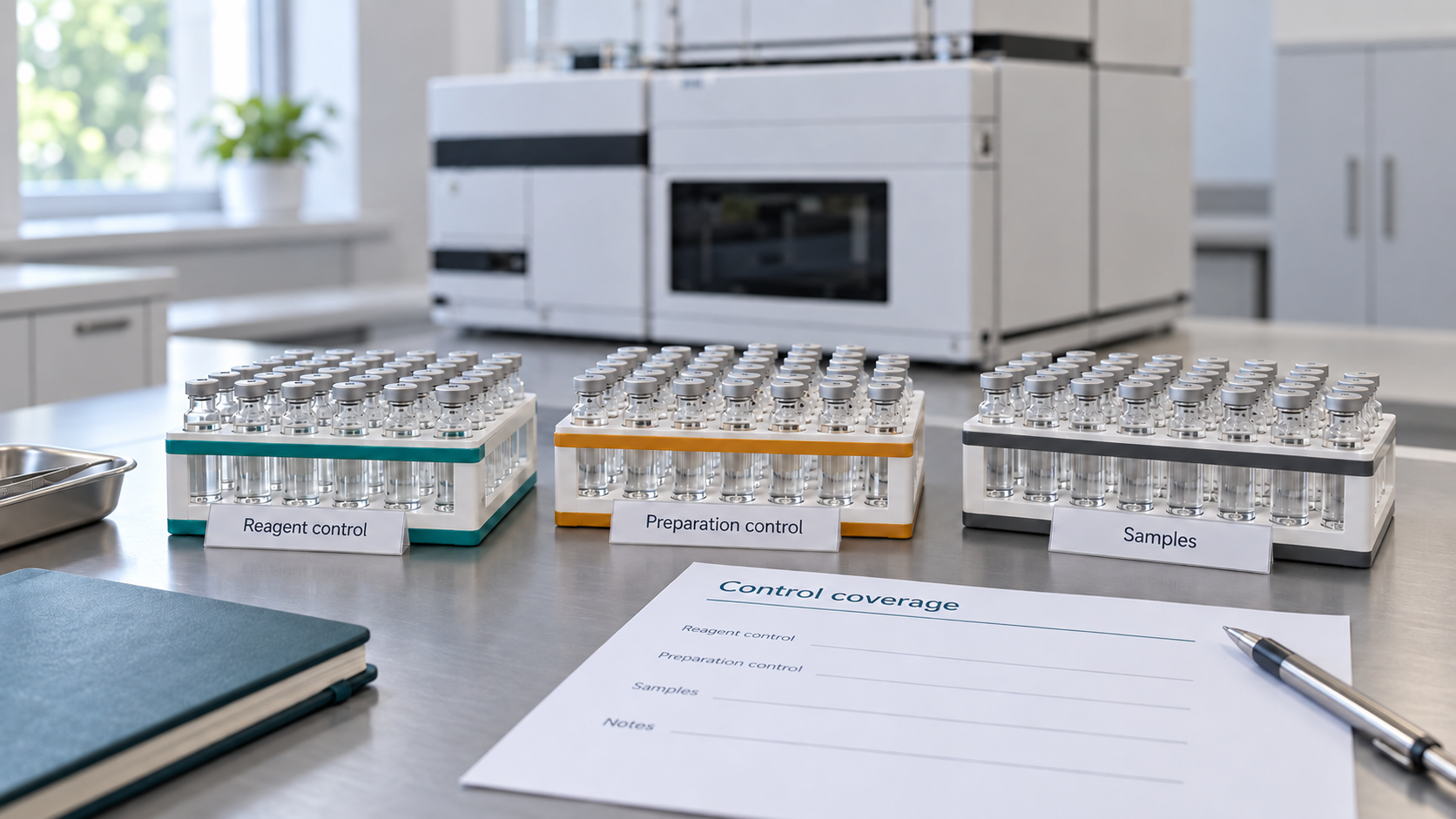
Turn that scope into a one-page control map: sample collection, transport, extraction, cleanup, final extract and instrument sequence. Assign the applicable controls, identifiers and reviewer to each relevant stage. This is a planning aid, not a replacement for the method's specified QC scheme.
Different blanks answer different questions
| Control | Useful question | Important boundary |
|---|---|---|
| Solvent or reagent screening blank | Does a selected input contribute background under the screening conditions? | It does not represent the whole extraction. |
| Method or laboratory reagent blank | Does the laboratory preparation pathway introduce target signals or interference? | Use the method-defined reference matrix, additions and processing steps. |
| Field blank | Could collection and handling contribute contamination? | Its design and required evaluation depend on the method and project. |
| Equipment blank | Could cleaned sampling equipment introduce contamination? | It represents the tested equipment and rinse pathway. |
| Instrument or injection blank | Is background or carryover associated with the measurement sequence? | It cannot establish that sample preparation was clean. |
Terminology matters. In EPA Method 533, the laboratory reagent blank is reagent water processed like a field sample, including the specified isotope-dilution analogues. It is more than a direct injection of reagent water. Document what each locally named blank actually experiences, rather than relying on its name.
Qualify the inputs that contact the sample
EPA Method 1633A, Sections 4 and 7, identifies solvents, reagents and processing hardware as potential contamination or interference sources. It includes lot-based checks for relevant inputs and requires method blanks with sample batches. Consult its precise provisions for the matrix and materials in use.
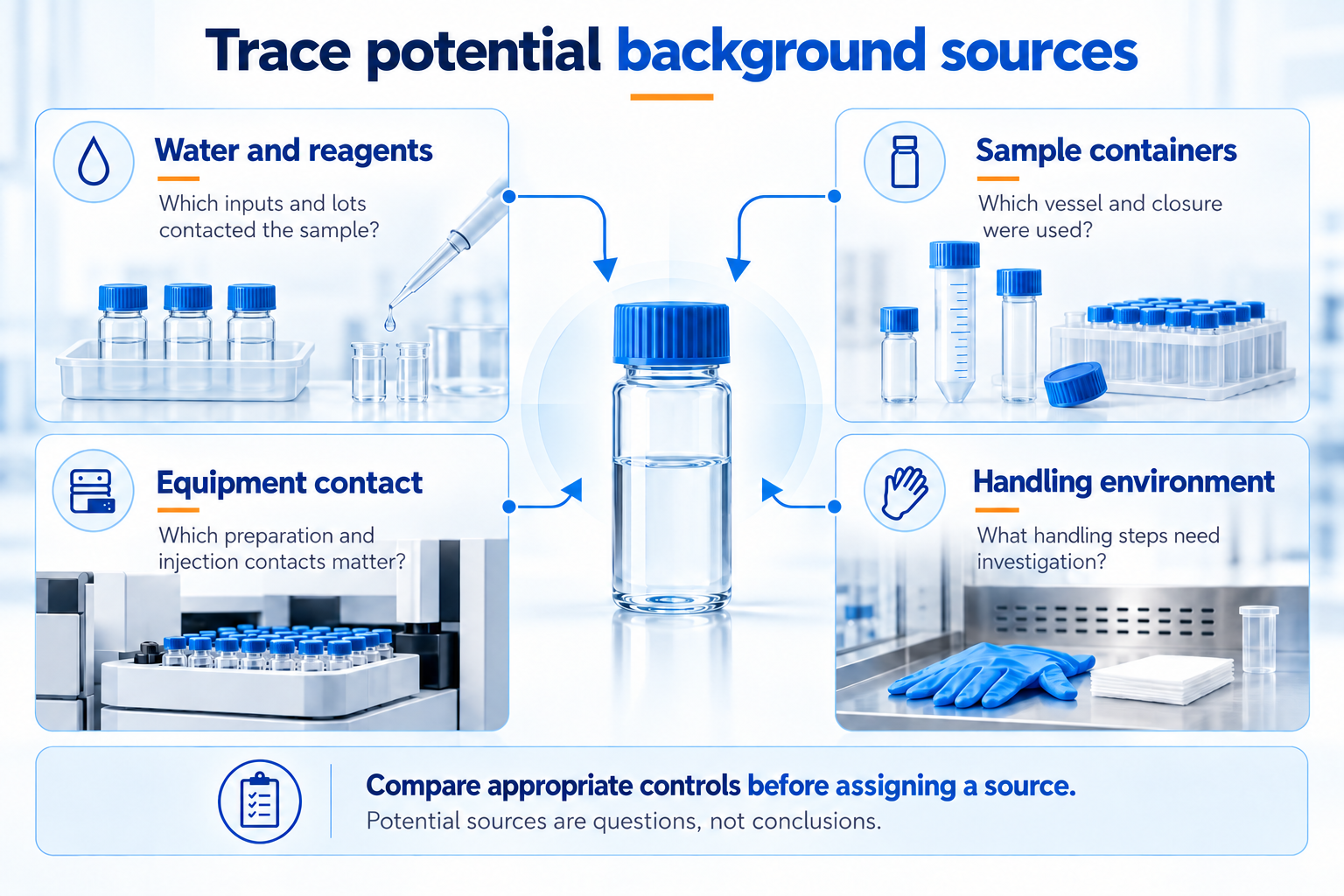
For procurement and laboratory handoff, record the supplier, grade, lot, container identity and opening history alongside the qualification evidence. A certificate of analysis helps establish what was tested for a lot; it does not supply an unlisted PFAS test. Likewise, an LC-MS grade designation should be assessed against the specific application, rather than interpreted as a universal PFAS-free claim.
Include transfer devices, caps, filters and cleanup consumables in the control map when they contact the sample or extract. Apply the method's material provisions and instrument guidance. Avoid creating a universal approved-material list from a single successful blank.
Coordinate the field and laboratory plan
EPA's PFAS sampling guidance for NPDES permits emphasizes laboratory coordination, suitable sample containers and reagent water, and documentation of project-dependent field/equipment blank frequency in the sampling and analysis plan. Those examples concern the methods discussed on that page; they are not a universal rule for every PFAS project.
Before dispatch, agree on who supplies the blank materials, which samples each control accompanies, how identities are recorded and who reviews exceptions. For example, a missing link between a field blank and its associated samples can make an otherwise useful measurement difficult to interpret. Include that relationship in the chain of custody.
Investigate a blank signal without guessing its source
A blank signal is evidence for investigation, not proof that the solvent bottle caused the problem. The broader discussion of solvent impurities and analytical results explains why background needs to be considered in the measurement context.
- Confirm analyte identification, sequence position and the applicable QC evaluation.
- List the sample batches and materials linked to the affected control.
- Plan permitted comparisons that isolate one suspected input or stage at a time.
- Document the correction and obtain the required evidence before resuming or reporting affected work.
Use the governing procedure for sample disposition and reporting. Do not improvise blank subtraction: Method 533 expressly prohibits subtracting blank values from sample results. Different methods have their own evaluation rules, so a familiar threshold from another procedure is not a substitute.
Questions before approving the control plan
- Are the target list, matrix and method version unambiguous?
- Does every control have a stated purpose and traceable association?
- Are relevant reagent and consumable lots linked to qualification evidence?
- Are field responsibilities and laboratory review responsibilities agreed?
- Does the plan reference the actual acceptance and corrective-action procedure?
The goal is a defensible connection between the result and the conditions under which it was obtained. This educational framework supplies neither universal PFAS acceptance limits nor a testing mandate. Laboratory QA should approve its application to a specific method and project before use.
Leave a comment!