Receiving Damaged Chemical Containers: A Quarantine and Escalation Checklist
Do not release a visibly damaged chemical delivery into routine stock until an authorized person has assessed it. Instead, pause receiving, prevent unnecessary access from a safe position and contact the site's designated safety and receiving leads.
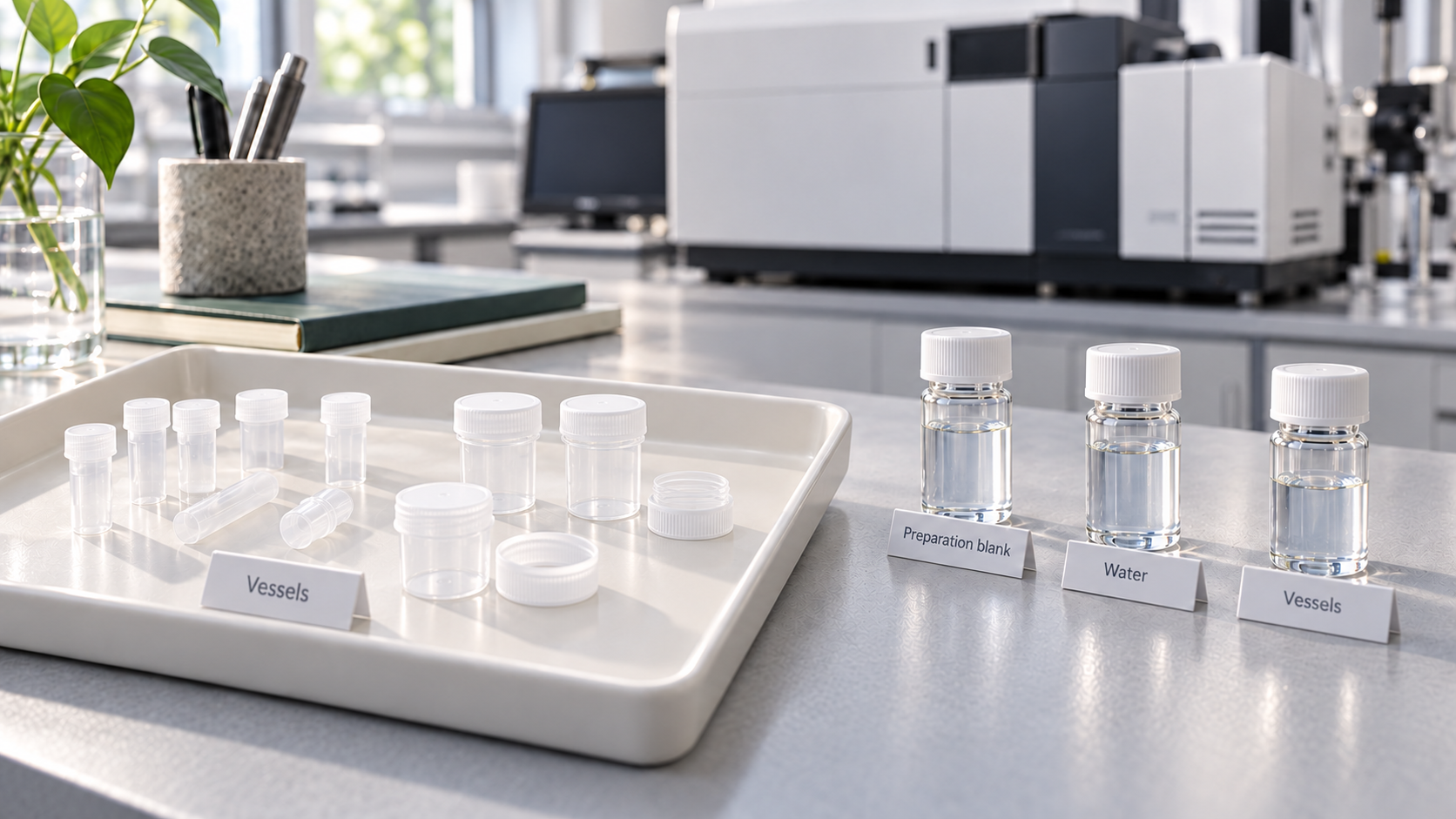
Trace-Metal Contamination: Checking Vessels, Water and Preparation Blanks
Before replacing an acid grade to solve a trace-metal blank problem, investigate the complete preparation pathway. Water, reagents, vessel surfaces, closures, transfer tools and handling can all contribute background.
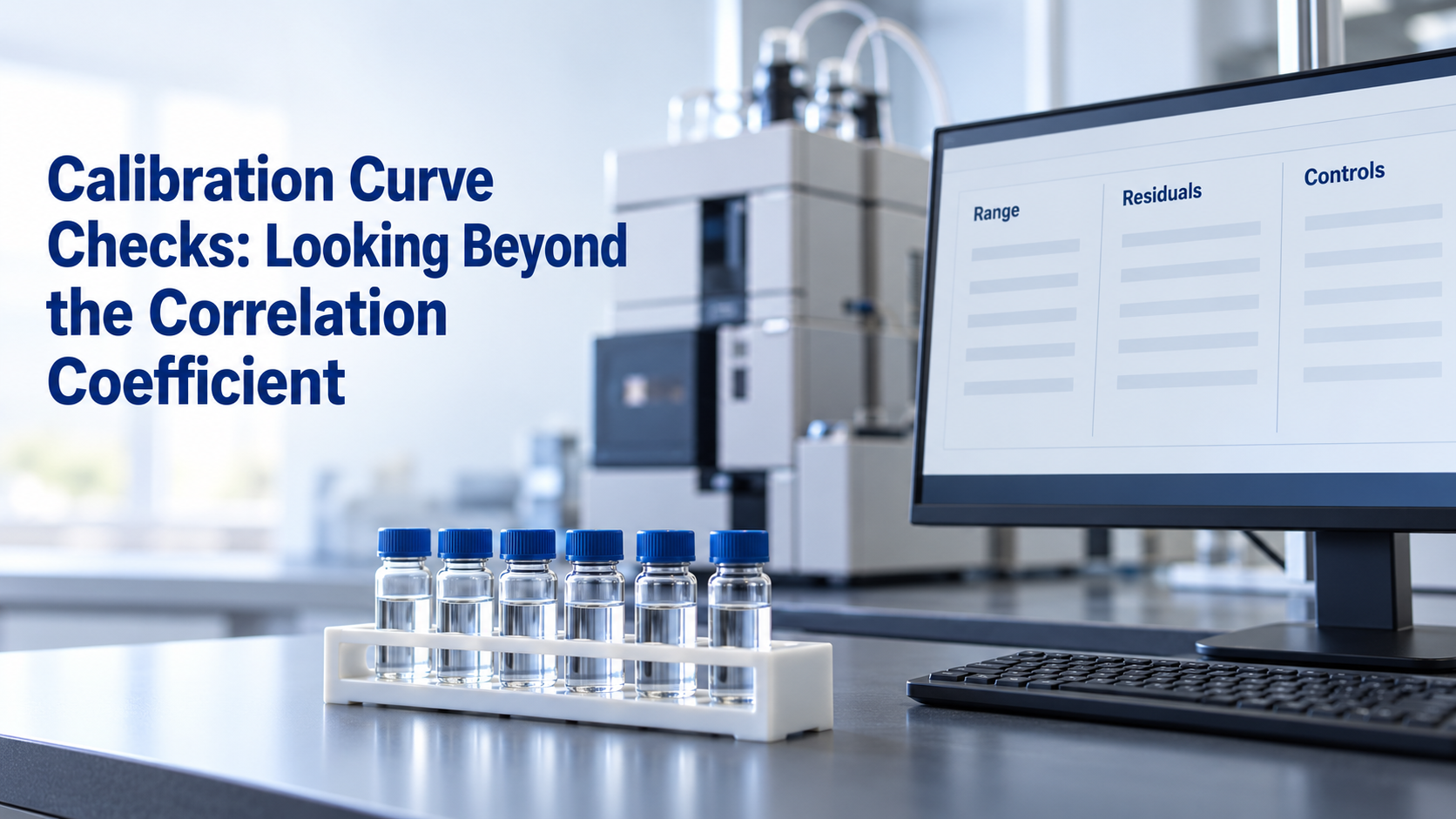
Calibration Curve Checks: Looking Beyond the Correlation Coefficient
A high correlation coefficient does not establish that a calibration is fit for reporting sample results. Check the calibration range, response model, residuals, back-calculated standards and appropriate independent controls using the method's predefined criteria.
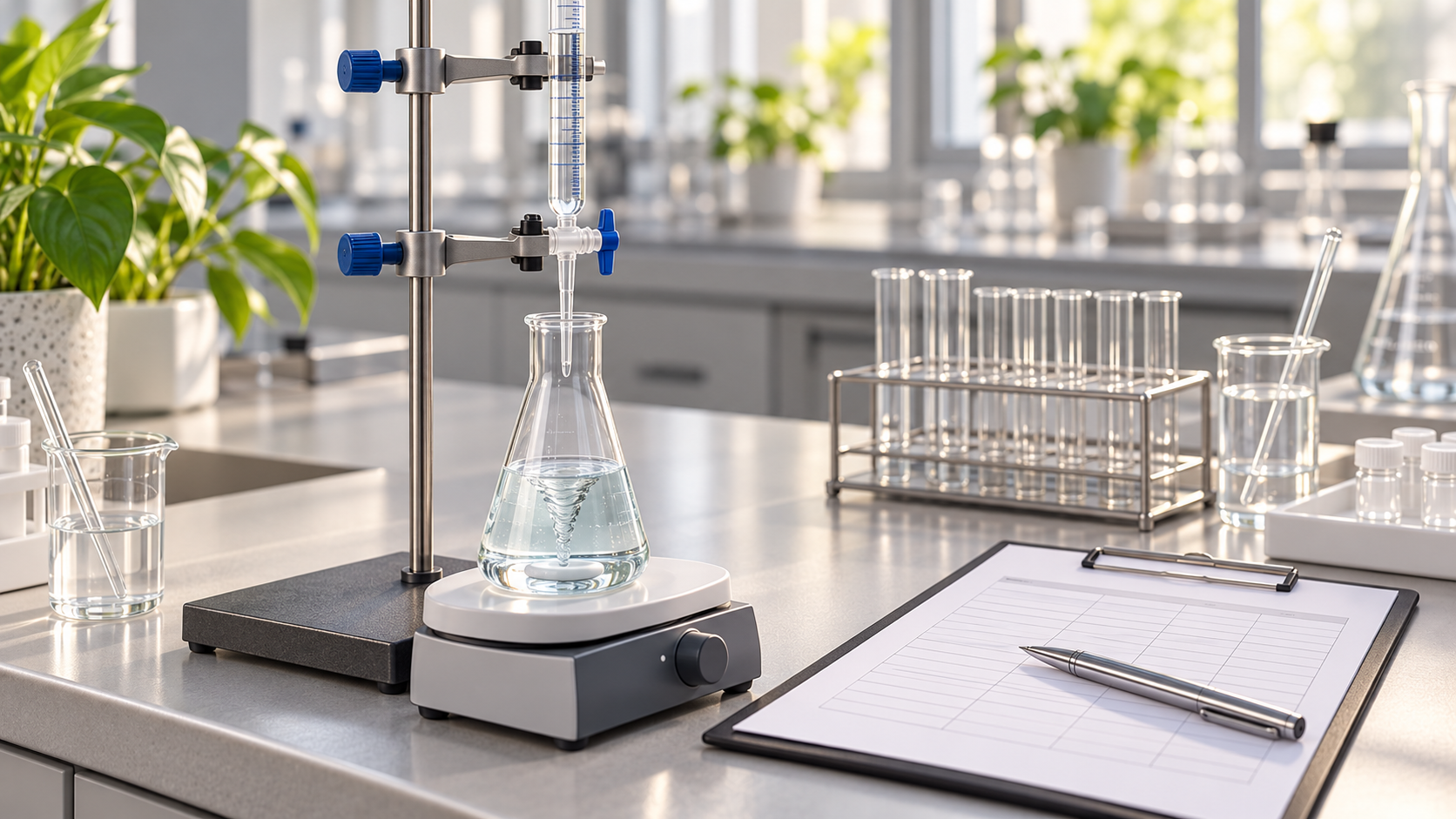
Why Titrant Standardization Matters Even When the Label States a Concentration
A concentration on a titrant label describes the supplied material under its documented conditions. Standardization establishes the working concentration or correction factor used by the laboratory's titration method.
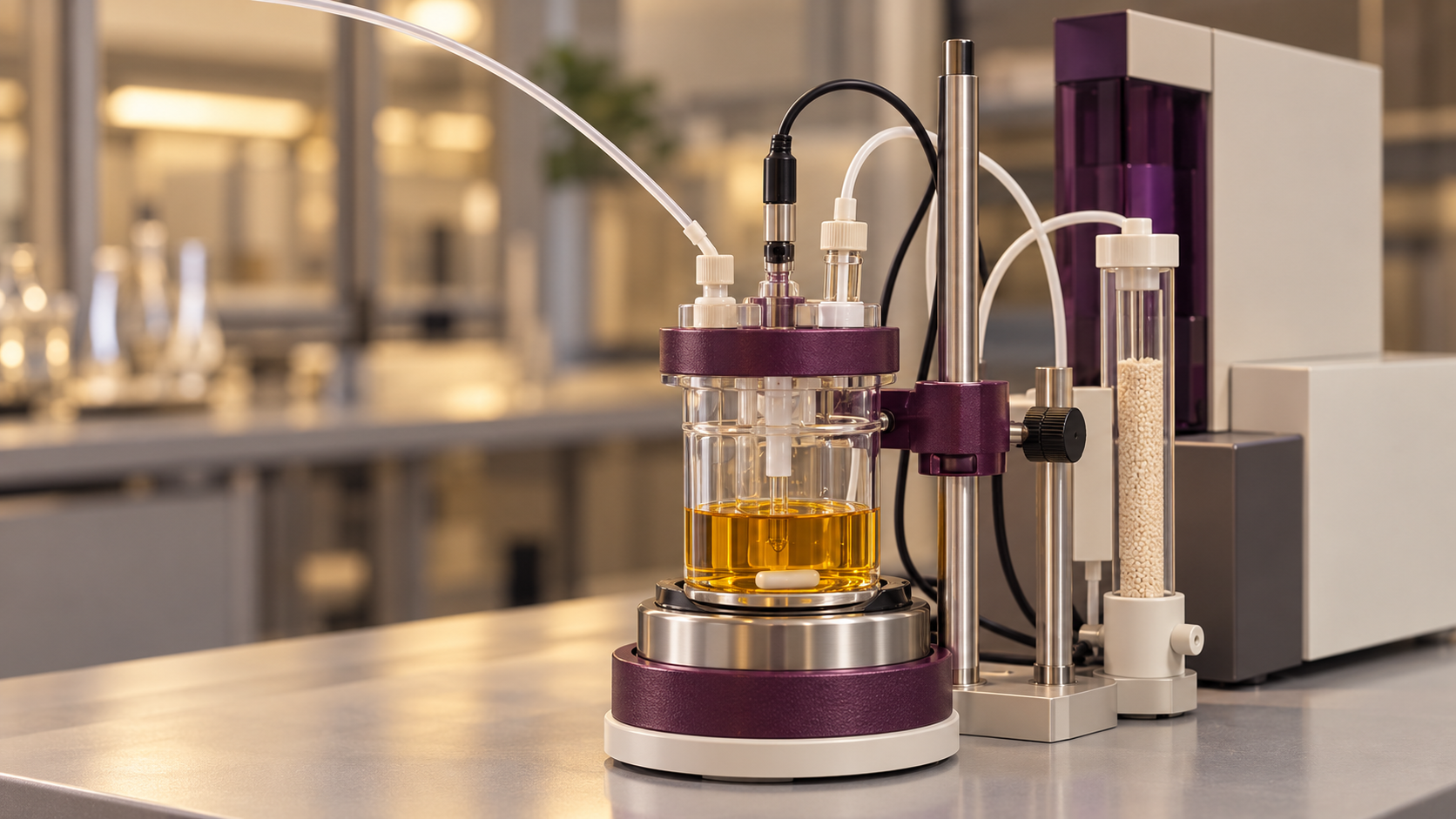
Coulometric vs Volumetric Karl Fischer: Choosing a Water-Measurement Approach
Choose a Karl Fischer (KF) approach from the expected amount of water entering the cell, the sample matrix and the demonstrated performance of the complete procedure. Coulometry generates iodine electrochemically; volumetry dispenses an iodine-containing titrant.
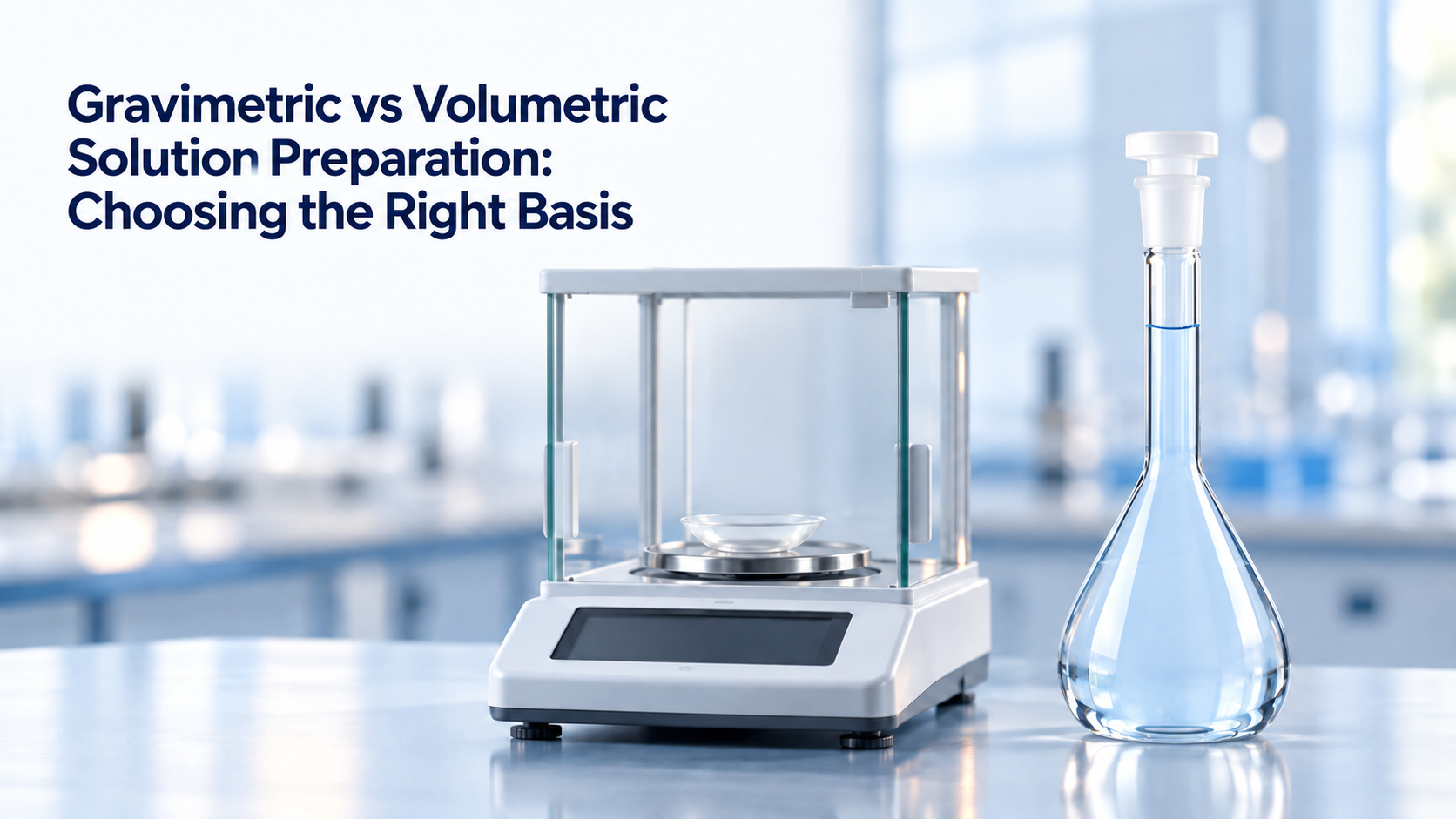
Gravimetric vs Volumetric Solution Preparation: Choosing the Right Basis
Choose the preparation approach by first defining the required quantity: analyte mass per total solution mass, analyte mass per solution volume, or another specified basis.
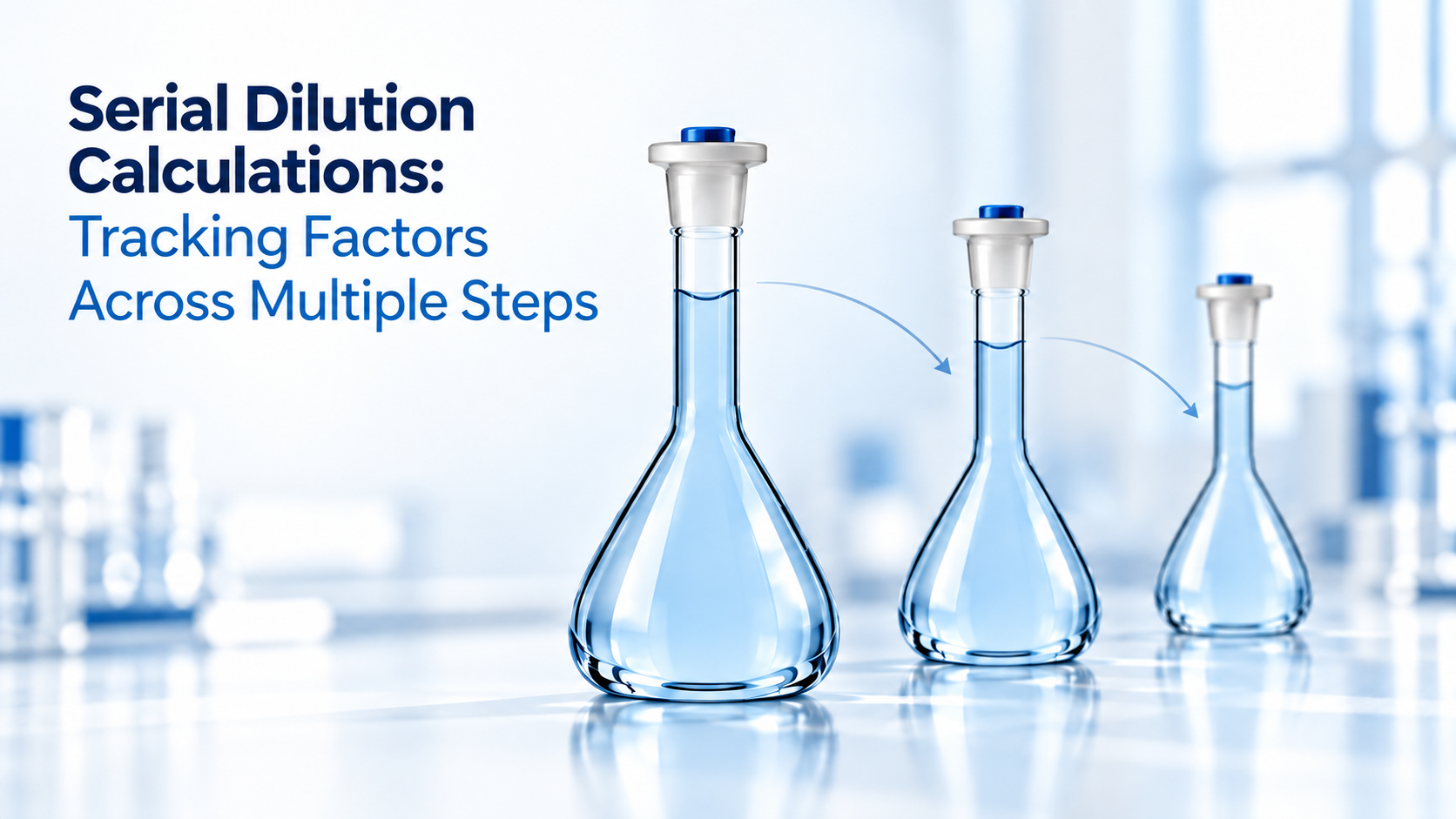
Serial Dilution Calculations: Tracking Factors Across Multiple Steps
For a serial dilution, calculate each step from the solution actually transferred into that step, then multiply the step dilution factors to obtain the overall factor. A tenfold dilution followed by a fivefold dilution and a twofold dilution gives an overall factor of 100. The final concentration is the original stock concentration divided by 100, provided the analyte is conserved throughout the preparation.
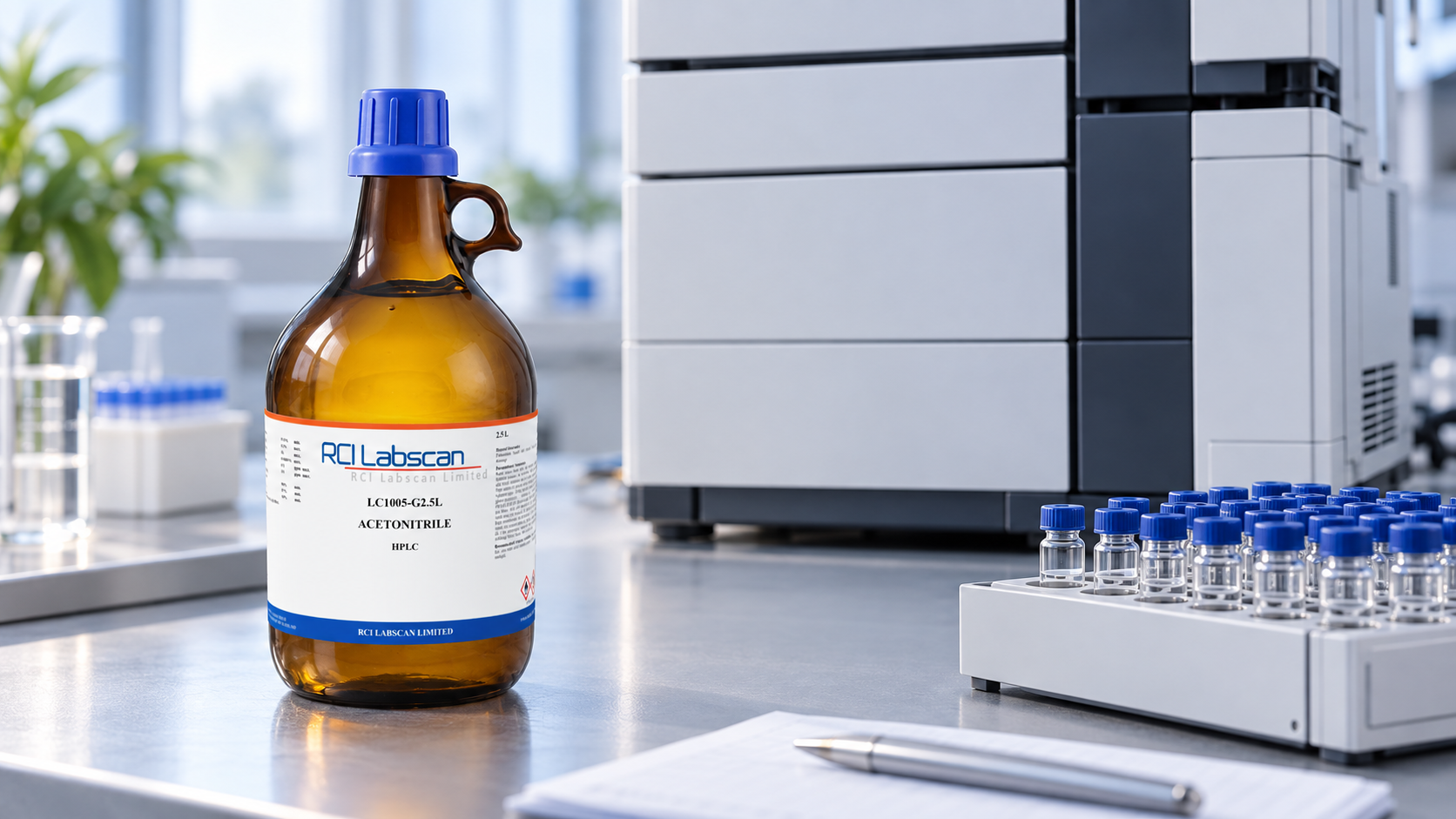
HPLC Injection-Solvent Mismatch: When Sample Diluent Distorts Peak Shape
A sample can be fully dissolved yet arrive at the column in a solvent environment that disrupts the separation. In reversed-phase HPLC, a diluent with greater elution strength than the initial mobile phase can reduce focusing of the injected band.
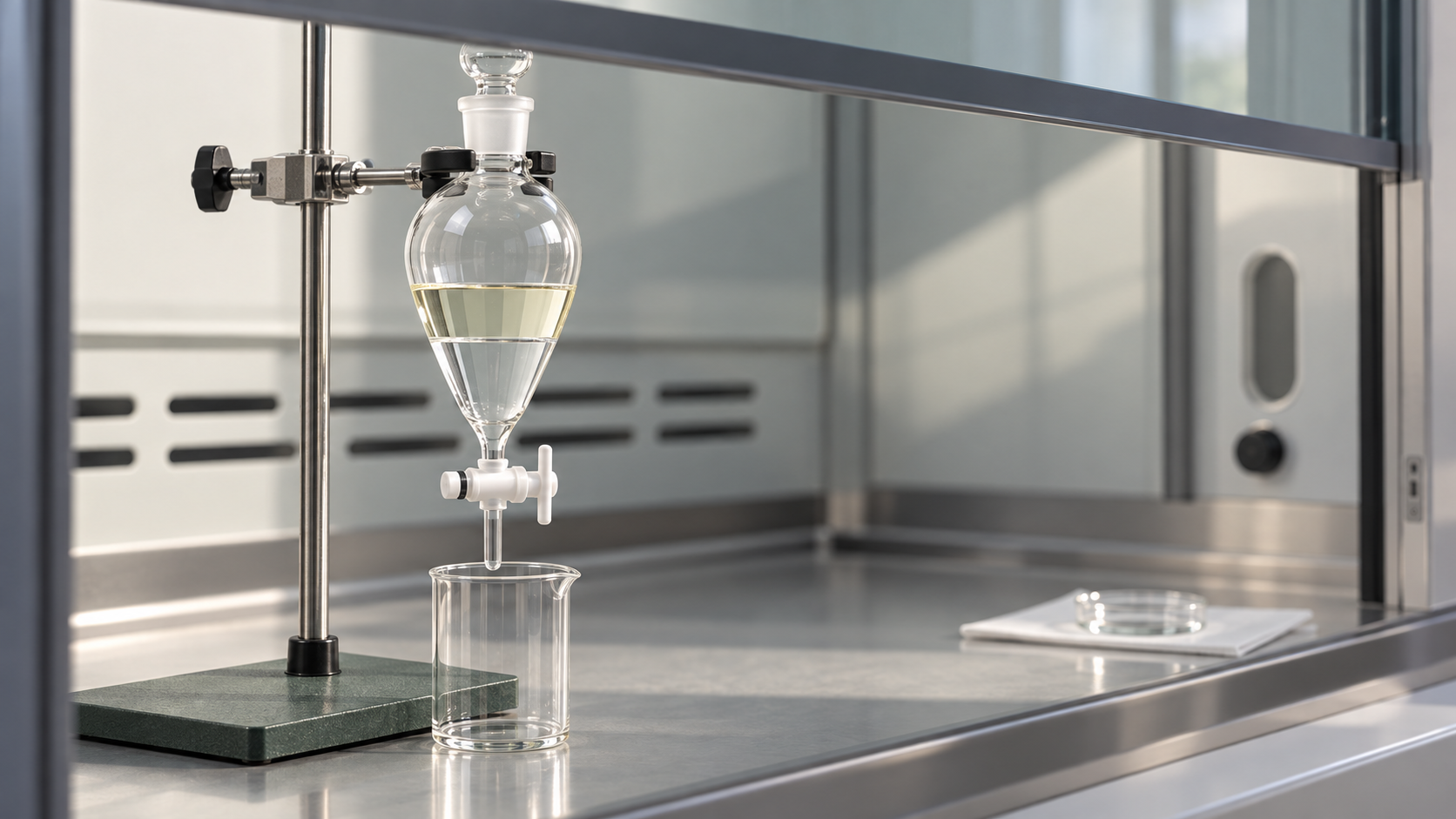
Liquid-Liquid Extraction: How Polarity, pH and Partitioning Work Together
Liquid-liquid extraction separates substances by how they distribute between two liquid phases. The solvent pair determines the environment available to the analyte, while its chemical form influences which phase it favors.
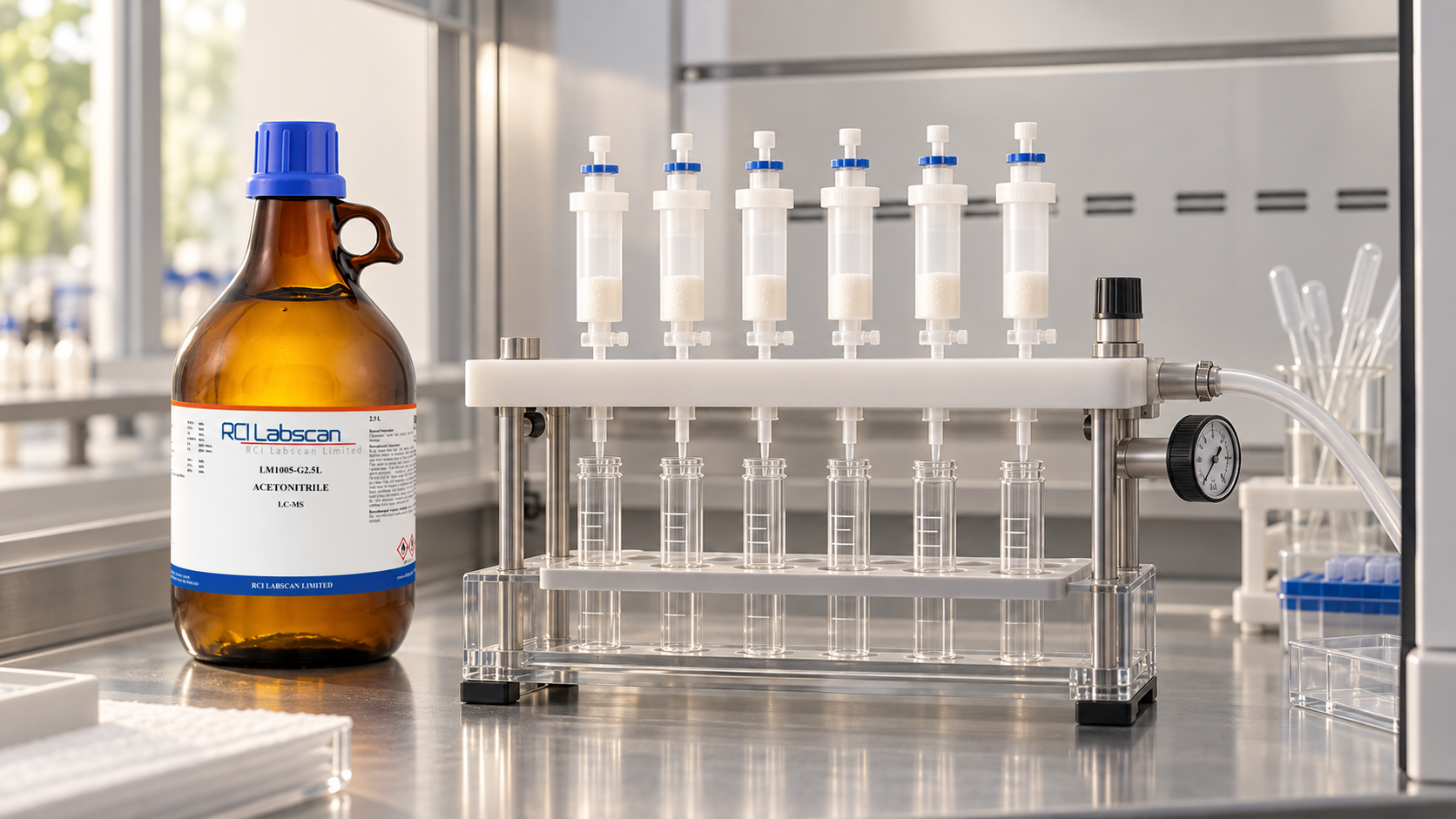
Selecting SPE Elution Solvents: Balancing Recovery and Matrix Cleanup
Select an SPE elution solvent by identifying how the analyte interacts with the sorbent. Then test conditions that release the analyte while limiting unwanted matrix in the collected fraction.
We use cookies to ensure that we give you the best experience on our website. Unless you've selected "Allow", our website will deactivate the cookies session by default.