
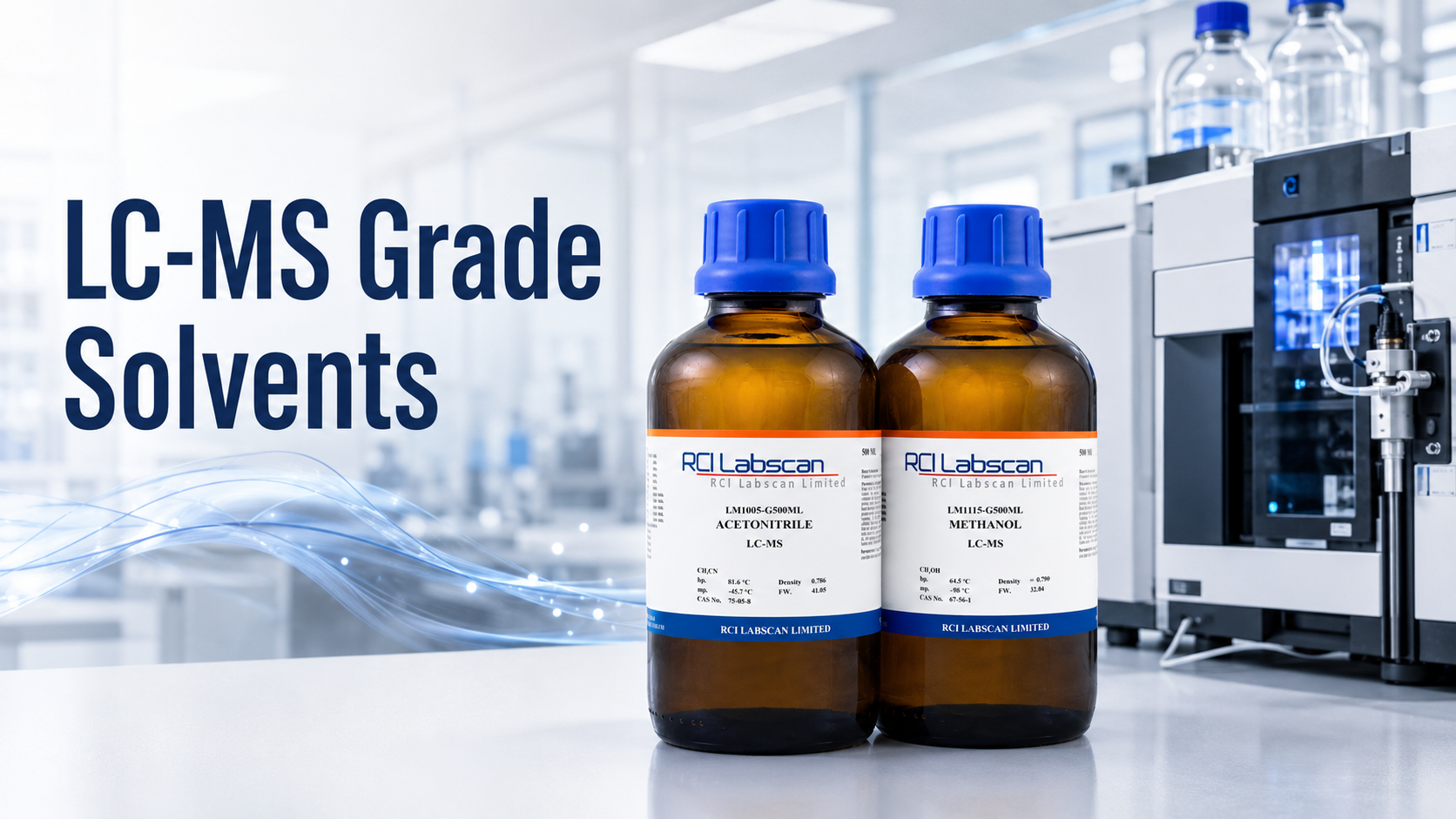
Why Are LC-MS Grade Solvents Important for Analytical Results?

Direct Answer
LC-MS grade solvents are important because liquid chromatography–mass spectrometry can detect very small amounts of chemicals, including impurities originating from the mobile phase.
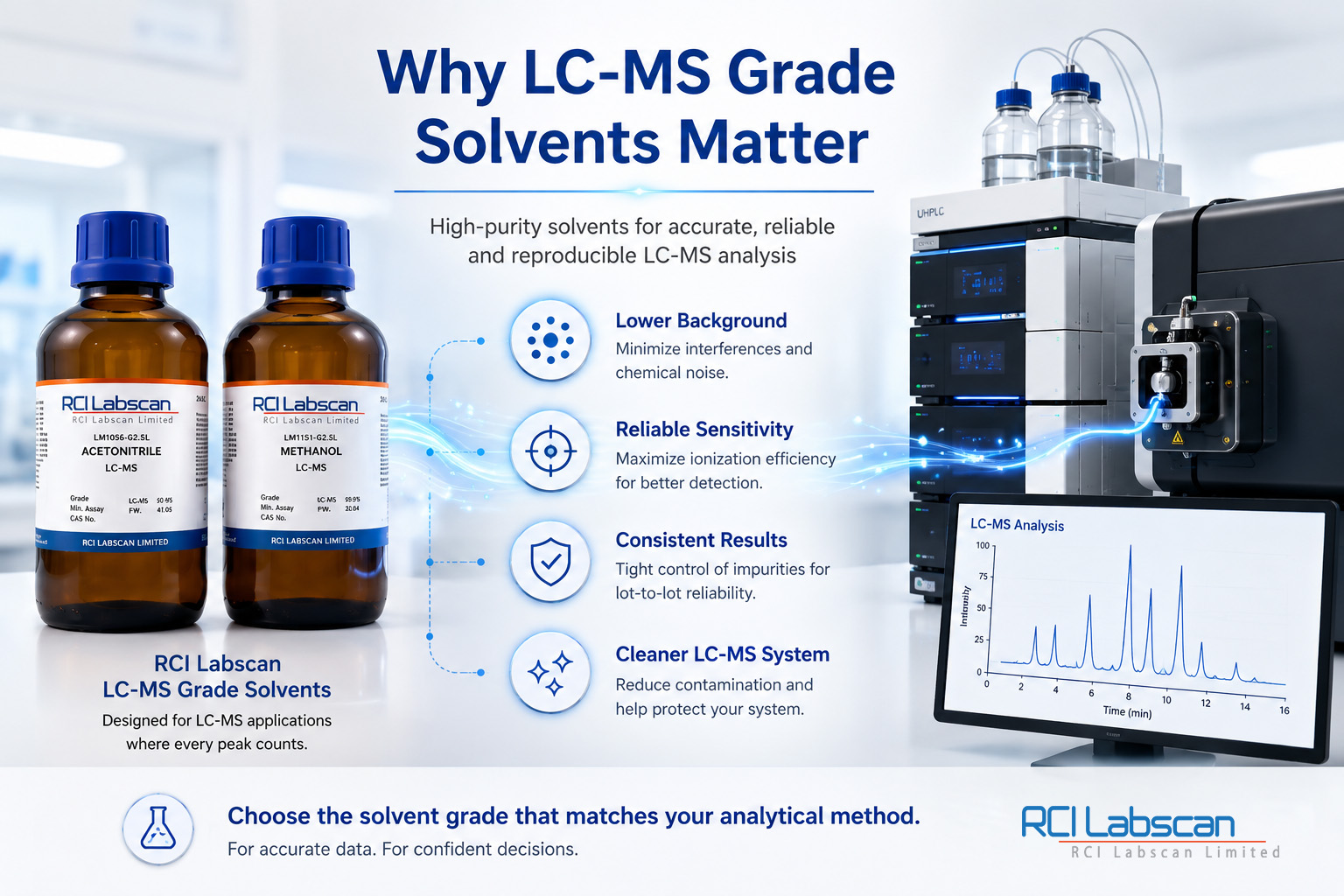
Using a solvent produced and controlled for LC-MS applications may help reduce background signals, unwanted peaks, ion suppression, contamination, and inconsistent analytical response. As a result, an appropriate LC-MS grade solvent can support cleaner spectra, reliable sensitivity, and better method reproducibility.
However, laboratories should always select the solvent according to the validated method, instrument requirements, detector conditions, and approved product specifications.
What Is an LC-MS Grade Solvent?
An LC-MS grade solvent is a high-purity solvent intended for use in liquid chromatography coupled with mass spectrometry.
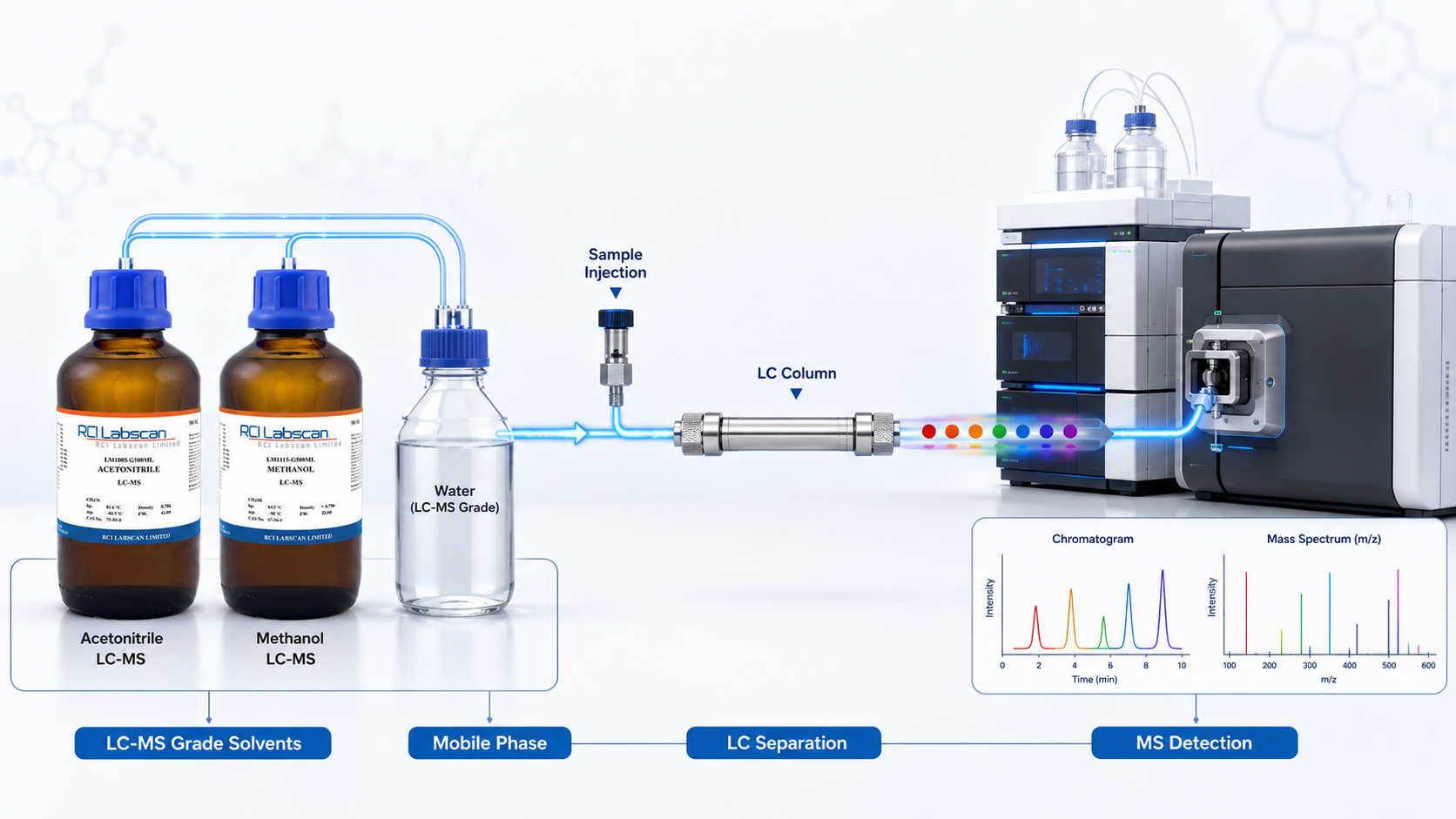
In LC-MS analysis, the solvent forms part of the mobile phase that carries the sample through the chromatographic column and into the mass spectrometer. Therefore, any impurity present in the solvent may also enter the analytical system.
Compared with solvents intended for less sensitive laboratory applications, LC-MS grade solvents are generally controlled with mass spectrometry-related analytical requirements in mind.
The relevant quality parameters depend on the product and application. Users should review the approved product specification or Certificate of Analysis rather than assuming that all LC-MS grade solvents have identical properties.
Why Is LC-MS Sensitive to Solvent Quality?
LC-MS combines two analytical processes:
- Liquid chromatography separates components within a sample.
- Mass spectrometry detects compounds according to their mass-to-charge characteristics.
Mass spectrometers can detect compounds at very low concentrations. This high sensitivity is valuable for trace analysis, but it also means that contaminants from solvents, containers, tubing, additives, sample preparation materials, or the laboratory environment may become visible in the results.
Therefore, the solvent should not be treated only as a liquid that transports the sample. It is part of the analytical system and can influence the quality of the final data.
How Can Solvent Quality Affect LC-MS Results?
Solvent-related impurities may affect LC-MS analysis in several ways. The effect depends on the type of contaminant, its concentration, the ionization technique, the analytical method, and the compounds being measured.
Potential effects include:
- Increased background signals
- Unexpected or interfering peaks
- Ion suppression or signal enhancement
- Reduced sensitivity
- Variable detector response
- Contamination inside the LC-MS system
- Poor reproducibility between analytical runs
- More frequent system cleaning or troubleshooting
Not every analytical problem originates from the solvent. Nevertheless, solvent quality is an important factor to investigate when laboratories experience unexplained background signals or inconsistent results.
1. Background Signals and Unwanted Peaks
Impurities in the mobile phase may produce signals that appear in the chromatogram or mass spectrum.
These signals may make data interpretation more difficult, particularly when the target compound is present at a low concentration. In some cases, background contaminants may overlap with the mass range or retention region of an analyte.
A suitable LC-MS grade solvent may help reduce solvent-related background. However, analysts should also check other possible contamination sources, including:
- Mobile phase additives
- Water quality
- Sample containers
- Vials and caps
- Tubing and seals
- Column contamination
- Sample preparation materials
- Previous analytical runs
A blank injection can help laboratories determine whether an unexpected signal may originate from the mobile phase or another part of the analytical process.
2. Ion Suppression and Signal Response
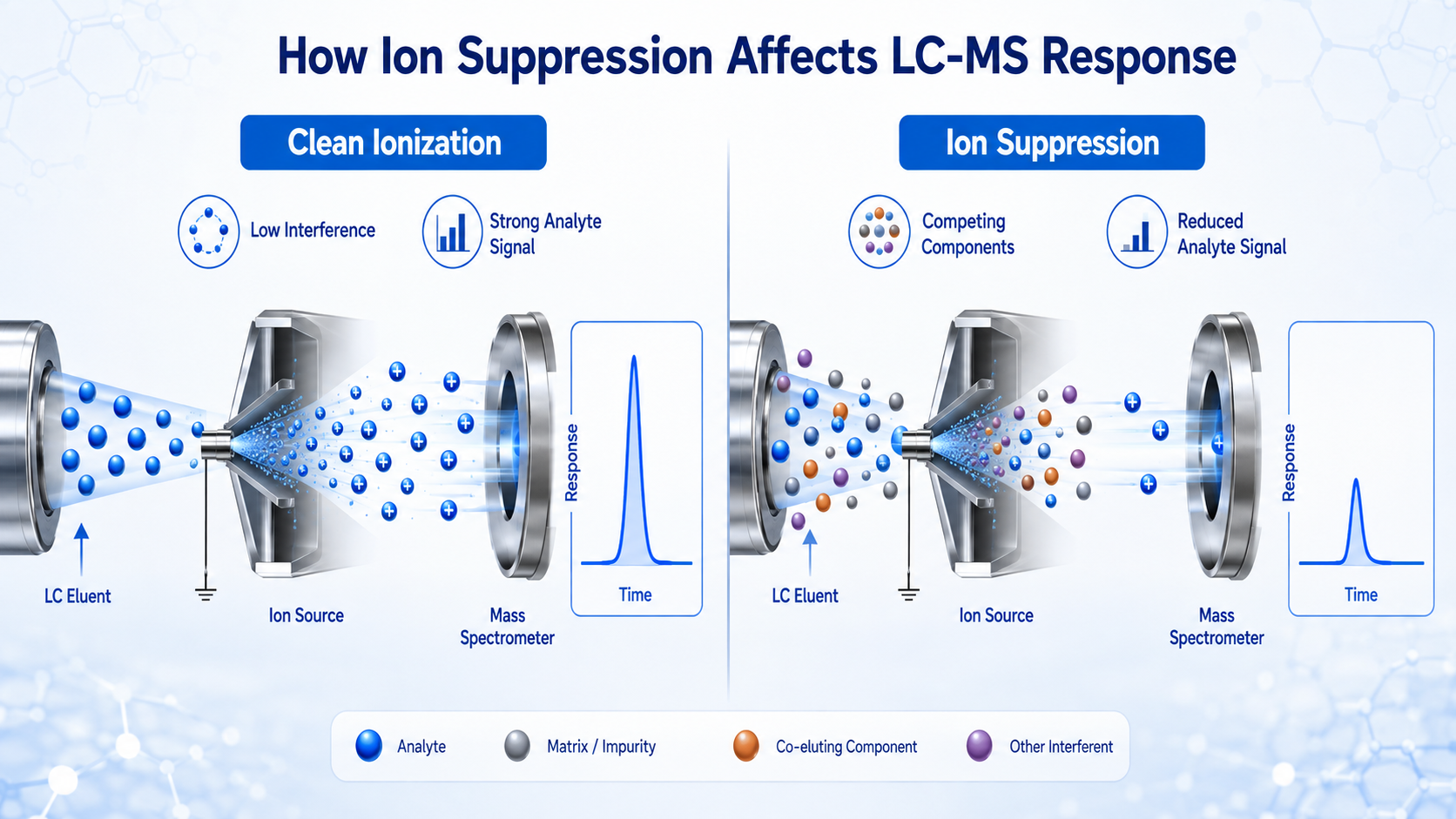
Ion suppression occurs when other substances reduce the efficiency with which an analyte forms detectable ions.
Because LC-MS detection depends on ion formation, contaminants that compete during the ionization process may decrease the measured response of the target compound. In other situations, components in the sample or mobile phase may increase the signal.
This means that the measured response may not reflect only the concentration of the analyte. It may also be influenced by the surrounding chemical environment.
Using an appropriate solvent grade can reduce one possible source of unwanted chemical components. However, ion suppression can also result from the sample matrix, co-eluting compounds, additives, or unsuitable chromatographic conditions.
3. Sensitivity at Low Concentrations
LC-MS is commonly selected when laboratories need sensitive detection or trace-level analysis.
When the target analyte produces a small signal, background contamination becomes more significant. A contaminant that has little effect on a high-concentration sample may interfere with a method designed to measure much lower concentrations.
For this reason, laboratories conducting sensitive LC-MS analysis should consider:
- Solvent grade
- Mobile phase purity
- Water quality
- Additive quality
- Cleanliness of sample preparation
- Instrument condition
- Blank performance
- Method detection requirements
Selecting LC-MS grade solvent alone cannot guarantee sensitivity. Instead, it supports a broader contamination-control and method-quality strategy.
4. Contamination of the LC-MS System
Non-volatile or difficult-to-remove contaminants may accumulate within the LC-MS system.
Depending on their source and properties, contaminants may affect components such as the injector, tubing, column, ion source, or other parts of the analytical flow path. This may contribute to carryover, persistent background signals, or increased maintenance requirements.
Appropriate solvent quality can help reduce the amount of unwanted material introduced through the mobile phase.
Nevertheless, laboratories should continue to follow the instrument manufacturer’s recommendations for system suitability, cleaning, maintenance, and mobile phase preparation.
5. Reproducibility and Lot-to-Lot Consistency
Analytical laboratories often need results that remain consistent across multiple runs, days, analysts, and solvent lots.
Changes in solvent quality may affect:
- Background response
- Ionization behaviour
- Retention characteristics
- Signal intensity
- Blank performance
- Method suitability
For routine QA/QC or validated methods, laboratories may need to review product documentation and confirm that the solvent meets their established method requirements.
Reliable documentation also helps laboratories investigate changes when transitioning from one solvent lot to another.
LC-MS Grade vs HPLC Grade Solvents
HPLC grade and LC-MS grade solvents are both intended for chromatographic work, but they are not automatically interchangeable.
HPLC grade solvents are commonly used with chromatographic detectors such as UV or PDA detectors. Their quality controls may focus on parameters relevant to HPLC analysis, including chromatographic purity, optical properties, residue, and other specified impurities.
LC-MS grade solvents are intended for applications that use mass spectrometry detection. Because mass spectrometry can detect different types of contaminants at very low levels, additional quality considerations may be relevant.
The exact differences depend on the manufacturer and individual product specification.
Therefore:
- HPLC grade should not automatically be assumed to be suitable for every LC-MS method.
- LC-MS grade should not be described as universally necessary for every chromatography application.
- Laboratories should follow the validated method and instrument requirements.
- Actual specifications should be reviewed before selection.
What Should Laboratories Check Before Selecting an LC-MS Solvent?
Before purchasing or approving a solvent for LC-MS analysis, laboratories may review the following factors:
| Selection Factor | Why It Matters |
|---|---|
| Intended analytical technique | Confirms whether the solvent is designed for LC-MS use |
| Product specification | Shows the approved quality parameters for the product |
| Certificate of Analysis | Provides lot-specific analytical information |
| Method requirements | Ensures the solvent matches the validated analytical procedure |
| Detector and ionization conditions | Different conditions may respond differently to contaminants |
| Mobile phase additives | Additives can also contribute to background or ion suppression |
| Water quality | Water is often a major component of the mobile phase |
| Packaging and handling | Contamination may occur after the product is opened |
| Lot consistency | Important for routine and validated laboratory work |
| Supplier documentation | Supports traceability and quality review |
Laboratories should avoid selecting a solvent based only on the chemical name or general purity statement. The grade, specification, analytical method, and documentation should also be considered.
Good Practices for Using LC-MS Grade Solvents
Even a suitable solvent can become contaminated during preparation or use.
Laboratories should follow their internal procedures and consider practices such as:
- Using clean and appropriate mobile phase containers
- Preparing mobile phases in a controlled environment
- Using additives of a suitable quality
- Avoiding unnecessary exposure to the laboratory environment
- Clearly labelling prepared mobile phases
- Monitoring blank injections
- Following defined storage and handling procedures
- Reviewing the SDS and approved product documentation
- Following instrument manufacturer recommendations
Detailed storage, handling, and safety requirements should always be confirmed from the product SDS and laboratory procedures.
Related RCI Labscan Products
RCI Labscan provides high-purity solvents intended for analytical laboratory applications, including solvents for LC-MS workflows.
Relevant product groups may include:
- Acetonitrile LC-MS
- Methanol LC-MS
- Other LC-MS grade solvents
- HPLC grade solvents for chromatographic applications
Customers should review the applicable product specification and documentation to confirm that a product is suitable for their analytical method.
For product information, documentation requests, or availability, customers may contact RCI Labscan or an authorized local distributor.
Frequently Asked Questions
Why can regular laboratory solvent cause problems in LC-MS?
A general laboratory solvent may contain impurities that are not controlled for sensitive mass spectrometry detection. These impurities may contribute to background signals, interference, contamination, or variable analytical response.
Can HPLC grade solvent be used for LC-MS?
It depends on the method and product specification. HPLC grade solvent should not automatically be assumed to meet the requirements of an LC-MS method. Laboratories should follow their validated procedure and review the approved solvent specification.
Does LC-MS grade solvent guarantee accurate results?
No. Solvent quality is only one part of the analytical process. Accurate results also depend on method validation, calibration, sample preparation, mobile phase additives, instrument condition, operator practices, and quality control procedures.
What solvents are commonly used in LC-MS mobile phases?
Water, Acetonitrile, and Methanol are commonly used in many LC-MS mobile phases. The correct solvent and composition depend on the analytical method, column, target compounds, and ionization conditions.
Can water quality affect LC-MS results?
Yes. Water is often a major part of the mobile phase and may introduce contaminants or background signals. Laboratories should select water quality according to the requirements of their LC-MS method.
What documents should be checked before purchasing LC-MS solvent?
Laboratories may review the product specification, Safety Data Sheet, Certificate of Analysis, grade information, and other approved technical documentation provided by the supplier.
Conclusion
LC-MS grade solvents are important because the mass spectrometer may detect not only the target analytes but also impurities introduced through the mobile phase.
An appropriate solvent grade may help support lower background signals, consistent ionization, sensitive detection, cleaner system operation, and reproducible analytical results. However, solvent selection should always be based on the validated method, instrument requirements, product specification, and laboratory quality procedures.
By reviewing both solvent grade and supporting documentation, laboratories can make more informed decisions and reduce avoidable sources of uncertainty in LC-MS analysis.
Explore related products:
Related article:
- HPLC Grade vs LC-MS Grade Solvents
- What Is HPLC Grade Solvent?
- How to Choose Acetonitrile for HPLC Solvents
Leave a comment!