
Glass Bottle vs Plastic Bottle: Which Chemical Container Is Better?
(A Practical Guide to Choosing the Right Chemical Packaging for Laboratory, Industrial, and Storage Applications)
Direct Answer
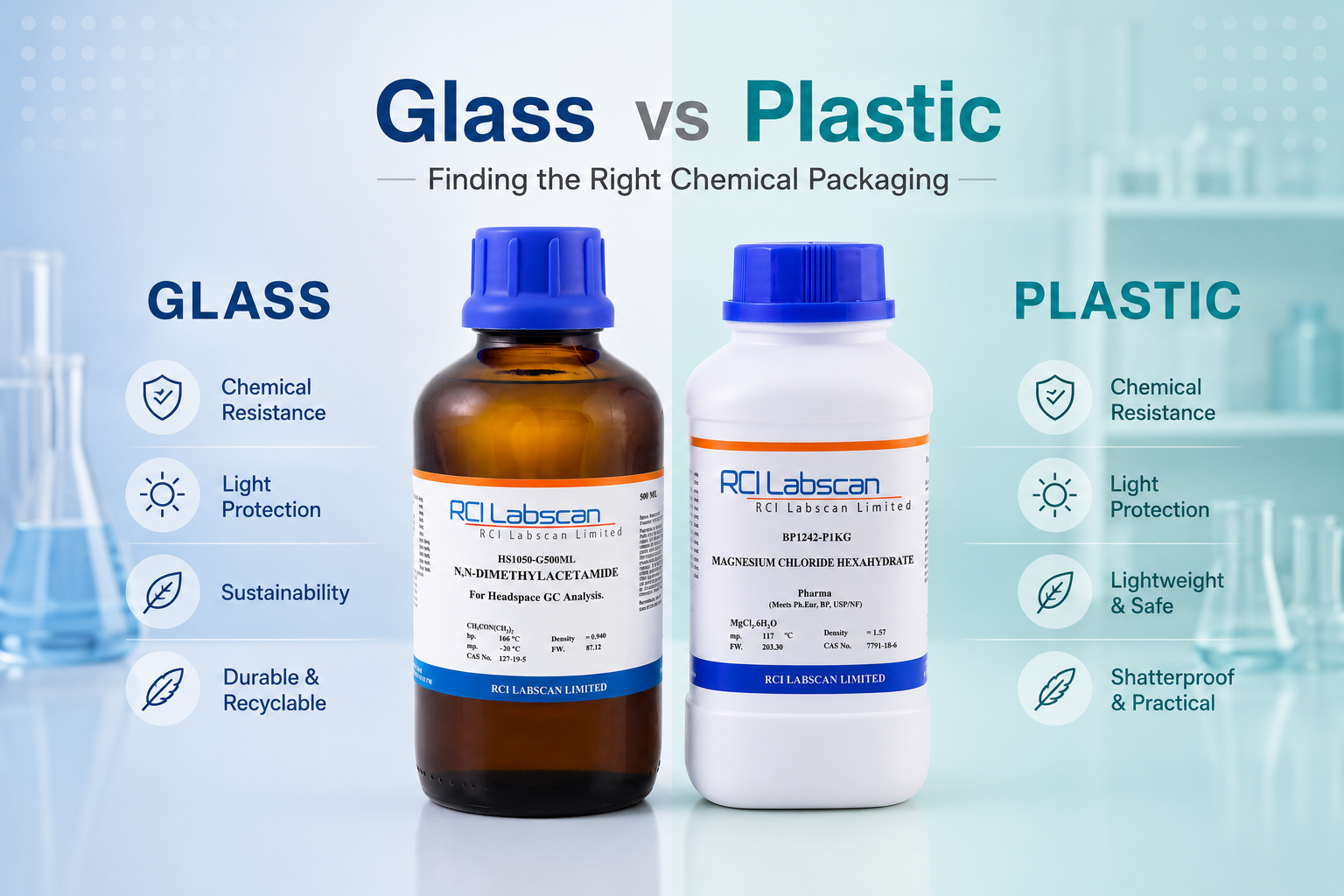
Both glass bottles and plastic bottles are widely used for packaging laboratory chemicals, and neither is universally better than the other. The right choice depends on the chemical compatibility, storage conditions, transportation requirements, and intended application.
Glass bottles generally offer excellent chemical resistance, low permeability, and high purity protection, making them suitable for many analytical reagents and solvents. Plastic bottles, on the other hand, are lightweight, impact-resistant, and easier to transport, making them a practical option for many acids, bases, and routine laboratory chemicals when chemical compatibility is confirmed.
Because different chemicals interact differently with packaging materials, users should always verify the recommended container material specified by the manufacturer and review the Safety Data Sheet (SDS) or product documentation before storage or use.
Why Does Chemical Packaging Matter?
Chemical packaging is more than just a container. The bottle plays an important role in protecting chemical quality throughout transportation, storage, and laboratory use.
An appropriate packaging material helps:
- Maintain product purity
- Reduce contamination risk
- Prevent evaporation or moisture ingress
- Protect chemicals from light exposure (when using amber bottles)
- Improve user safety during handling and storage
Selecting the wrong packaging material may affect chemical stability, shorten shelf life, or create compatibility issues with certain reagents.
Glass Bottles for Chemical Storage
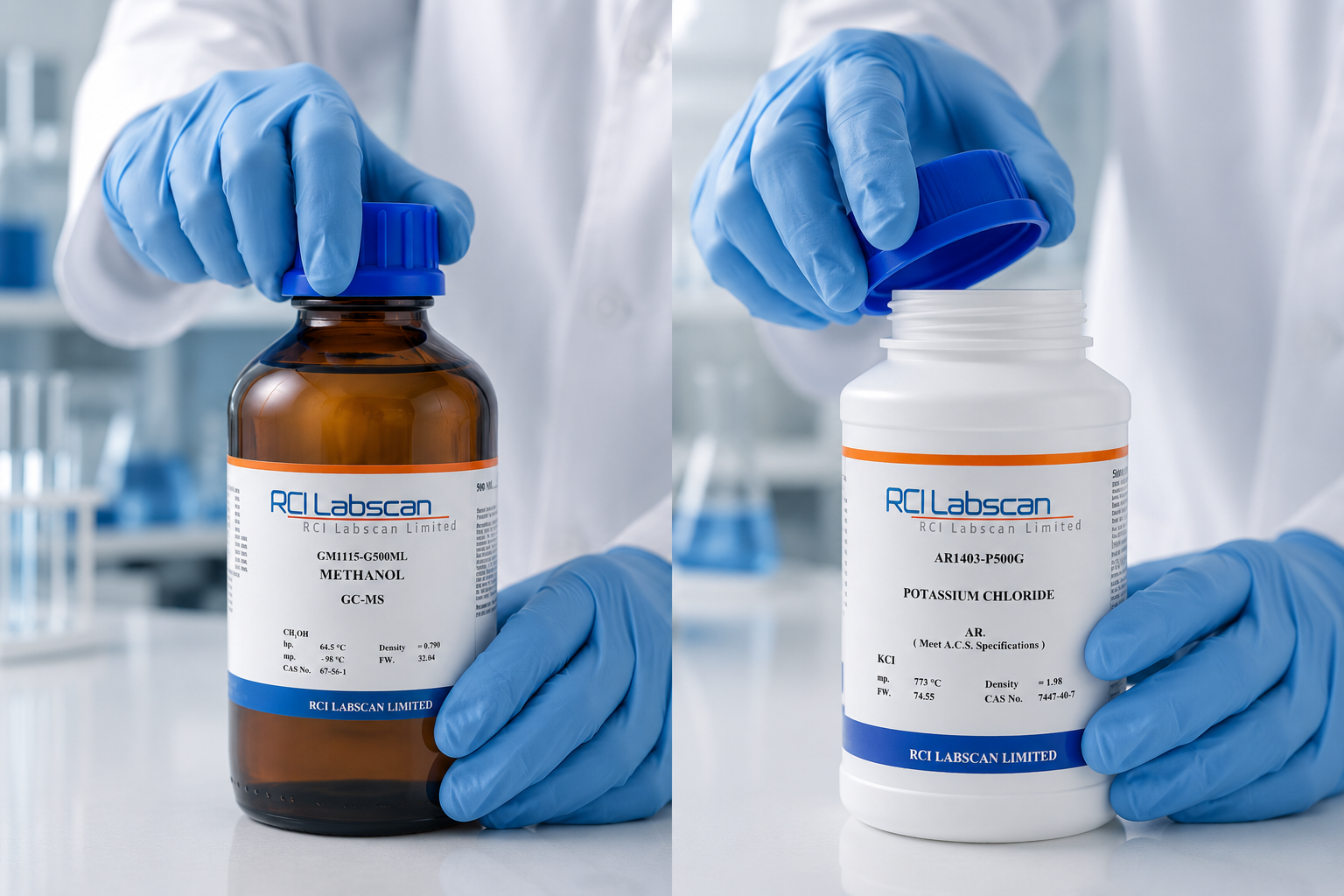
Glass has long been the preferred packaging material for many laboratory chemicals because of its excellent chemical stability and low interaction with most substances.
Advantages of Glass Bottles
- Excellent resistance to many laboratory chemicals
- Very low gas and vapor permeability
- Does not absorb most solvents
- Maintains chemical purity effectively
- Suitable for many high-purity analytical reagents
- Available in clear and amber glass for light-sensitive chemicals
Limitations of Glass Bottles
- Breakable if dropped
- Heavier than plastic
- Higher transportation costs
- May not be suitable for chemicals that attack glass, such as hydrofluoric acid (HF)
Plastic Bottles for Chemical Storage
Modern laboratory plastic bottles are manufactured from materials such as HDPE, LDPE, PP, or PET, each offering different chemical compatibility characteristics.
Plastic packaging is commonly selected where durability, lower weight, and handling safety are priorities.
Advantages of Plastic Bottles
- Lightweight and easy to transport
- Excellent impact resistance
- Reduced risk of breakage
- Lower shipping costs
- Suitable for many acids, alkalis, and general laboratory reagents
- Often preferred for field use or routine laboratory handling
Limitations of Plastic Bottles
- Some plastics may absorb or permeate certain organic solvents
- Chemical compatibility varies significantly by plastic type
- Some solvents may cause swelling or degradation
- Generally less resistant to high temperatures than glass
Glass Bottle vs Plastic Bottle: Key Differences
| Factor | Glass Bottle | Plastic Bottle |
|---|---|---|
| Chemical Resistance | Excellent for many chemicals | Depends on plastic type and chemical compatibility |
| Purity Protection | Excellent | Good when compatible |
| Gas Permeability | Very low | Higher than glass |
| Weight | Heavy | Lightweight |
| Break Resistance | Fragile | Highly impact resistant |
| Transportation | Higher shipping weight | Easier and safer to transport |
| Cost | Typically higher | Often more economical |
| Light Protection | Amber glass available | Opaque and amber plastics available depending on material |
| Typical Applications | High-purity solvents, analytical reagents, sensitive chemicals | Routine laboratory reagents, acids, bases, industrial chemicals |
Note: Packaging suitability depends on both the chemical and the bottle material. Always verify compatibility for the specific product.
When Should You Choose a Glass Bottle?
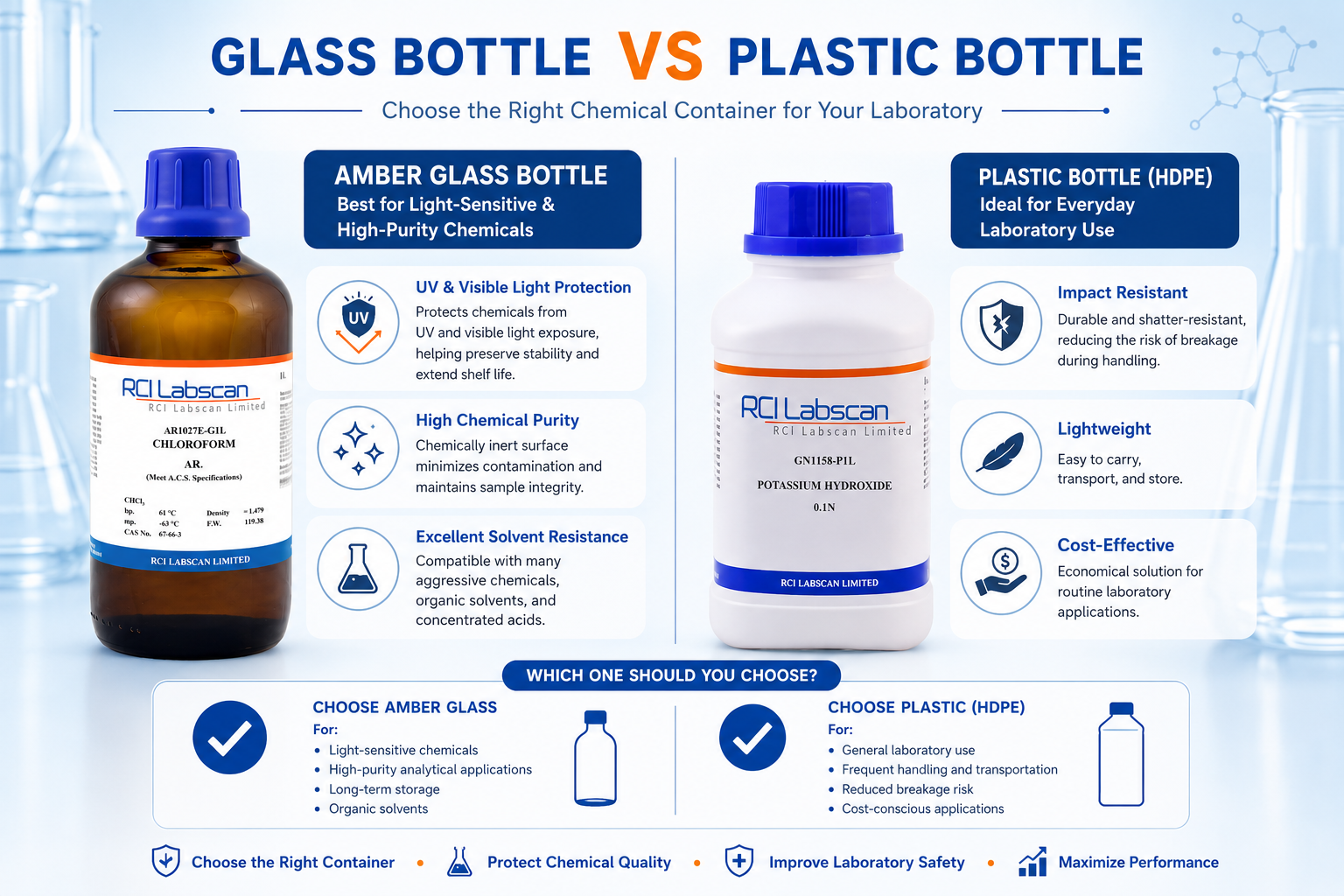
Glass bottles may be the preferred choice when:
- High chemical purity must be maintained
- The chemical contains volatile organic solvents
- Low permeability is important
- Long-term storage is required
- The chemical is sensitive to contamination
- Laboratory methods require minimal interaction between the container and the reagent
Typical examples include many HPLC solvents, analytical reagents, and high-purity laboratory chemicals.
When Should You Choose a Plastic Bottle?
Plastic bottles may be more suitable when:
- Safe handling is a priority
- Chemicals are transported frequently
- Large-volume containers are needed
- The product is used in production or industrial environments
- The chemical is compatible with the selected plastic material
- Reduced shipping weight is preferred
Many acids, alkalis, cleaning chemicals, and routine laboratory reagents are commonly packaged in compatible plastic bottles.
How to Choose the Right Chemical Bottle
Before selecting a chemical container, consider the following:
1. Check Chemical Compatibility
Different chemicals react differently with glass and different plastic materials. Always review compatibility information before use.
2. Consider Storage Conditions
Evaluate factors such as temperature, humidity, sunlight exposure, and long-term storage duration.
3. Evaluate Transportation Needs
If chemicals are transported frequently, lightweight plastic containers may reduce breakage risk.
4. Review Regulatory or Laboratory Requirements
Some laboratory methods or quality systems may specify particular packaging materials for certain chemicals.
5. Follow Manufacturer Recommendations
The recommended container supplied by the manufacturer has typically been selected based on compatibility testing and product stability.
Does Bottle Color Matter?
Yes.
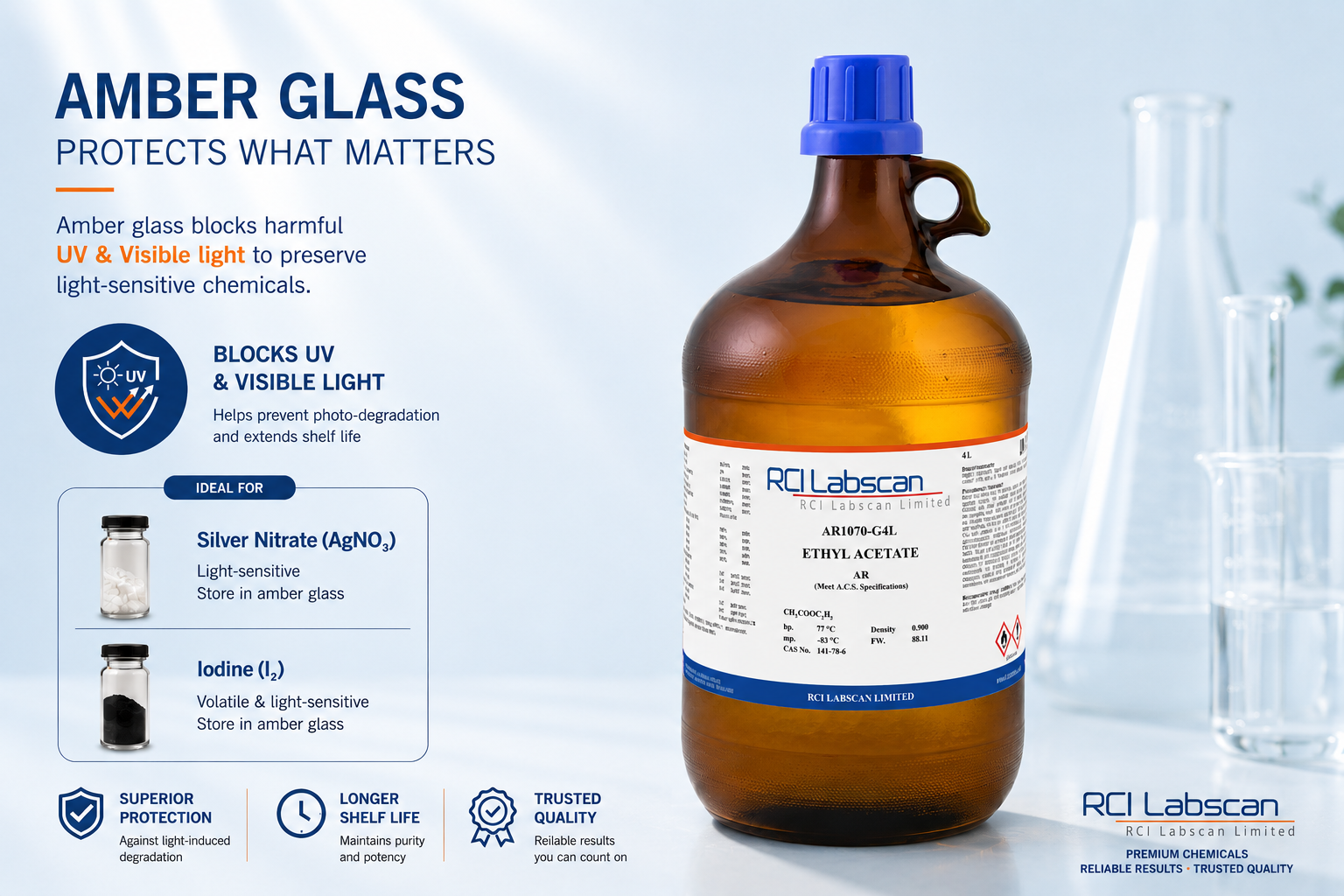
Some laboratory chemicals degrade when exposed to ultraviolet (UV) or visible light. For these products, amber glass bottles or other light-protective containers help reduce light exposure and maintain product stability during storage.
Examples include:
- Silver nitrate
- Iodine solutions
- Certain organic reagents
- Some analytical standards
Users should always follow the storage recommendations provided on the product label or SDS.
FAQ
Is a glass bottle always better than a plastic bottle?
No. Glass offers excellent chemical resistance and purity protection, while plastic provides advantages in durability and handling. The best choice depends on the specific chemical and application.
Which chemicals should not be stored in glass bottles?
Some chemicals, such as hydrofluoric acid (HF), can attack glass and should be stored in compatible plastic containers recommended by the manufacturer.
Can organic solvents be stored in plastic bottles?
Some organic solvents are compatible with certain plastics, while others may cause swelling or permeation. Compatibility depends on both the solvent and the plastic material, so manufacturer recommendations should always be followed.
Why are many laboratory solvents supplied in amber glass bottles?
Amber glass helps reduce exposure to UV and visible light, protecting light-sensitive chemicals from degradation during storage.
How can I verify the correct packaging material for a chemical?
Review the product label, Safety Data Sheet (SDS), product specification, or Certificate of Analysis (COA), and follow the manufacturer's storage recommendations. If uncertain, consult the supplier's technical support team.
Ensure Chemical Integrity with RCI Labscan
RCI Labscan supplies laboratory chemicals packaged in carefully selected container materials based on chemical compatibility and intended application. Depending on the product, packaging may include high-quality glass bottles or compatible plastic containers designed to maintain product quality throughout storage and transportation.
For detailed product specifications, packaging information, or technical support, customers may contact RCI Labscan or an authorized distributor.
Choose with confidence. Analyze with precision. Trust RCI Labscan.
Explore Related Topics:
- Packaging of Laboratory Chemicals: How Does It Affect Chemical Quality?
- Shelf Life vs Expiry Date: What's the Difference for Laboratory Chemicals?
- HPLC Grade Solvents
- Analytical Reagents
- RCI Labscan Catalogue
- The Advantage of Our Signature Bottle Cap
Leave a comment!