What Is Gradient Elution and How Does Solvent Quality Affect It?

What Is Gradient Elution and How Does Solvent Quality Affect It? Direct Answer

Gradient elution is an HPLC procedure in which the mobile-phase composition changes continuously or stepwise during a run. In reversed-phase HPLC, the organic proportion commonly increases so that weakly retained compounds separate early and more strongly retained compounds elute later within a practical run time.


Common Mistakes When Choosing Laboratory Chemicals

Common Mistakes When Choosing Laboratory Chemicals Direct Answer

The most common chemical-selection mistakes are choosing by headline purity or price alone, confusing grade names across suppliers, ignoring the analytical method and detector, failing to review the specification and lot Certificate of Analysis (COA), overlooking safety and storage requirements, and ordering an impractical package size.

Why Is Acetonitrile Commonly Used in HPLC?

Why Is Acetonitrile Commonly Used in HPLC? Direct Answer

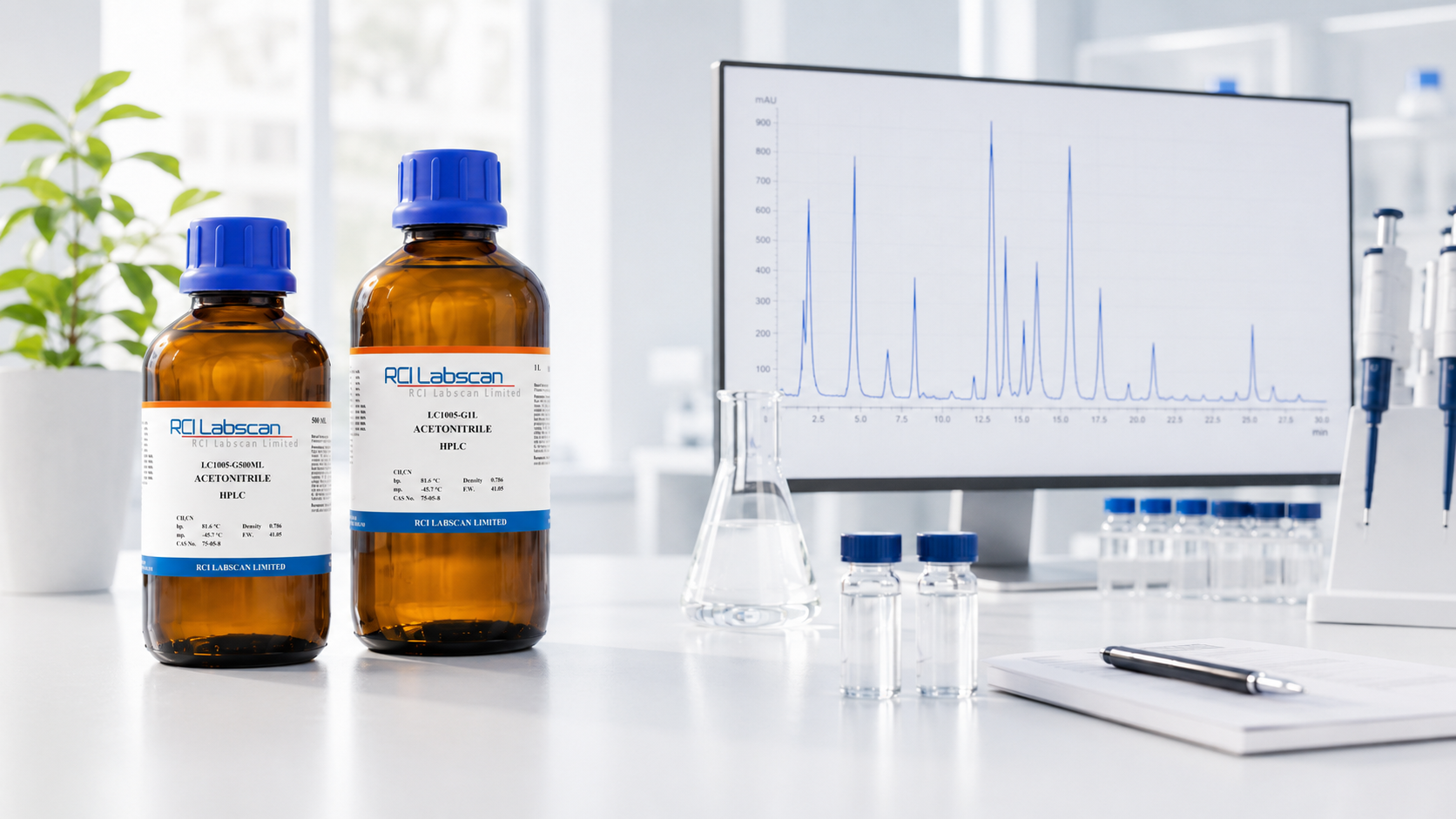
Acetonitrile is widely used in high-performance liquid chromatography (HPLC) because it combines several useful properties: it mixes with water, has relatively low viscosity, provides strong elution in many reversed-phase separations, and has low absorbance in the short-wavelength UV region when a suitable chromatography grade is used.

What Is GC-Grade Solvent and When Should You Use It?

What Is GC-Grade Solvent and When Should You Use It? Direct Answer

GC-grade solvent is a solvent purified and tested for gas chromatography. It is selected to reduce solvent-related peaks, background, residue, and other contamination that could interfere with a GC chromatogram.

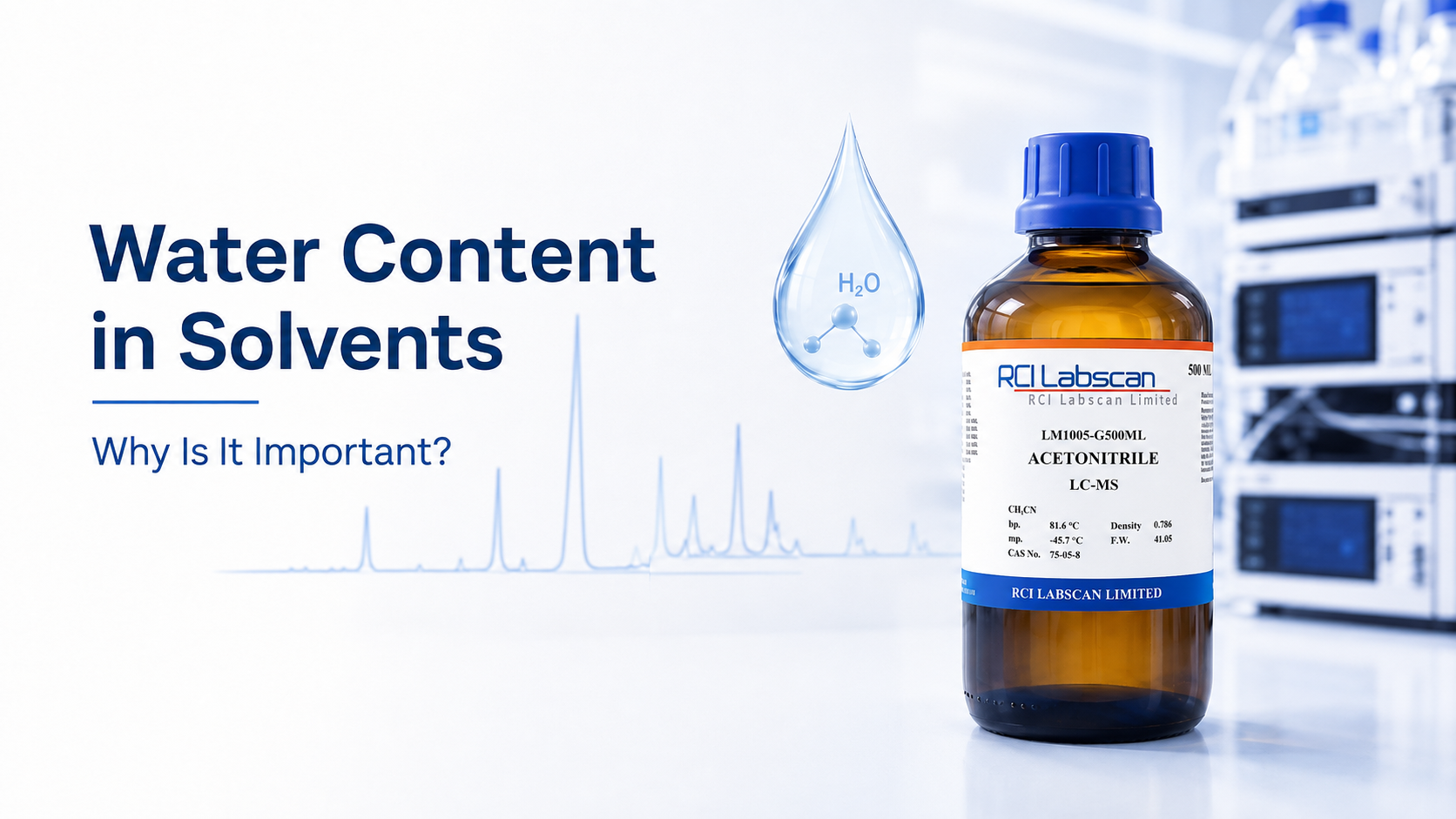
Water Content in Solvents: Why Is It Important?

Water Content in Solvents: Why Is It Important?

Direct Answer

Water content refers to the amount of water present in a solvent. It is important because even a relatively small change in moisture level may alter the actual solvent composition, affect chromatographic retention, reduce method reproducibility, or interfere with moisture-sensitive reactions and analyses.

What Is Acetonitrile and What Is It Used for in the Laboratory?

What Is Acetonitrile and What Is It Used for in the Laboratory? Direct Answer

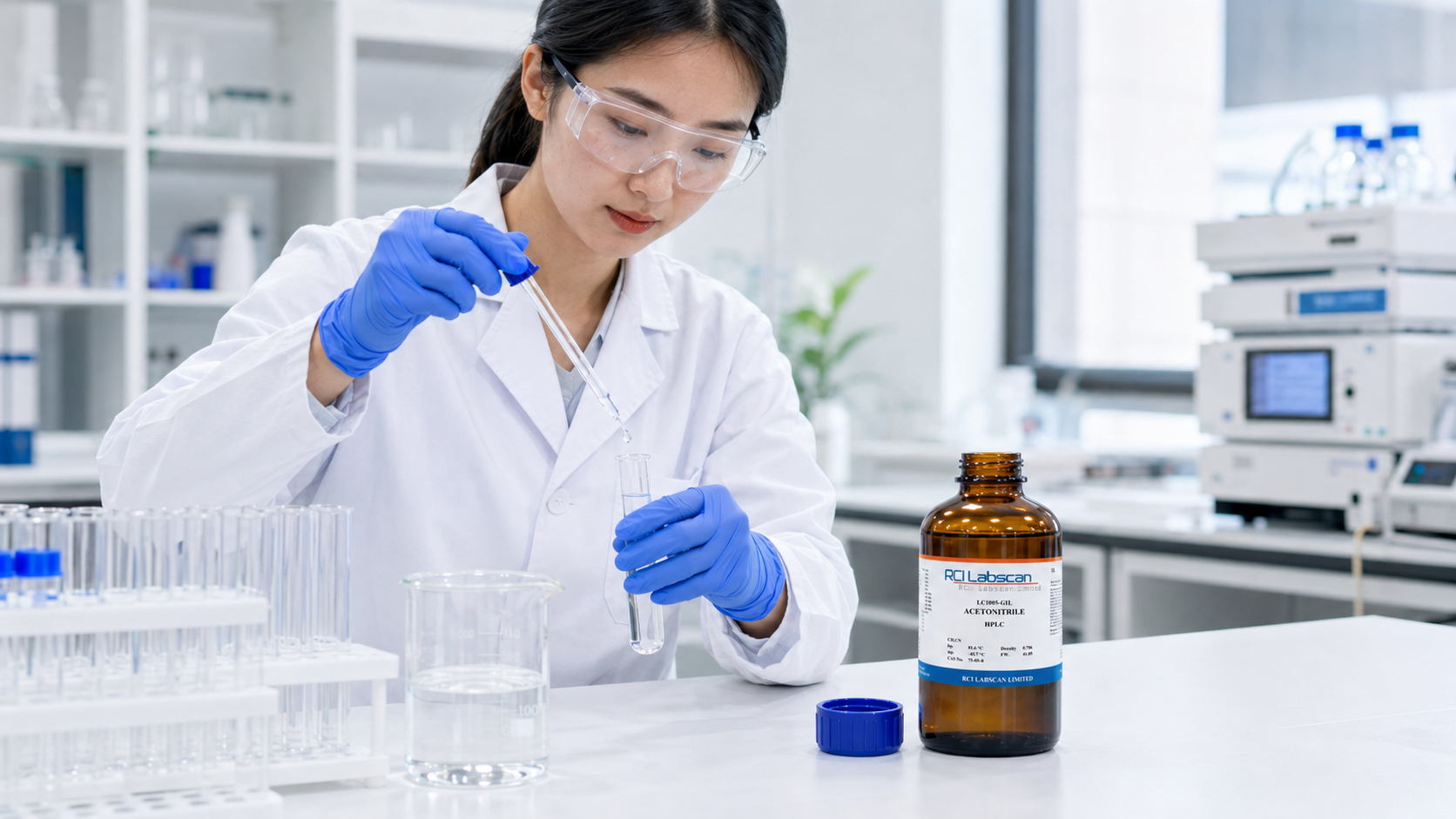
Acetonitrile is a clear, highly polar organic solvent that laboratories commonly use for chemical analysis, sample preparation, extraction, and chromatography. In analytical laboratories, many users know Acetonitrile as a mobile phase solvent for High Performance Liquid Chromatography, or HPLC.

Because Acetonitrile mixes well with water, has relatively low viscosity, and works well in many chromatographic methods, laboratories use it in research, quality control, pharmaceutical analysis, food testing, environmental testing, and other laboratory applications.

How to Choose Acetonitrile for HPLC Solvents

How to Choose Acetonitrile for HPLC Solvents

To choose Acetonitrile for HPLC, select a solvent grade that is specifically designed for chromatographic analysis. Key factors include high purity, low UV absorbance, low residue, consistent lot-to-lot quality, suitable water content, and reliable documentation such as specification, SDS, or COA. For routine HPLC analysis, HPLC grade Acetonitrile is commonly used, while more sensitive techniques such as LC-MS may require LC-MS grade solvent.

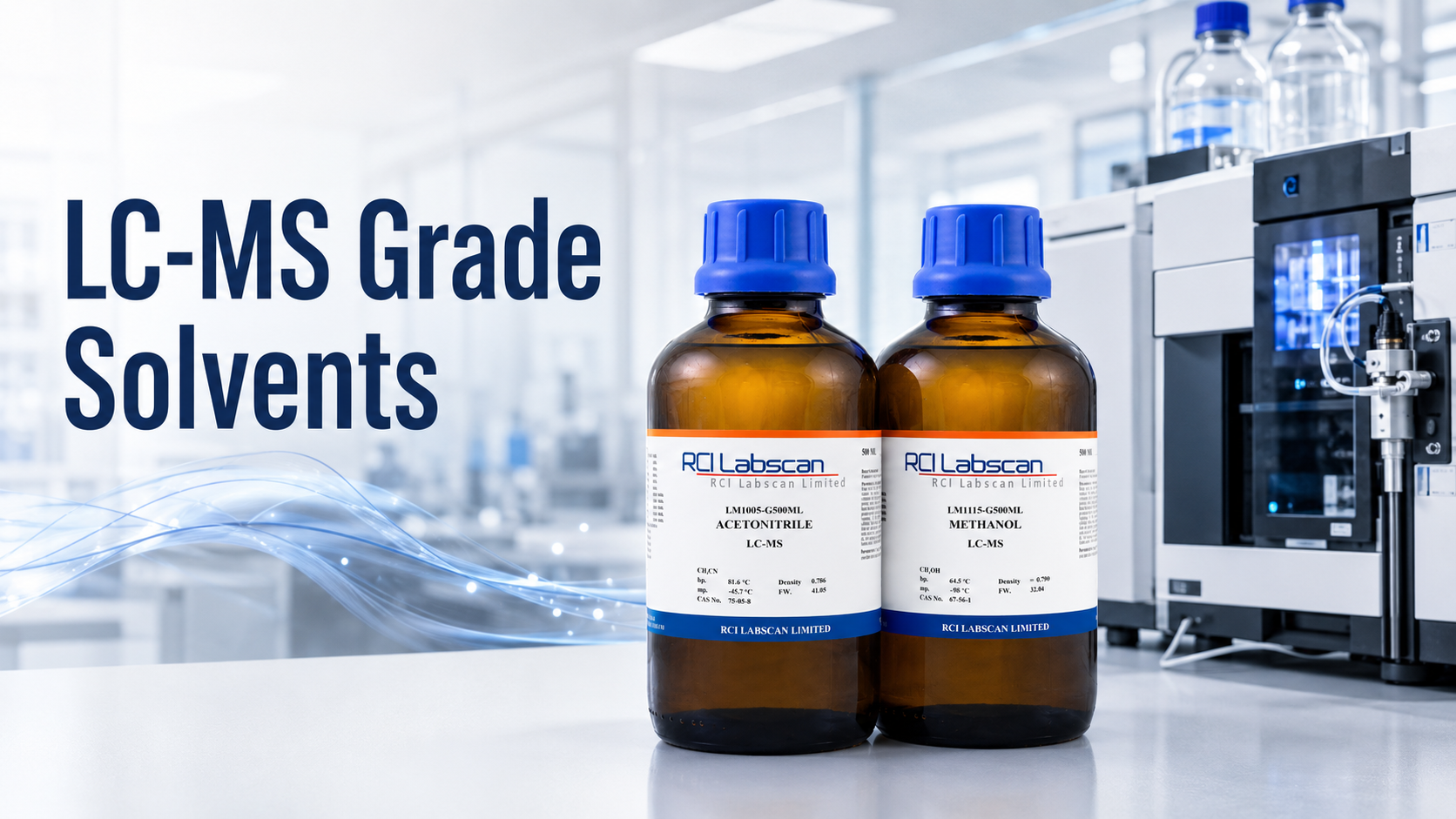
HPLC vs LC-MS Grade Solvents

HPLC vs LC-MS Grade Solvents

(A Practical Guide to Choosing the Right Solvent Grade for Analytical Applications)

Direct Answer

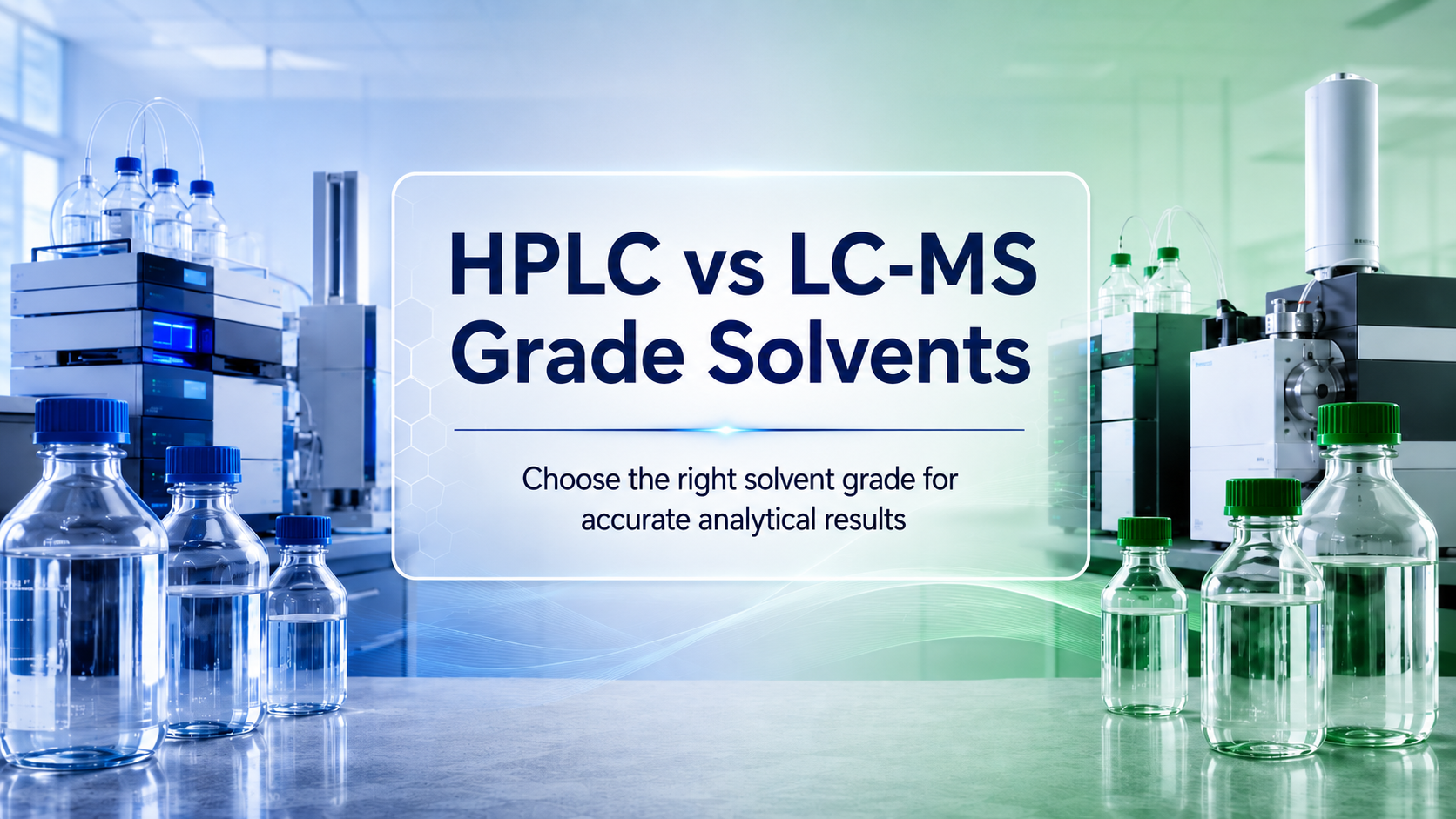
HPLC grade solvents and LC-MS grade solvents are both high-purity solvents for analytical laboratories.

Read more 1 Comment