Volatile vs Nonvolatile Mobile-Phase Additives in LC-MS
Why additive volatility matters at the mass-spectrometer interface—and how to choose an additive without sacrificing chromatography or signal quality
Direct Answer
For routine LC-MS, analysts generally prefer volatile mobile-phase additives because they can leave the electrospray or atmospheric-pressure ionization interface with the solvent.
What Is LVI-GC Grade and When Is It Needed for Trace Organic Analysis?
Direct Answer
LVI-GC is an RCI Labscan application designation for solvents used in large-volume injection gas chromatography and related trace-organic work. It is not a universal regulated grade or a guarantee that a solvent will suit every method.
What Is Headspace GC and Why Does Diluent Quality Matter?
Direct Answer
Headspace gas chromatography (HS-GC) analyzes volatile compounds that partition from a liquid or solid sample into the gas phase above it. Diluent quality matters because the diluent can contribute its own peaks, change analyte partitioning, or introduce contamination that interferes with residual-solvent results.
How Solvent Purity Affects GC Baselines, Blank Runs, and Detection Limits
Direct Answer
Solvent purity affects GC performance when impurities create peaks, increase baseline noise, or leave residue in the inlet and column. These effects can make blank runs look contaminated, reduce signal-to-noise ratio, and make a low-level analyte harder to detect.
RCI Product Knowledge Update: Solvents, Grades, and Documentation
Distributors and business partners often need to translate a customer's laboratory request into three connected questions: which chemical the method requires, which grade fits the application, and which documents are needed for the exact product and supplied lot.
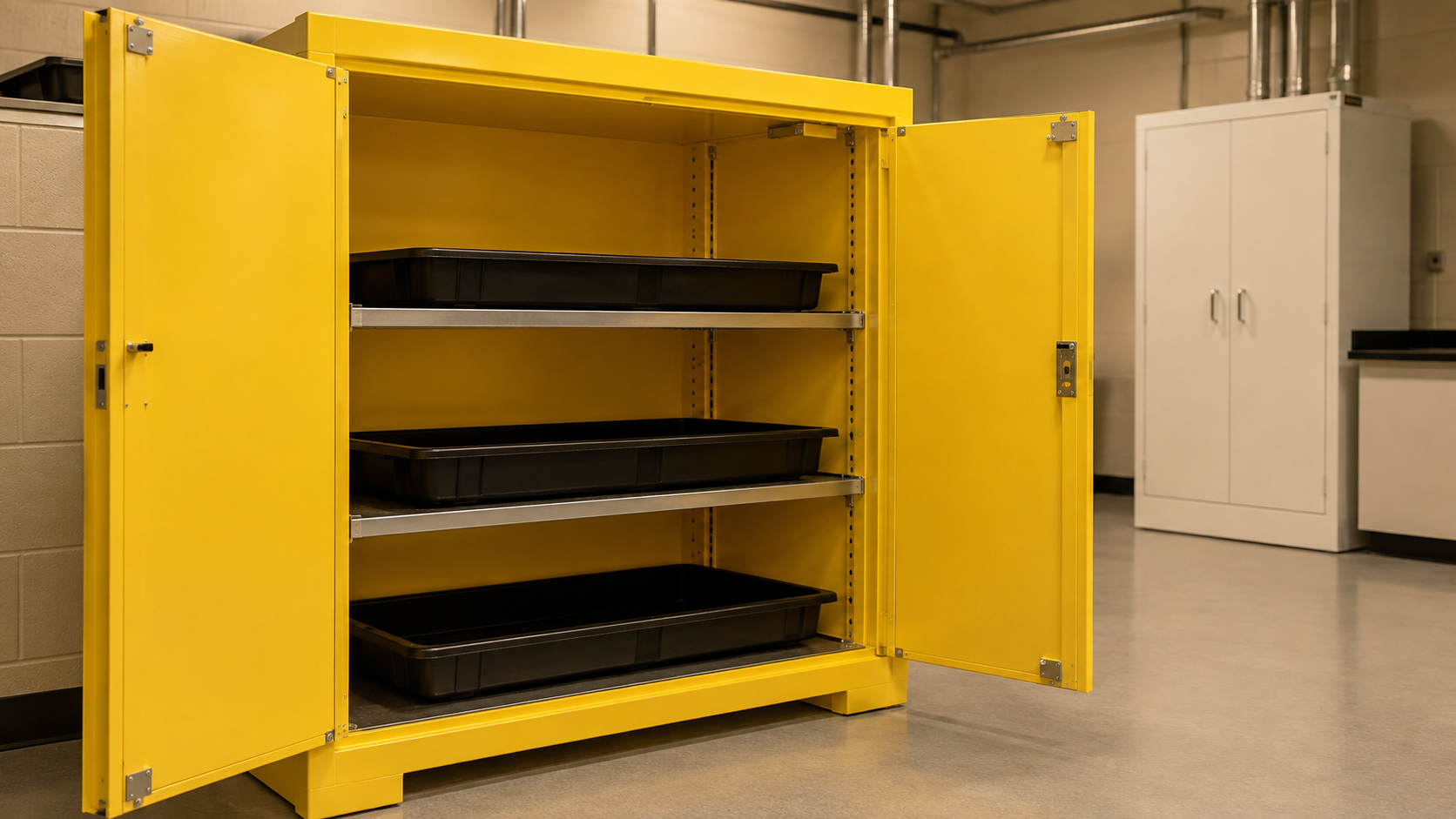
How to Store Laboratory Solvents Safely and Preserve Quality
Direct Answer
Store laboratory solvents according to the current Safety Data Sheet (SDS), container label, manufacturer instructions, applicable local rules, and your laboratory’s chemical-hygiene procedure.
Why Lot-to-Lot Consistency Matters for Analytical Results
Direct Answer
Lot-to-lot consistency matters because changes in a solvent, reagent, standard, consumable, or sample-preparation material can change background, recovery, retention, detector response, or other method performance.
What Is Residue After Evaporation and Why Does It Matter in a Solvent Specification?
Direct Answer
Residue after evaporation is the amount of non-volatile material left after a defined quantity of solvent is evaporated under a specified test procedure.
What Causes Baseline Noise in HPLC and How Does Solvent Quality Contribute?
Direct Answer
HPLC baseline noise is unwanted short-term fluctuation in the detector signal. It can come from bubbles, pump pulsation, poor mixing, temperature changes, detector contamination, electrical settings, a deteriorated lamp, the column, or the mobile phase.
We use cookies to ensure that we give you the best experience on our website. Unless you've selected "Allow", our website will deactivate the cookies session by default.