How to Store Laboratory Solvents Safely and Preserve Quality
Direct Answer
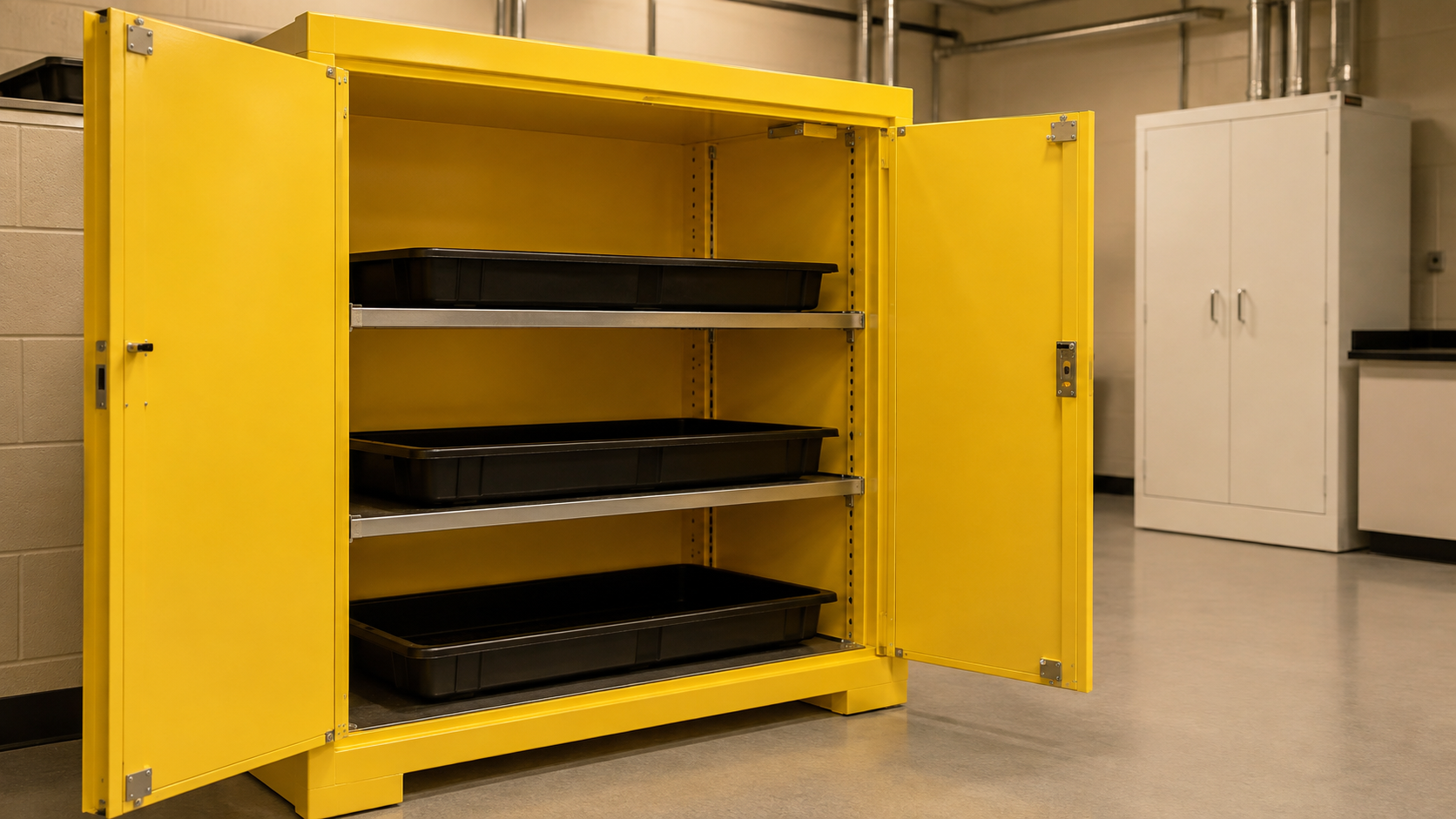
Store laboratory solvents according to the current Safety Data Sheet (SDS), container label, manufacturer instructions, applicable local rules, and your laboratory’s chemical-hygiene procedure.
Why Lot-to-Lot Consistency Matters for Analytical Results
Direct Answer
Lot-to-lot consistency matters because changes in a solvent, reagent, standard, consumable, or sample-preparation material can change background, recovery, retention, detector response, or other method performance.
What Is Residue After Evaporation and Why Does It Matter in a Solvent Specification?
Direct Answer
Residue after evaporation is the amount of non-volatile material left after a defined quantity of solvent is evaporated under a specified test procedure.
What Causes Baseline Noise in HPLC and How Does Solvent Quality Contribute?
Direct Answer
HPLC baseline noise is unwanted short-term fluctuation in the detector signal. It can come from bubbles, pump pulsation, poor mixing, temperature changes, detector contamination, electrical settings, a deteriorated lamp, the column, or the mobile phase.
What Is Gradient Elution and How Does Solvent Quality Affect It?
Direct Answer
Gradient elution is an HPLC procedure in which the mobile-phase composition changes continuously or stepwise during a run. In reversed-phase HPLC, the organic proportion commonly increases so that weakly retained compounds separate early and more strongly retained compounds elute later within a practical run time.
Acetonitrile vs Methanol vs Water: How Are These Solvents Used Differently?
Direct Answer
In reversed-phase HPLC, water usually provides the weaker, more polar part of the mobile phase, while acetonitrile or methanol provides the organic component that helps elute retained compounds.
Common Mistakes When Choosing Laboratory Chemicals
Direct Answer
The most common chemical-selection mistakes are choosing by headline purity or price alone, confusing grade names across suppliers, ignoring the analytical method and detector, failing to review the specification and lot Certificate of Analysis (COA), overlooking safety and storage requirements, and ordering an impractical package size.
Why Is Acetonitrile Commonly Used in HPLC?
Direct Answer
Acetonitrile is widely used in high-performance liquid chromatography (HPLC) because it combines several useful properties: it mixes with water, has relatively low viscosity, provides strong elution in many reversed-phase separations, and has low absorbance in the short-wavelength UV region when a suitable chromatography grade is used.
We use cookies to ensure that we give you the best experience on our website. Unless you've selected "Allow", our website will deactivate the cookies session by default.