

What Is Residue After Evaporation and Why Does It Matter in a Solvent Specification?
Direct Answer
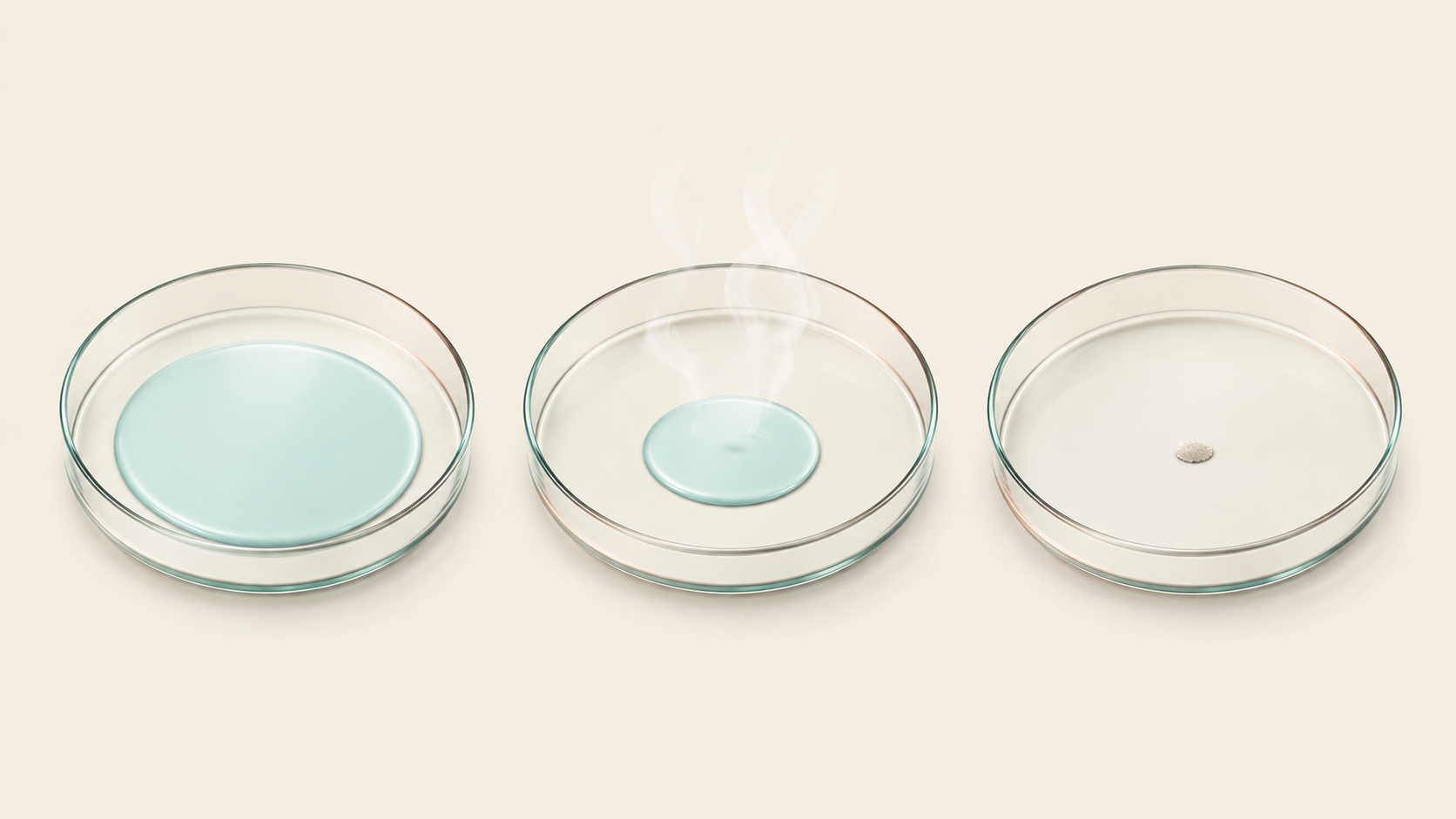
Residue after evaporation is the amount of non-volatile material left after a defined quantity of solvent is evaporated under a specified test procedure. It is a quality-control measure for substances that do not evaporate with the main solvent, such as trace salts, oils, particles, or other non-volatile contamination.
A low reported value can reduce the risk of deposits, background, and contamination in sensitive workflows, but it does not identify every impurity and does not by itself prove suitability for HPLC, LC-MS, GC, synthesis, or any other application.
What the Test Actually Measures
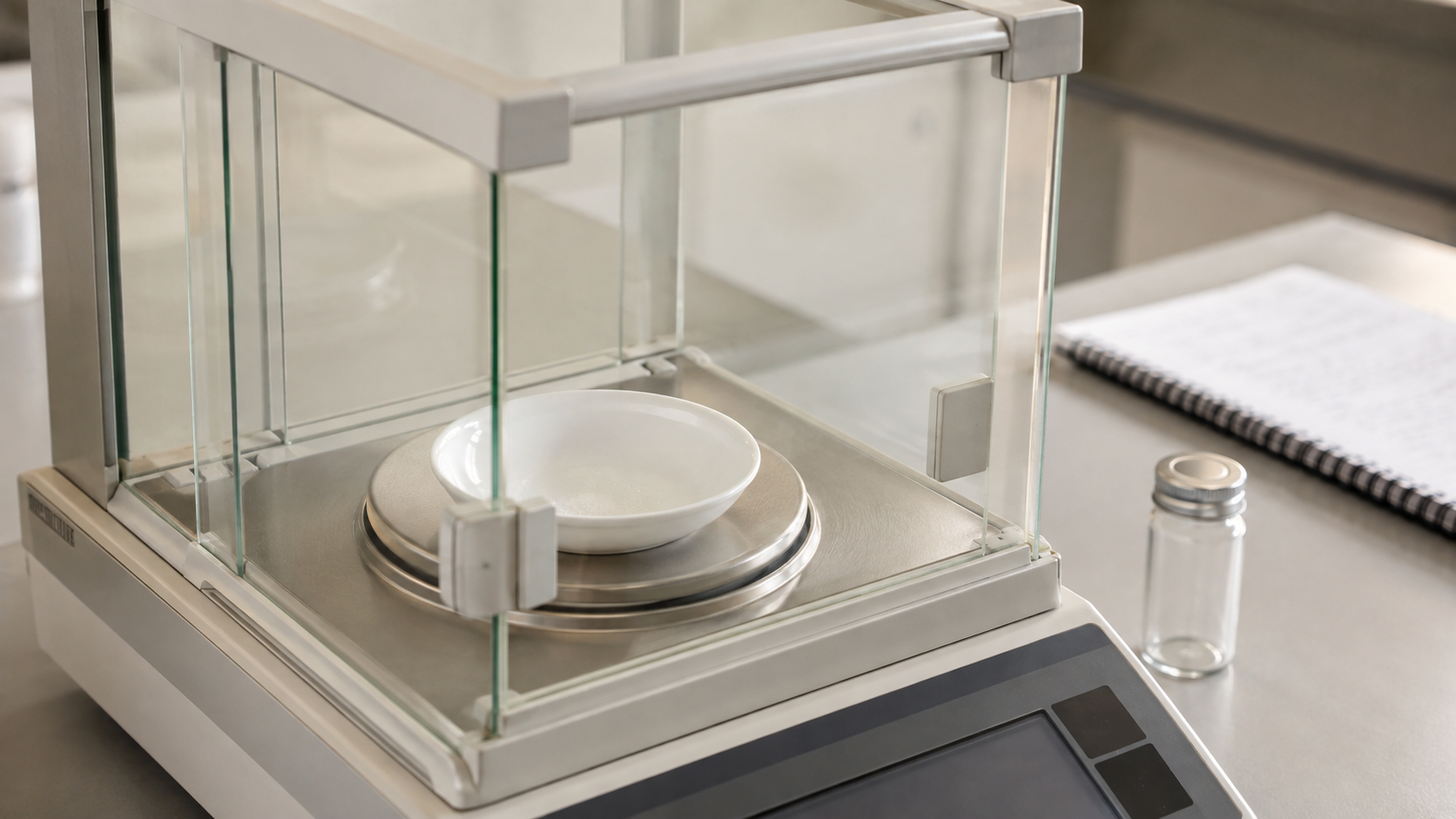
The general concept is gravimetric: a known amount of solvent is placed in a clean, pre-weighed vessel, evaporated under defined conditions, dried if required, cooled in a controlled environment, and weighed again. The mass difference represents material that remained.
The exact sample size, vessel, temperature, evaporation method, drying time, cooling procedure, and reporting unit are method-specific. Results from two specifications should not be compared unless the test methods and units are compatible.
What May Remain After the Solvent Evaporates?
- Inorganic salts or dissolved minerals
- Non-volatile organic contaminants
- Lubricants, oils, or manufacturing residues
- Particles introduced during production, packaging, or handling
- Extractables from an unsuitable container or closure
- Material introduced after opening in the laboratory
The test reports total residue under its conditions. It generally does not identify the individual substances present.
Why Residue Matters in Analytical Work
Instrument cleanliness
Non-volatile material can accumulate in injectors, tubing, detector components, or evaporation interfaces. The practical risk depends on the technique, amount of solvent used, and instrument design.
Blank and background performance
Residue can contribute background or deposits that later release contamination. However, a residue test is not a substitute for chromatographic blank testing because volatile or semi-volatile impurities may leave little gravimetric residue and still produce peaks.
Sample concentration steps
When a large solvent volume is evaporated to concentrate an extract, any non-volatile contamination may be concentrated with the analytes. The allowable residue should therefore be considered in relation to solvent volume and method sensitivity.
Detectors that respond to non-volatile material
Some detector technologies are especially sensitive to non-volatile mobile-phase components. Follow the detector manufacturer's restrictions for buffers, additives, and mobile phases.
How to Read the Specification
| Item to check | Why it matters |
|---|---|
| Limit and unit | A value in mg/L, ppm, percent, or mass per test portion cannot be compared without conversion and method context |
| Test method | Evaporation and drying conditions affect which material remains and how it is measured |
| Specification vs actual result | The specification is the acceptance limit; the Certificate of Analysis may provide the lot-specific result |
| Application grade | Residue is only one parameter among optical, chromatographic, water, acidity, and other requirements |
| Handling conditions | A compliant unopened lot can become contaminated after opening or transfer |
Residue After Evaporation Is Not the Same as Residual Solvents
The terms sound similar but describe different questions. Residue after evaporation measures non-volatile material remaining after a solvent is removed. Residual solvents are volatile organic chemicals that remain in a manufactured material such as a drug substance, excipient, or product. The tests, samples, and risk interpretations are different.
Good Laboratory Practices
- Select the solvent according to the validated method and required grade.
- Review both the current specification and the lot-specific Certificate of Analysis.
- Use clean, compatible glassware and closures.
- Keep the original container closed when not in use.
- Avoid returning unused solvent to the original container.
- Investigate unexpected residue using blanks that include the vessel and preparation process.
- Follow the SDS, waste procedure, and approved evaporation method; do not improvise heating conditions.
Frequently Asked Questions
Does a low residue limit guarantee a clean chromatogram?
No. Volatile impurities can create chromatographic peaks but leave little residue. Chromatographic suitability and blank performance require their own controls.
Can I compare residue values from different suppliers?
Only after confirming that the units and test methods are comparable. Different sample sizes, evaporation conditions, or reporting conventions can make direct comparison misleading.
Why might the laboratory observe more residue than the Certificate of Analysis?
Possible causes include contaminated vessels, environmental exposure, transfer containers, closure extractables, handling after opening, or a different test method.
Is residue after evaporation important only for chromatography?
No. It can matter whenever solvent is evaporated, used in surface cleaning, or introduced into a process where non-volatile contamination affects the outcome.
Key Takeaway
Residue after evaporation is a useful control for total non-volatile contamination, but it must be interpreted with its method, unit, application, and other specification parameters. Review the lot-specific documentation and confirm suitability in the actual workflow.
Leave a comment!