
How to Store Laboratory Solvents Safely and Preserve Quality
Direct Answer
Store laboratory solvents according to the current Safety Data Sheet (SDS), container label, manufacturer instructions, applicable local rules, and your laboratory’s chemical-hygiene procedure. Keep containers tightly closed, segregate incompatible hazard classes, control ignition sources for flammable liquids, use suitable secondary containment, maintain the required temperature and ventilation, and record receipt and opening dates.
Safe storage and quality preservation are connected. The same controls that reduce fire, exposure, and spill risk also help limit evaporation, moisture uptake, oxidation, contamination, and changes in solvent composition.
Start with the SDS—Not a General Storage Rule
“Solvent” covers materials with very different hazards. Many common organic solvents are flammable, but others may be toxic, corrosive, peroxide-forming, water-reactive, or incompatible with particular materials. Section 7 of the SDS normally addresses handling and storage, while Sections 2, 10, and 14 can help identify hazards, incompatibilities, reactivity, and transport information.
The SDS is the starting point, not the only control. Site-specific quantities, cabinet ratings, fire codes, ventilation, emergency systems, and local legal requirements also matter. When requirements differ, the laboratory’s safety officer should resolve them before the material is stored.
1. Segregate by Hazard and Compatibility
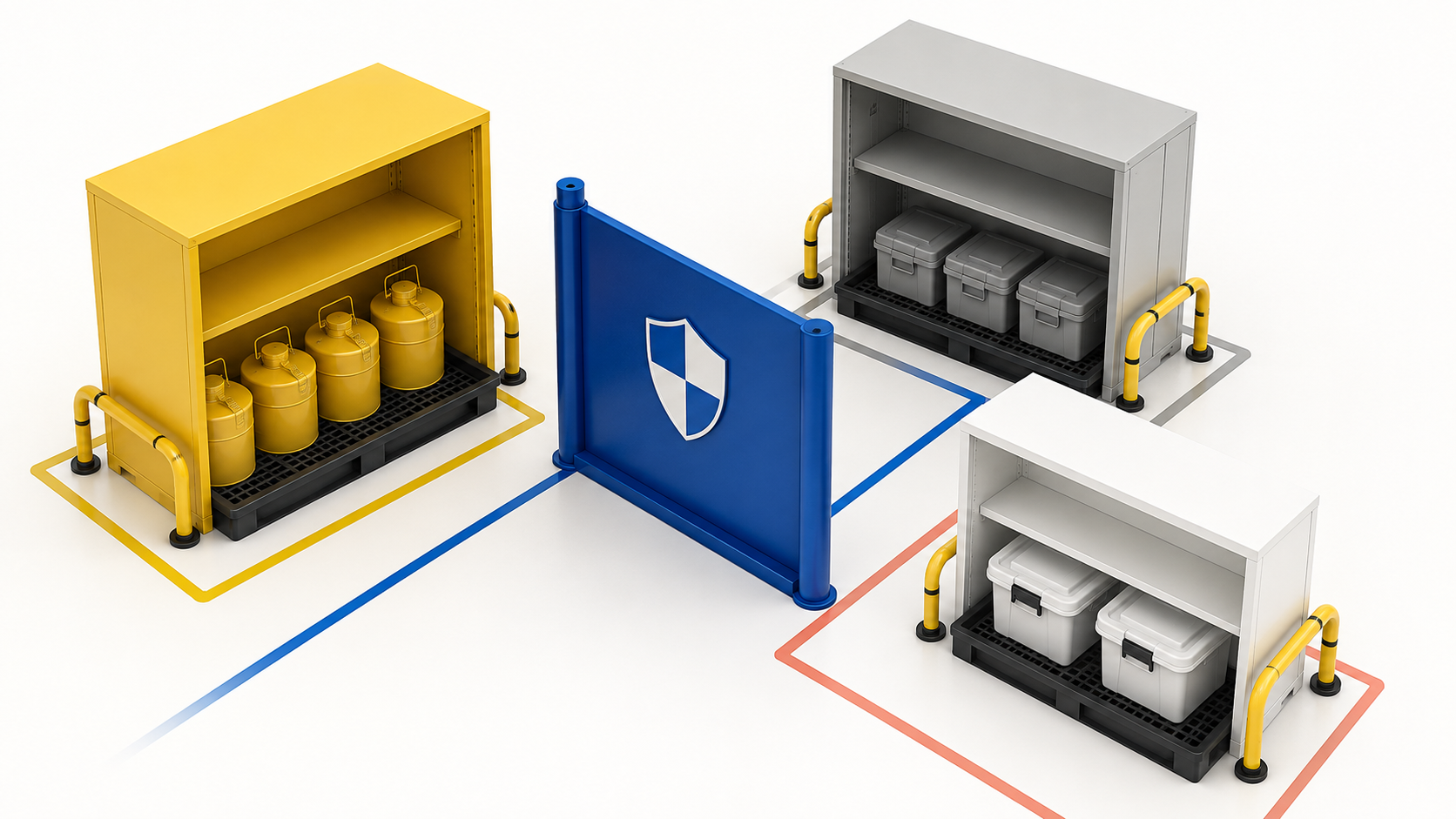
Alphabetical order alone is not a safe storage system. Separate chemicals by hazard class and compatibility so a leak or broken container does not bring incompatible materials together. For example, oxidizers should be kept away from fuels and many organic solvents. Acids, bases, water-reactive chemicals, and peroxide formers may require additional dedicated controls.
Use the SDS and the site compatibility procedure to define the groups. Do not infer compatibility from similar names, colors, or packaging.
2. Use the Correct Cabinet and Location
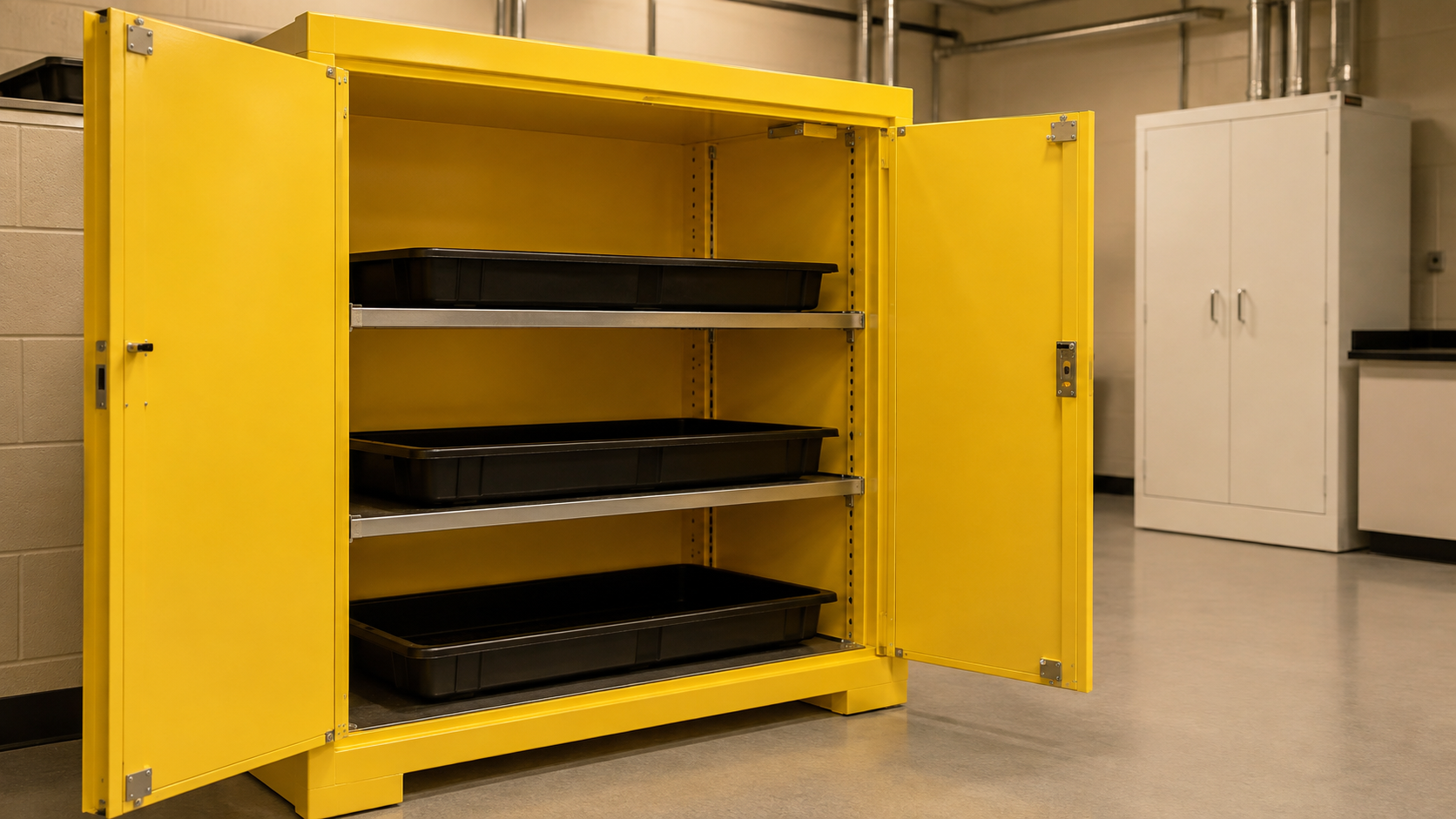
Flammable solvents should be stored in approved flammable-liquid containers and cabinets when required by the SDS, risk assessment, and applicable rules. Keep storage away from heat, sparks, open flames, direct sunlight, and other ignition sources. Do not store routine chemical inventory on the floor, in exit routes, on open benchtops, or inside a fume hood used for work.
A fume hood is designed to control work-related vapors, not to become a crowded storage cabinet. Stored containers can obstruct airflow, increase the quantity involved in a spill or fire, and reduce working space.
3. Keep Containers Closed and Upright
A tight, compatible closure reduces vapor release and helps prevent water, oxygen, and airborne contaminants from entering. Store containers upright, protect them from impact, and avoid residues on the threads or cap that could prevent a proper seal. Never return unused solvent to the original container unless an approved procedure specifically allows it.
For frequently used solvent, a controlled working container may reduce repeated exposure of the main stock. The transfer container must be compatible, clean, correctly labeled, and covered by a laboratory procedure. Do not use food or beverage containers.
4. Provide Secondary Containment
Secondary containment can limit the spread of a leak and help keep incompatible materials apart. Select a tray or bin with suitable chemical resistance and capacity for the stored container. Do not place incompatible chemical groups in the same tray merely because there is space.
Inspect trays and shelves for residue, cracks, corrosion, or evidence of previous leakage. Clean-up and disposal should follow the SDS and the laboratory spill procedure.
5. Control Temperature, Light, and Ventilation
Use the storage range stated by the manufacturer. Avoid placing solvents near windows, heating equipment, or areas with large temperature swings. If a flammable liquid requires cool storage, use equipment specifically suitable for flammable materials; a domestic refrigerator can contain ignition sources and is not an automatic substitute.
Light-sensitive materials may require amber packaging or a dark location. Ventilation requirements depend on the material, quantity, cabinet design, and facility. Do not modify or externally vent a cabinet without qualified review, because the change can affect its intended performance.
6. Control Inventory and Time in Storage
Date incoming shipments, record the opening date, and rotate stock so older or earlier-expiring material is used first when appropriate. Order only the quantity that can be stored safely and used within its supported period. An inventory should show the chemical identity, hazard class, amount, location, responsible owner, lot, and relevant expiry or retest information.
Pay particular attention to materials that can form peroxides or otherwise change during storage. These require substance-specific controls, dates, inspection, and disposal criteria. Never open a suspect container; isolate the area and contact trained safety personnel.
7. Preserve Analytical Quality
- Use the original container whenever practical and keep its label legible.
- Use clean, dedicated transfer tools and compatible closures.
- Minimize opening time, especially for hygroscopic or volatile solvents.
- Avoid storing high-purity solvent near open sources of volatile contamination.
- Do not combine lots or top up a working bottle without an approved procedure.
- Record lot changes and check a representative blank for sensitive analytical work.
- Quarantine containers that are damaged, leaking, discolored, cloudy, or otherwise abnormal.
Storage Review Checklist
| Check | Question | Action if not controlled |
|---|---|---|
| Documentation | Is the current SDS available and understood? | Pause storage or use until requirements are confirmed. |
| Compatibility | Are hazard groups correctly segregated? | Move material using an approved handling plan. |
| Container | Is it compatible, closed, upright, and undamaged? | Quarantine and follow the spill or damaged-container procedure. |
| Location | Is the cabinet or storage area suitable for the hazard and quantity? | Consult the safety officer and applicable requirements. |
| Environment | Are temperature, light, ventilation, and ignition sources controlled? | Correct the condition before returning the material to service. |
| Traceability | Are lot, receipt, opening, and date-status records complete? | Quarantine until identity and status are resolved. |
Common Storage Mistakes
- Organizing all chemicals alphabetically without first separating hazards
- Leaving solvent wash bottles or stock containers permanently on the bench
- Using a household refrigerator for flammable material
- Storing oxidizers with organic solvents in one spill tray
- Keeping containers in a working fume hood
- Using an unlabeled transfer bottle
- Assuming a closed cabinet removes the need for inventory limits and inspections
- Ignoring a damaged cap because the bottle is not visibly leaking
FAQ
Should every organic solvent go into a flammable-liquid cabinet?
No single rule covers every solvent. Check the SDS hazard classification, quantity, container, local requirements, and site procedure. Many common organic solvents are flammable, but storage decisions must be product-specific.
Can solvents be stored in a fume hood?
Routine inventory should not be stored in a working hood. Containers needed for current work should be minimized and removed to the correct storage location when the task is complete.
Can flammable solvent be kept in a normal refrigerator?
Do not use a domestic or unapproved refrigerator. If cool storage is required, use equipment designed and approved for the hazard, following the SDS and facility procedure.
How often should solvent storage be inspected?
The frequency should be defined by the laboratory’s risk assessment and SOP. Inspections should check labels, closures, leaks, segregation, inventory accuracy, date status, cabinet condition, and signs of deterioration.
Does correct storage guarantee solvent performance?
No. Correct storage preserves the supplier’s intended conditions, but suitability still depends on the method, grade, lot documentation, handling history, and analytical verification such as a blank.
Key Takeaway
Safe solvent storage is a controlled system—not simply a cabinet. Use product-specific SDS information, segregate incompatible hazards, control ignition and environmental conditions, maintain secure closures and secondary containment, and keep complete inventory records. These practices protect people and facilities while helping preserve solvent quality.
Related Reading
- What to Consider When Storing Flammable Chemicals
- What Is an SDS and Why Should Laboratories Take It Seriously?
- How Chemical Packaging Affects Quality
- Shelf Life vs Expiry Date for Laboratory Chemicals
Explore RCI Labscan laboratory products and consult the current SDS and product documentation before storage or use.
Leave a comment!