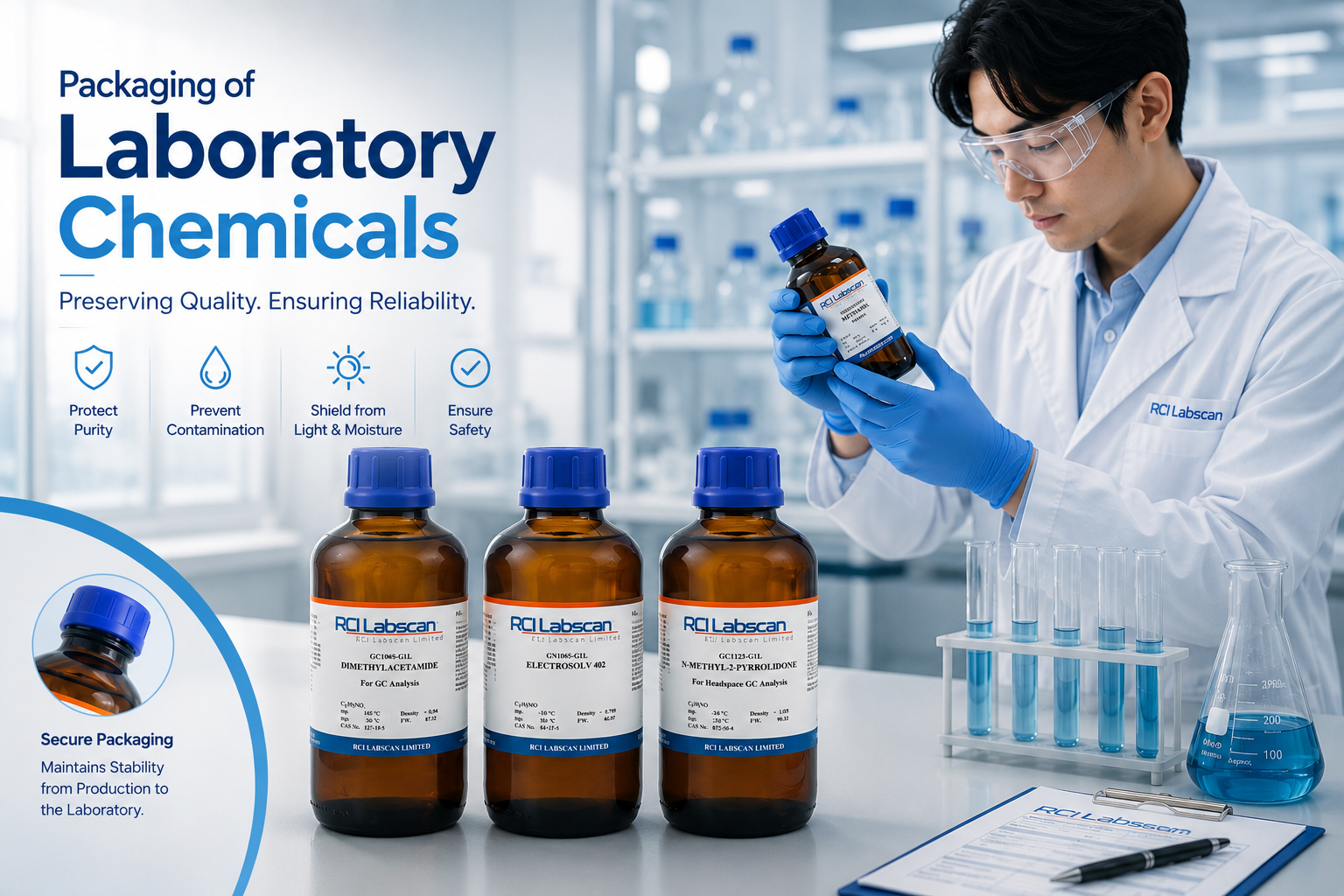
Packaging of Laboratory Chemicals: How Does It Affect Chemical Quality?

Direct Answer
Yes. The packaging of laboratory chemicals plays an important role in maintaining product quality, stability, and safety throughout storage and transportation. While the chemical formulation itself determines performance, inappropriate packaging may allow contamination, moisture, oxygen, light, or evaporation to affect the product over time.
Selecting suitable packaging materials and container designs helps preserve chemical purity, minimize degradation, reduce contamination risk, and support reliable laboratory results.
Why Packaging Matters for Laboratory Chemicals
Packaging is more than simply holding a chemical product. It acts as a protective barrier between the chemical and the external environment.
A properly designed container helps maintain the chemical's original specifications by protecting it from factors such as:
- Moisture
- Oxygen
- Light
- Temperature fluctuations
- Contamination
- Evaporation
- Physical damage during transport
For analytical laboratories, even small changes caused by poor packaging may influence experimental consistency and result reliability.
How Packaging Can Affect Chemical Quality
Different chemicals have different stability characteristics. Some are highly sensitive to moisture, while others degrade when exposed to light or air.
When selecting laboratory chemicals, users should consider not only purity and grade but also the packaging design.
Important considerations include:
- Packaging material
- Light protection
- Moisture resistance
- Air-tight sealing
- Chemical compatibility
- Container size
- Closure system
- Storage conditions
- Product labeling
- Documentation
1. Packaging Material
The packaging material should be compatible with the chemical it contains.
Common packaging materials include:
| Packaging Material | Typical Applications |
|---|---|
| Amber glass bottle | Light-sensitive solvents and reagents |
| Clear glass bottle | Stable chemicals requiring visual inspection |
| HDPE bottle | Many acids, bases, and aqueous chemicals |
| Fluorinated containers | Highly reactive chemicals |
| Metal containers | Certain industrial solvents |
Choosing incompatible packaging materials may result in chemical reactions, contamination, leaching, or reduced product stability.
2. Protection from Light
Many laboratory chemicals are sensitive to ultraviolet (UV) or visible light.
Continuous light exposure may cause:
- Chemical degradation
- Color changes
- Reduced concentration
- Formation of degradation products
Amber glass bottles are commonly used to reduce light exposure and help maintain product stability during storage.
3. Moisture Protection
Some chemicals readily absorb moisture from the surrounding air.
Examples include:
- Sodium hydroxide
- Potassium hydroxide
- Calcium chloride
- Molecular sieves
Packaging with effective moisture barriers and tightly sealed closures helps reduce water absorption that could alter chemical composition or analytical performance.
4. Air and Oxygen Exposure
Certain chemicals oxidize when exposed to oxygen.
Examples include:
- Ferrous salts
- Reducing agents
- Some organic solvents
- Certain pharmaceutical reagents
Well-designed caps, liners, and sealing systems help minimize oxygen exposure and preserve product quality.
5. Preventing Evaporation
Volatile solvents may gradually evaporate if packaging is not properly sealed.
Common volatile solvents include:
- Acetone
- Methanol
- Acetonitrile
- Hexane
- Ethanol
Evaporation may lead to:
- Concentration changes
- Reduced bottle volume
- Increased contamination risk
- Analytical inconsistency
Leak-resistant closures help maintain solvent composition throughout the product's shelf life.
6. Chemical Compatibility
Not every container is suitable for every chemical.
For example:
| Chemical Type | Suitable Packaging Consideration |
|---|---|
| Strong acids | Acid-resistant bottles |
| Organic solvents | Solvent-compatible containers |
| Oxidizing agents | Chemically resistant packaging |
| Light-sensitive reagents | Amber glass bottles |
| Hygroscopic chemicals | Moisture-resistant packaging |
Manufacturers carefully evaluate packaging compatibility during product development to ensure long-term stability.
7. Container Size
Container size also affects chemical quality.
A container that is significantly larger than the product volume contains more headspace, allowing greater exposure to oxygen and moisture after opening.
Selecting an appropriate bottle size may help reduce repeated air exposure during routine laboratory use.
8. Closure System
Bottle caps are an essential component of chemical packaging.
A reliable closure system should:
- Prevent leakage
- Maintain an air-tight seal
- Resist chemical attack
- Minimize evaporation
- Reduce contamination
Some laboratory chemicals use specialized liners or tamper-evident seals to provide additional protection.
Packaging and Shelf Life
Packaging directly influences the ability of a chemical to maintain its quality throughout its shelf life.
Shelf life assumes that the product is:
- Stored in its original unopened container
- Kept under recommended storage conditions
- Protected from contamination
- Not exposed to excessive heat, moisture, or sunlight
Once a container has been opened, storage practices become increasingly important to preserve chemical quality.
Packaging Does Not Replace Proper Storage
Even the highest-quality packaging cannot compensate for improper storage.
Laboratories should always follow the manufacturer's recommended storage conditions regarding:
- Temperature
- Humidity
- Light exposure
- Ventilation
- Chemical segregation
- Container closure after use
Proper packaging and proper storage work together to maximize product stability.
What to Check Before Purchasing Laboratory Chemicals
Before purchasing laboratory chemicals, users may review:
- Packaging material
- Available bottle sizes
- Closure design
- Storage recommendations
- Product Specification
- Safety Data Sheet (SDS)
- Certificate of Analysis (COA)
- Product labeling
- Batch information
These factors help laboratories select products appropriate for their analytical requirements and quality systems.
Related RCI Labscan Products
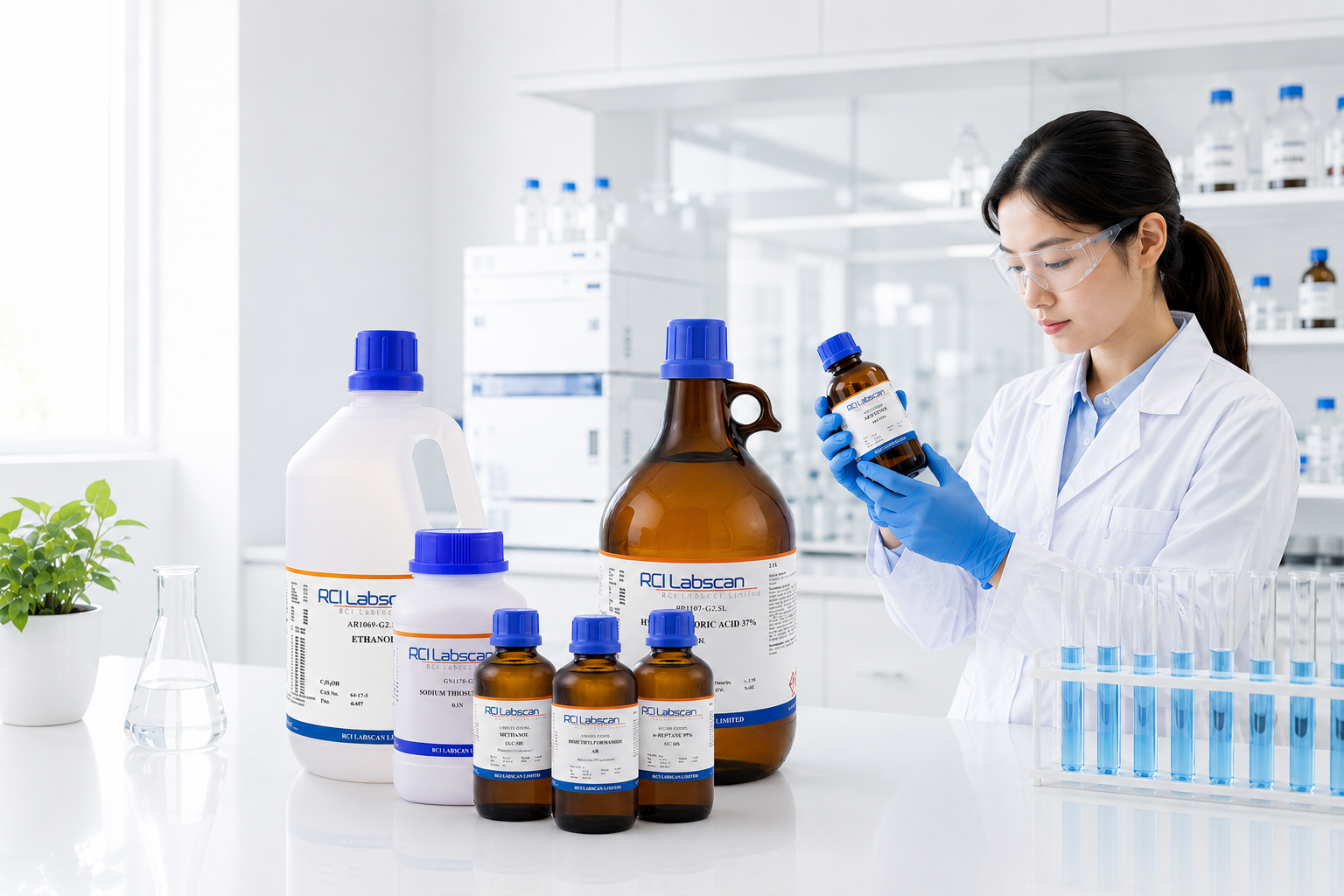
RCI Labscan supplies laboratory chemicals in packaging designed to support safe handling, product stability, and reliable analytical performance.
Available packaging options vary depending on the product and may include different bottle materials, container sizes, and packaging configurations for laboratory, quality control, research, and industrial applications.
Customers requiring product specifications, SDS, COA, or packaging information may contact RCI Labscan or an authorized distributor.
FAQ
Does packaging really affect chemical quality?
Yes. Packaging helps protect chemicals from moisture, oxygen, light, contamination, and evaporation, all of which can influence product stability over time.
Why are some laboratory chemicals supplied in amber bottles?
Amber bottles reduce light exposure and help protect chemicals that are sensitive to ultraviolet or visible light.
Can I transfer chemicals into another container?
Whenever possible, laboratory chemicals should remain in their original manufacturer packaging. Transferring chemicals to unsuitable containers may increase contamination risk or reduce product stability.
Why is bottle sealing important?
A properly sealed container helps minimize evaporation, moisture absorption, oxygen exposure, and contamination during storage.
Does larger packaging reduce chemical quality?
Not necessarily. However, once opened, larger containers may contain more headspace, increasing exposure to air and moisture. Laboratories should choose packaging sizes appropriate for their usage frequency.
Is packaging information important before purchasing?
Yes. Packaging material, closure type, storage recommendations, and supporting documentation can all help determine whether a product is suitable for a specific laboratory application.
Conclusion
Packaging plays a critical role in protecting laboratory chemicals throughout storage, transportation, and routine laboratory use. Selecting suitable packaging materials, compatible containers, secure closure systems, and appropriate bottle sizes helps maintain chemical quality and supports reliable analytical performance.
Before purchasing laboratory chemicals, laboratories should review product specifications, packaging information, Safety Data Sheets (SDS), Certificates of Analysis (COA), and recommended storage conditions to ensure the products meet their quality requirements.
Explore Related Products:
Related Articles:
- Shelf Life vs Expiry Date: What's the Difference for Laboratory Chemicals?
- What Is an SDS? Why Every Laboratory Should Take It Seriously
- How to Choose Acetonitrile for HPLC Solvents
Leave a comment!