

What Is Headspace GC and Why Does Diluent Quality Matter?
Direct Answer
Headspace gas chromatography (HS-GC) analyzes volatile compounds that partition from a liquid or solid sample into the gas phase above it. Diluent quality matters because the diluent can contribute its own peaks, change analyte partitioning, or introduce contamination that interferes with residual-solvent results.
The best diluent is the one that dissolves or disperses the sample, supports the validated headspace conditions, and produces an acceptable blank under the method’s temperature and time settings.
How Headspace GC Works
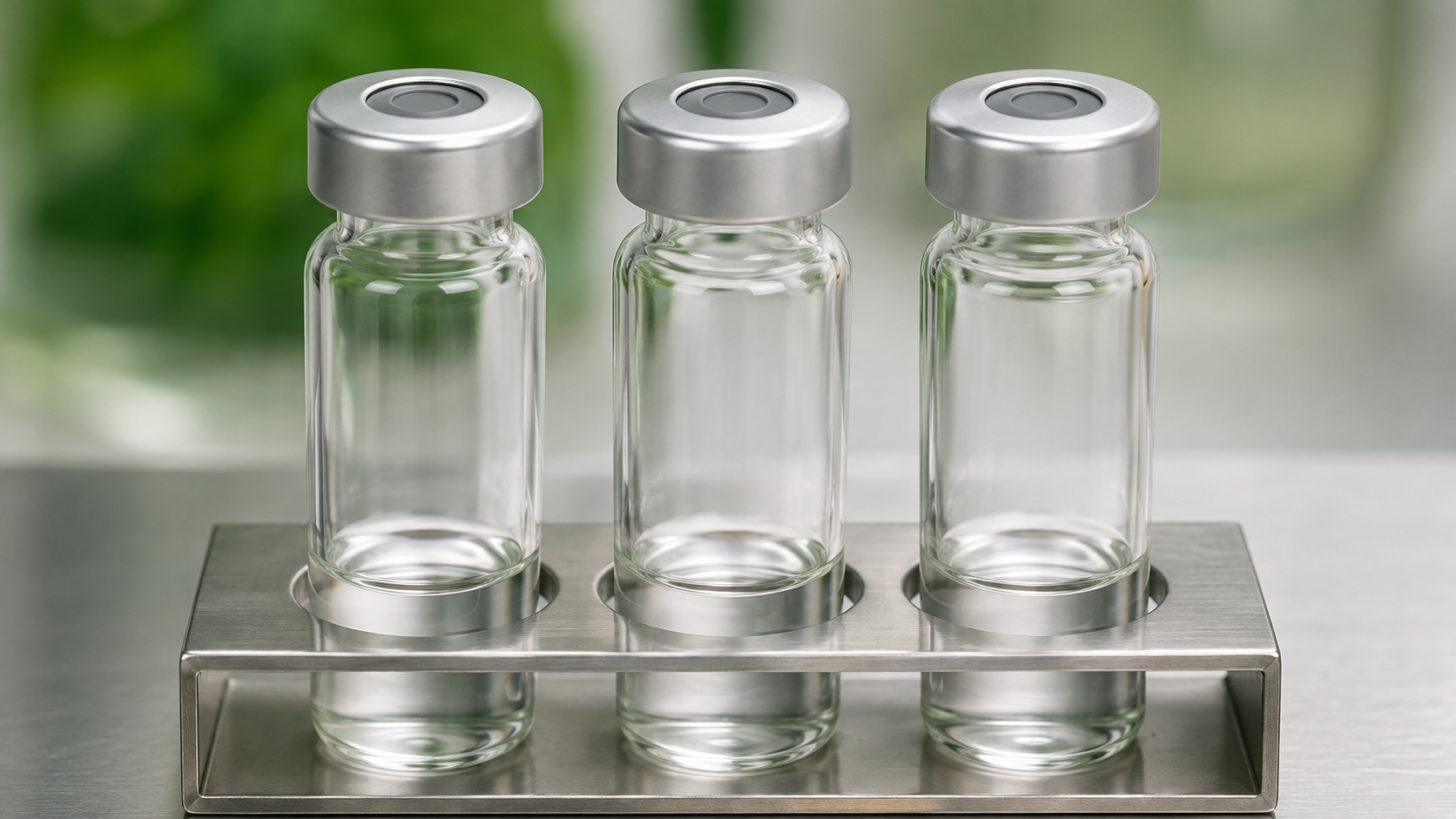
In a headspace vial, the sample is sealed and equilibrated at a defined temperature and time. Volatile compounds move between the sample phase and the gas phase. The autosampler withdraws part of that gas phase and transfers it to the GC for separation and detection.
This approach can reduce the amount of non-volatile matrix entering the inlet compared with direct liquid injection. It does not remove the need for careful sample preparation. Vial volume, agitation, equilibration temperature, equilibration time, and sample composition all influence the result.
Why Diluent Quality Affects Results
- A diluent impurity can appear as an unexpected peak.
- Different diluents can change the partition of volatile analytes.
- A diluent that does not dissolve the sample can create poor repeatability.
- High background may obscure low-level residual solvents.
- Contamination can be introduced through the bottle, vial, septum, or transfer tools.
Water is commonly used as a diluent, but another high-boiling solvent may be needed when a sample is not water-soluble. That choice must be supported by method development or the applicable official procedure.
Properties to Review Before Choosing a Diluent
| Property | Why it matters |
|---|---|
| Sample solubility | Incomplete dissolution can reduce recovery and repeatability. |
| Volatility | A volatile diluent may compete with or overlap target compounds. |
| Purity and blank | Impurities can be reported as residual-solvent peaks. |
| Thermal stability | The diluent must remain suitable during vial equilibration. |
| Compatibility | The diluent should not damage the vial, septum, or instrument path. |
| Method fit | Concentration, temperature, time, and calibration must remain valid. |
Common Diluent Choices
Water is frequently used for water-soluble materials. Dimethyl sulfoxide (DMSO), dimethylformamide (DMF), dimethylacetamide (DMAC), and N-methyl-2-pyrrolidone (NMP) may be considered for materials that require a high-boiling organic diluent. The appropriate choice depends on sample solubility, target compounds, method conditions, safety, and the applicable specification.
Do not assume that a familiar solvent is appropriate simply because it dissolves the sample. Check its headspace blank, chromatographic behavior, and compatibility with the target analytes.
How to Check Diluent Suitability
- Prepare a diluent blank in the same vial type and volume used for samples.
- Run the blank at the method’s equilibration temperature and time.
- Check for peaks near target retention times and for excessive background.
- Confirm that the sample dissolves or disperses consistently.
- Compare replicate preparations and document the selected diluent.
FAQ
Is headspace GC only used for pharmaceutical samples?
No. It is used for volatile compounds in many matrices, including pharmaceutical materials, foods, chemicals, packaging, and environmental samples. The method and acceptance criteria depend on the application.
Why is a high-boiling diluent often useful?
A high-boiling diluent can help dissolve the sample while remaining less likely to dominate the early volatile region. It still must be checked for purity and compatibility.
Can I change the diluent without changing the method?
Not automatically. Changing the diluent can alter partitioning, response, blank performance, and recovery. Treat it as a method change that requires appropriate evaluation.
Diluent Suitability Checklist
| Check | What to observe | Why it matters |
|---|---|---|
| Sample dissolution | Consistent solution or dispersion at the working concentration | Uneven preparation can change volatile recovery. |
| Diluent blank | No interfering peaks near target compounds | Background must not be mistaken for residual solvent. |
| Equilibration behavior | Stable response at the specified temperature and time | Partitioning depends on the complete headspace program. |
| Container compatibility | No visible damage, leakage, or unusual septum behavior | The vial and closure are part of the sampling system. |
| Repeatability | Replicate preparations provide comparable responses | Consistency is needed for quantitative interpretation. |
Why the Vial and Closure Matter
Headspace analysis is sensitive to the sealed-vial system. The vial volume, fill volume, cap, septum, crimp or screw closure, and sealing technique affect the gas phase available for sampling. A diluent that is suitable in one vial format may require re-evaluation in another format.
Use the same vial and closure configuration for blanks, standards, and samples whenever the procedure requires it. Inspect closures for damage and avoid repeated punctures that can compromise sealing. Follow the autosampler and method instructions for equilibration, agitation, and sequence timing.
Interpreting a Diluent Blank
A blank with a small peak does not automatically invalidate the diluent. The analyst must compare the peak’s retention time, detector response, and relationship to the reporting limit. If the peak overlaps a target compound or varies between preparations, the diluent or sampling process requires further investigation.
Document the blank chromatogram and the decision criteria used. This creates a defensible record for method development and helps distinguish a diluent issue from contamination introduced during sample preparation.
Controlling Equilibration and Sampling Variables
Headspace results depend on how long the vial equilibrates, how consistently it is heated, and how the vapor is withdrawn. Keep the equilibration temperature and time within the method limits, and allow the autosampler to reach its operating condition before beginning a sequence. A short or inconsistent equilibration period can leave the sample away from partitioning equilibrium and increase variation between vials.
Agitation can improve contact between the sample and diluent, but the speed and duration should be controlled because vigorous mixing may create bubbles or foam. Use the same mixing approach for standards, blanks, and samples. Record any deviation, including delayed injections, unusual vial appearance, or a cap that does not seal properly.
When comparing two diluents, keep the vial fill volume and headspace volume constant. Changing both the solvent and the gas-to-liquid ratio can obscure the reason for a response change. A controlled comparison should show whether the difference comes from solubility, partitioning, background, or handling.
When to Escalate a Diluent Problem
Escalate the issue when a blank peak overlaps a reportable target, replicate response fails the method criterion, the sample remains visibly heterogeneous, or results change after a new diluent lot. Preserve the chromatograms, preparation records, solvent lot information, and vial details. This evidence helps the technical reviewer decide whether to repeat preparation, investigate the instrument, or formally evaluate an alternative diluent.
Related Reading
- How Impurities in Solvents Affect Analytical Results
- How to Read a Product Specification
- What to Check on a Certificate of Analysis
- Explore RCI Labscan laboratory products
- Contact RCI Labscan for product information
Conclusion
Headspace GC measures volatile compounds in the gas phase above a sealed sample. A suitable, clean diluent supports repeatable partitioning and reduces background, but it must be selected and verified within the complete method.
Leave a comment!