News

What Is Gradient Elution and How Does Solvent Quality Affect It?

What Is Gradient Elution and How Does Solvent Quality Affect It? Direct Answer

Gradient elution is an HPLC procedure in which the mobile-phase composition changes continuously or stepwise during a run. In reversed-phase HPLC, the organic proportion commonly increases so that weakly retained compounds separate early and more strongly retained compounds elute later within a practical run time.

Common Mistakes When Choosing Laboratory Chemicals

Common Mistakes When Choosing Laboratory Chemicals Direct Answer

The most common chemical-selection mistakes are choosing by headline purity or price alone, confusing grade names across suppliers, ignoring the analytical method and detector, failing to review the specification and lot Certificate of Analysis (COA), overlooking safety and storage requirements, and ordering an impractical package size.

Why Is Acetonitrile Commonly Used in HPLC?

Why Is Acetonitrile Commonly Used in HPLC? Direct Answer

Acetonitrile is widely used in high-performance liquid chromatography (HPLC) because it combines several useful properties: it mixes with water, has relatively low viscosity, provides strong elution in many reversed-phase separations, and has low absorbance in the short-wavelength UV region when a suitable chromatography grade is used.

What Is GC-Grade Solvent and When Should You Use It?

What Is GC-Grade Solvent and When Should You Use It? Direct Answer

GC-grade solvent is a solvent purified and tested for gas chromatography. It is selected to reduce solvent-related peaks, background, residue, and other contamination that could interfere with a GC chromatogram.

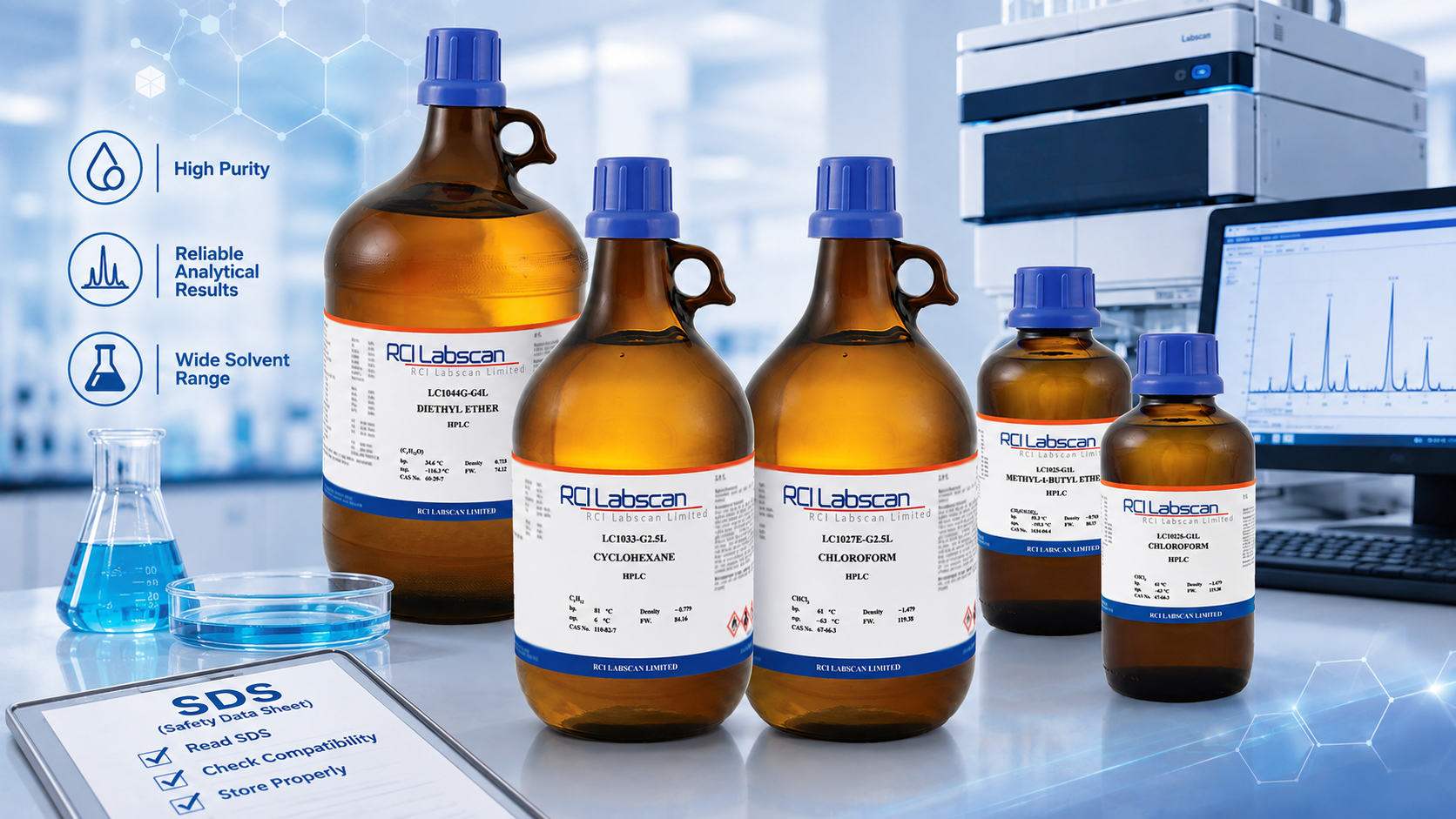
RCI Labscan HPLC Solvents Product Range

RCI Labscan HPLC Solvents Product Range

High-purity solvents designed to support reliable HPLC and LC analytical performance

Direct Answer

RCI Labscan offers a broad range of HPLC solvents designed for analytical and preparative separation, including use as mobile phases in HPLC and LC techniques.

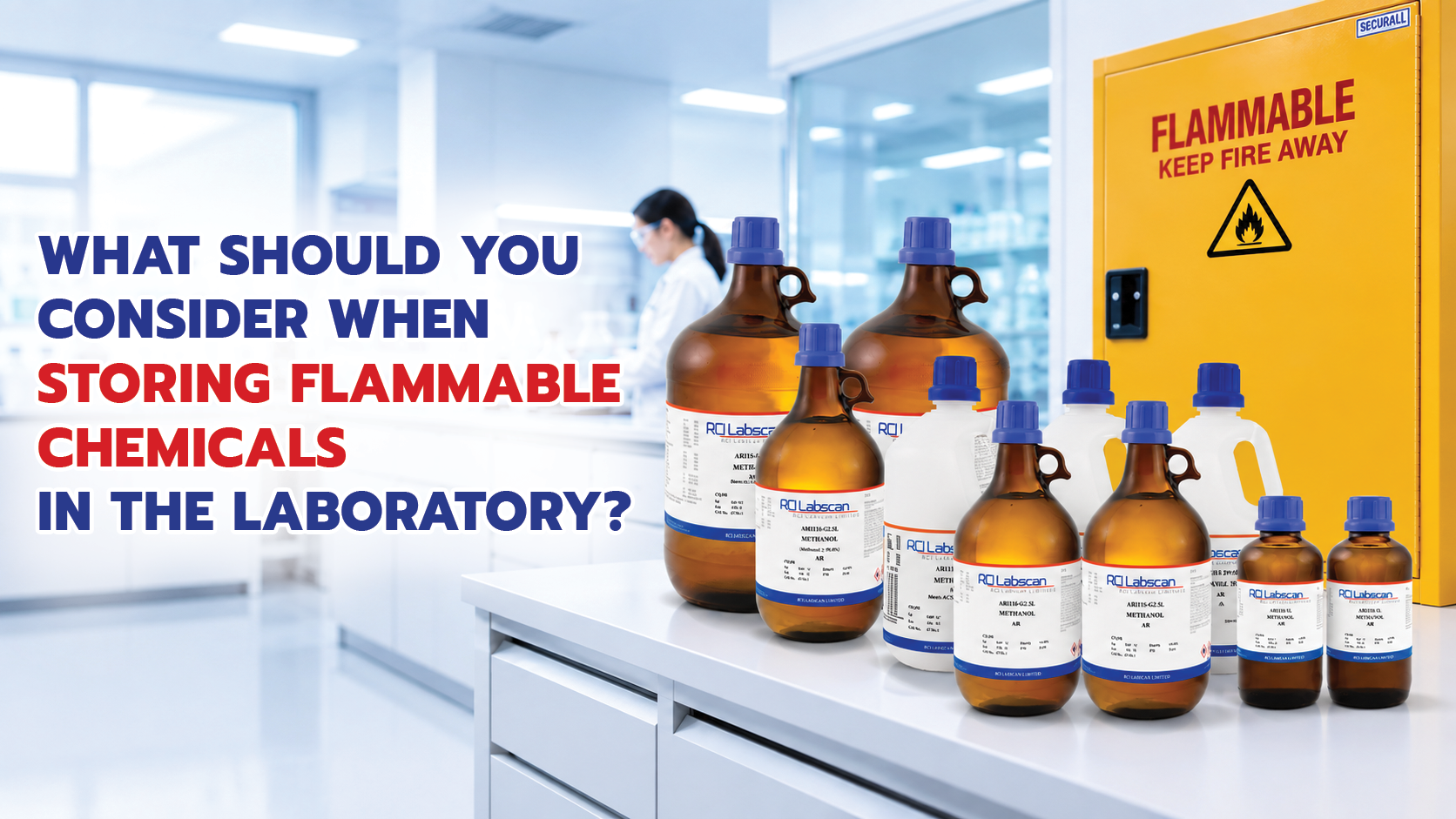
What Should You Consider When Storing Flammable Chemicals in the Laboratory?

What Should You Consider When Storing Flammable Chemicals in the Laboratory?

Key storage practices to reduce the risk of fire, chemical spills, and exposure to flammable vapors

Direct Answer

Flammable chemicals should be stored with careful consideration of their hazard classification, storage conditions, quantity, container compatibility, chemical compatibility, ignition sources, ventilation, and appropriate storage equipment.

Why Buying from an Authorized Distributor Matters When Purchasing Laboratory Chemicals

Why Buying from an Authorized Distributor Matters When Purchasing Laboratory Chemicals

Understanding how sourcing channel affects product authenticity, documentation, and quality

Direct Answer

Purchasing laboratory chemicals from an authorized distributor helps ensure product authenticity, consistent quality, and access to reliable documentation such as SDS, COA, and product specifications.